Turmeric Oil FAQ: Answers Before You Order
Turmeric oil raises the same handful of questions again and again, and they tend to arrive in a predictable order: is this the golden powder from the spice rack, how do I use it, will it stain, and what paperwork backs it up? Here they are, answered the way we would answer across the counter.

Turmeric Essential Oil
Our own Turmeric Essential Oil, in sizes from 0.5 oz to bulk.
From $12.99
Shop Now →Is it the same thing as turmeric powder or curcumin?
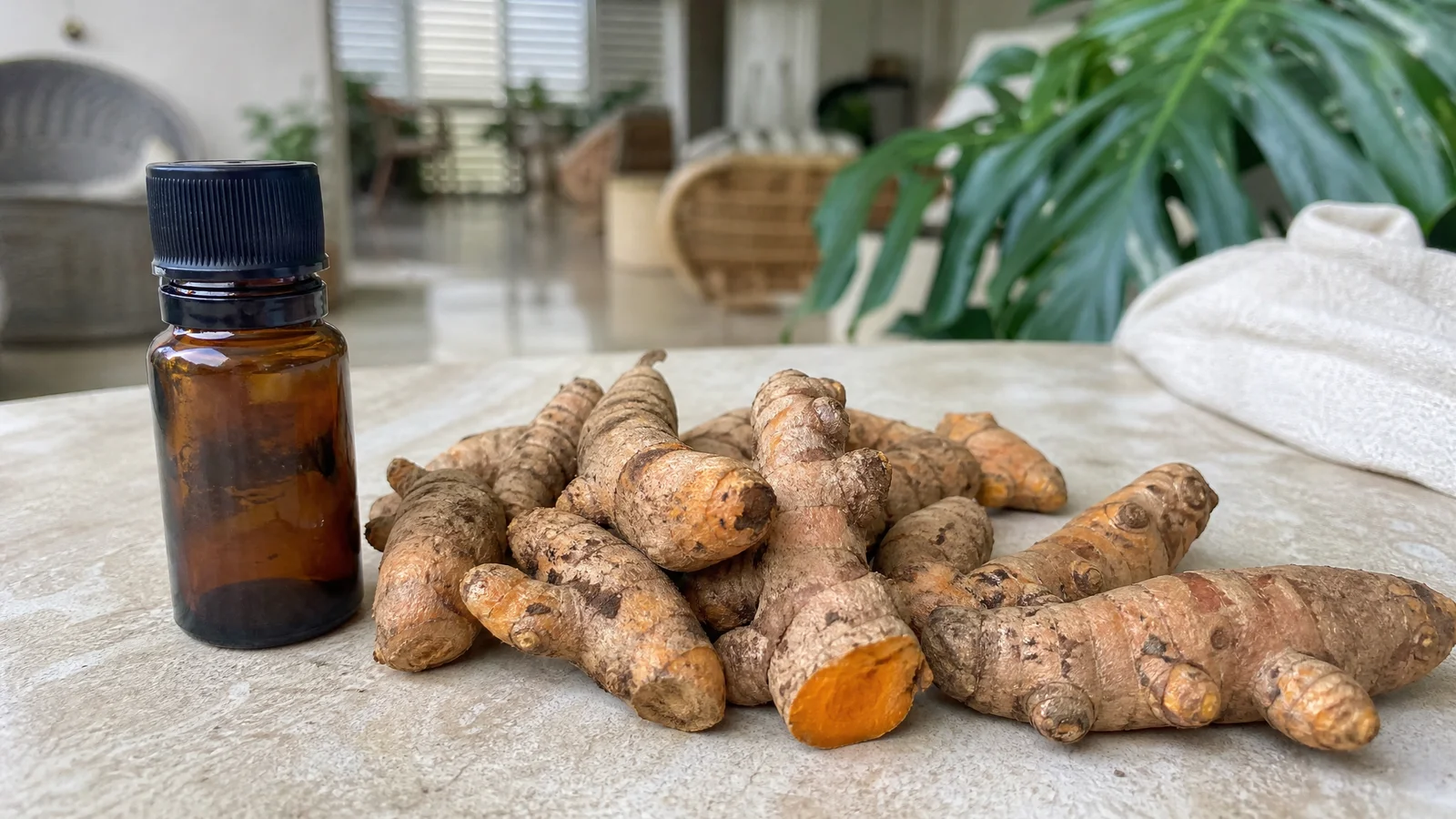
No, and this is the single most useful thing to understand. The rhizome holds two families of compounds. The curcuminoids carry the bright yellow color, while the volatile oil carries the aroma (Dosoky and Setzer, 2018). Steam distillation only carries over the volatile part, so curcumin, which is not volatile, stays behind. Our oil is the aromatic fraction, and that is why the research on curcumin capsules and pastes does not describe it. For a fuller walk through the chemistry, see turmerones and curcumin.
What does it smell like?
We describe it as warm, earthy and gingery with a woody-spicy edge, a base to middle note that sits comfortably beside ginger, sweet orange, ylang ylang, sandalwood, patchouli and cedarwood. If you want more on that, our scent profile goes deeper.
How is it made?
It is steam-distilled from the dried rhizomes of Curcuma longa. Steam passes through the plant material, lifts out the volatile compounds, and is cooled back into liquid, where the oil separates from the water. The distillation post covers the method.
How do I use it on skin?
Diluted, always. Our guidance is 0.5% to 2% in a carrier oil such as jojoba or sweet almond, with a patch test first and the oil kept well away from the eyes. At roughly 20 drops to the milliliter, that works out to about 3 to 12 drops per ounce of carrier, though droppers vary, so weigh if you can. Turmeric oil can be sensitising for some people, so we suggest starting at the low end. The dilution guide has the full arithmetic, and our skin post covers the first-try routine.
Should I smell it before I decide?
If you can, yes. Aroma is personal, and a scent that one person calls warm and cozy another calls heavy. That is why we like samples for anyone planning a larger project, and why a small bottle is a sensible first order for a scent you have not tried.
Will it stain?
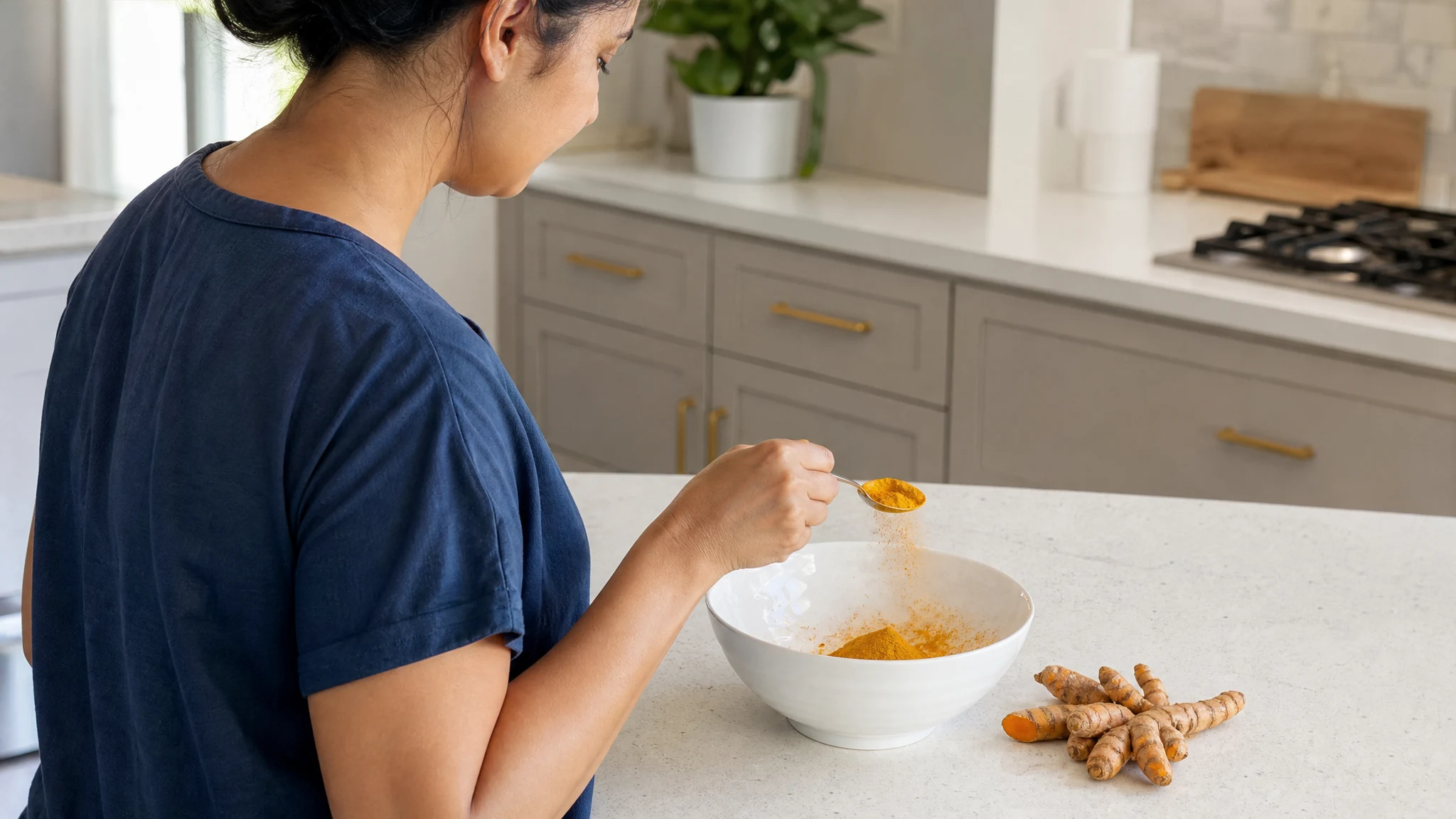
The oil carries turmeric's aroma without the pigment that stains raw powder. Even so, a drop on a white cloth is a cheap way to find out how it behaves with your carrier before it meets a favorite towel. We go into it in the stain post.
Can I cook with it or swallow it?
No. It is a concentrated botanical extract for aromatic and cosmetic use only, never for internal consumption. The kitchen spice is a different product altogether. If anyone does swallow an essential oil, America's Poison Centers says to call your poison center at 1-800-222-1222 (Essential oils: Poisonous when misused).
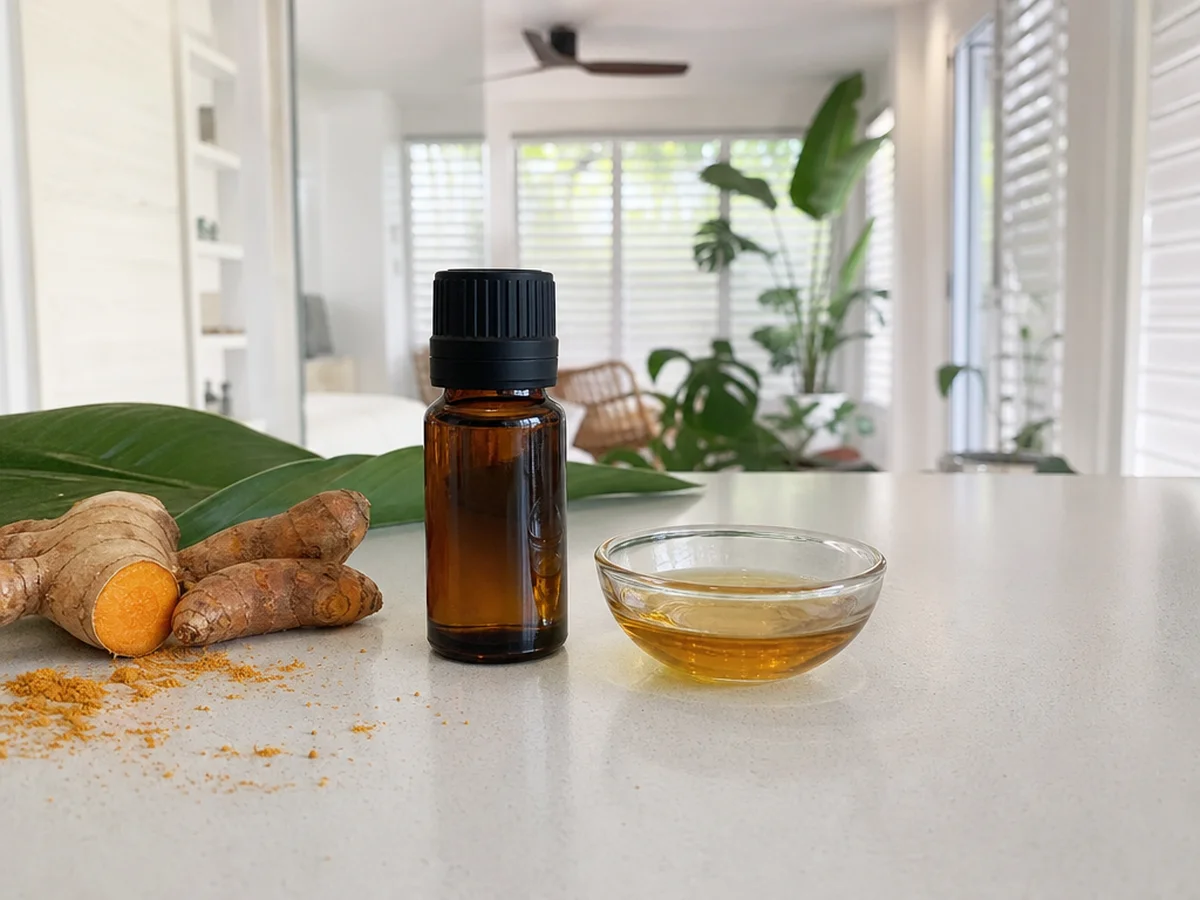
What about children, pets, pregnancy and medications?
Keep the bottle away from children and pets, and store it somewhere cool and dark. If you are pregnant, nursing, or have a medical condition, please check with your physician before using any essential oil. We sell an external aromatic and cosmetic oil, so questions about medicines belong with a pharmacist. We have separate posts on children, medications, and pregnancy.
Does it do anything for skin, joints, mood or hair?
We make no medical claims. The National Center for Complementary and Integrative Health says plainly, "We don't know enough to definitively conclude if turmeric or curcumin is beneficial for any health purposes", and that page concerns the spice and supplements (Turmeric: Usefulness and Safety). We sell turmeric oil for what it is good at: a warm, earthy aroma for diffusing, perfumery, soap and diluted body oils.
Where should I store it?
Somewhere cool, dark and out of reach: a closed cupboard works well. Keep the cap tight and write the date you opened the bottle on the label, so you always know how long it has been in use.
How long does a bottle keep?
We say typically 3 to 4 years unopened, kept in a cool, dark place away from heat and direct light.
What documents can I see?
We publish a Certificate of Analysis for one batch, listing measured relative density of 0.941, refractive index 1.512 and optical rotation of +0.68 degrees, each inside the standard range printed beside it. We also publish a qualitative GC-MS report, which we walk through here. If your project needs a batch-matched GC-MS with an analysis date, an allergen declaration, an IFRA certificate or a safety data sheet, ask us in writing through the contact page before you order and keep our reply.
Do you sell in bulk?
Yes, from small bottles up to drums, with samples available if you want to try before committing. The bulk page and wholesale page explain how it works, and we are happy to talk through private label too.
A tip if you are comparing oils: write down the botanical name, the plant part and the extraction method for each, and compare those lines rather than the descriptions. It makes it much easier to see what you are really choosing between.
If your question is not here, send it along and we will gladly help you sort it out.
Turmeric Essential Oil
Turmeric Essential Oil from our own shop, in sizes from 0.5 oz to bulk.
From $12.99
Shop Now →Sources & Further Reading
- Dosoky NS, Setzer WN. Chemical Composition and Biological Activities of Essential Oils of Curcuma Species. Nutrients, 2018. PMC6164907
- NCCIH. Turmeric: Usefulness and Safety. nccih.nih.gov/health/turmeric
- America's Poison Centers. Essential oils: Poisonous when misused. poison.org/articles/essential-oils