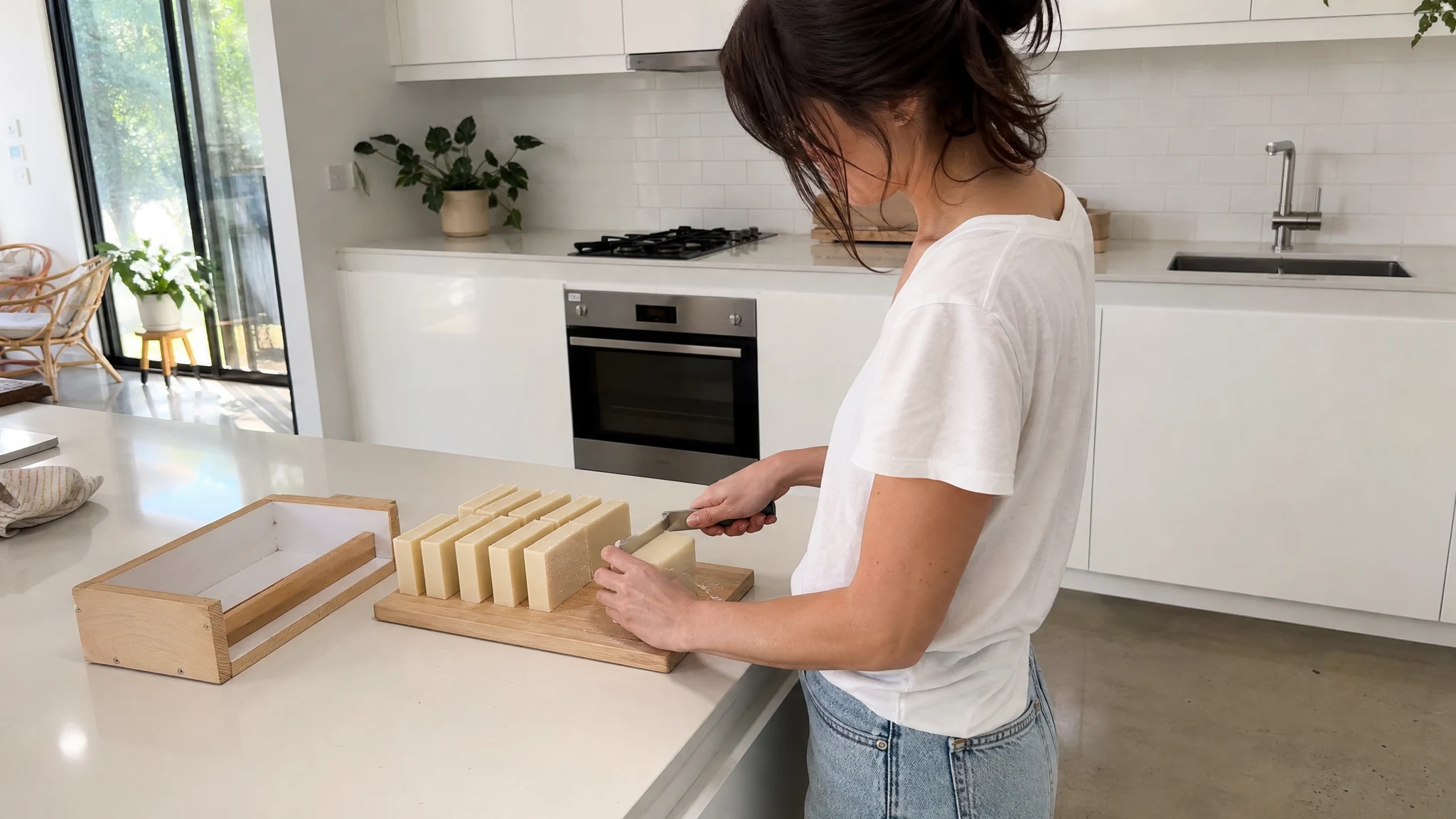
How Much Turmeric Oil to Use in Cold Process Soap
The most useful number in a turmeric oil soap is not on the lye calculator at all. It is the percentage of essential oil you decide to scent with, and turning that percentage into grams before you pour is what keeps a batch consistent. This is how we would work it out, with the arithmetic on show.

Turmeric Essential Oil
Our own Turmeric Essential Oil, in sizes from 0.5 oz to bulk.
From $12.99
Shop Now →Start with the rate, then convert to weight
Soap makers talk about scent in terms of percentage of the oils in the recipe, by weight. Our guidance for turmeric oil on skin is a dilution of 0.5% to 2%, and our suggestion for soap is to begin around 1% of your oil weight, treating 2% as the upper end. That is a recommendation based on our own guidance, not a rate set by any regulator or soap-making authority. A useful detail is that a batch of soap batter weighs more than the oils alone, once lye solution is added, so 2% of oil weight is less than 2% of the finished batter.
Here is the arithmetic for a 500 g batch of oils, using the measured density of 0.941 g/ml on the batch on our Certificate of Analysis (a figure for that batch, not all batches) and about 20 drops to the millilitre:
| Rate on oil weight | Grams | Millilitres | Drops |
|---|---|---|---|
| 1% | 5.0 | about 5.3 | about 106 |
| 1.5% | 7.5 | about 8.0 | about 159 |
| 2% | 10.0 | about 10.6 | about 213 |
Nobody should count over a hundred drops, so weigh the oil on a scale. For a one-pound batch of oils (453.6 g), 1% is about 4.5 g. Scale from there to whatever size you pour.
What to expect from the colour
It is tempting to picture a golden bar, and turmeric's name suggests one. The honest answer is that our oil will not reliably colour a soap batch on its own. Makers who want a golden hue add turmeric powder or a colorant from a soap-making supplier. The oil is there for the aroma: warm, earthy and gingery, with a woody-spicy edge, a scent that suits a base-to-middle note in a blend. It pairs well with ginger, sweet orange, ylang ylang, sandalwood, patchouli and cedarwood, which you will find at a soap-making supplier.
The rest of the recipe belongs to your lye calculator
Everything else in cold process soap, the oils, the lye, the water and the superfat, belongs to a lye calculator and to a good soap-making course or tutorial. We do not sell lye, carrier oils, butters or moulds, and we would not want a table of figures from us to stand in for your suppliers' saponification values and a calculator you trust. Lye is caustic, so follow your supplier's safety instructions on goggles, gloves, long sleeves and ventilation. If you have never made cold process soap, learning alongside an experienced maker is the right way to begin.
When a batch is poured, keep the weighed oil with the other measurements in your notes, so a lovely bar can be made again.
Make the scent step easy to repeat
Weigh the turmeric oil into its own small cup before you start, so the scent step is not a scramble once the batter is moving. Wipe the scale clean first, and keep the bottle capped between uses so the aroma stays in the oil and not in the room. Then keep a simple log beside your recipe. A few lines are enough:
- The date, the batch weight of oils and the percentage you chose.
- The grams of turmeric oil you weighed, and the supplier of everything else.
- What the bar smells like fresh from the mould, and again once it has cured.
The last line is the most useful. Scent changes as a bar sits, and your own notes will tell you whether 1% was enough or whether you would like to move toward the upper end next time.
If you plan to sell the soap
This is a small but valuable piece of regulatory knowledge. The FDA explains that it interprets "soap" narrowly: the bulk of the product's non-volatile matter must be an alkali salt of fatty acids, its cleansing action must come from those compounds, and it must be labelled, sold and represented solely as soap. Products that meet that definition are regulated by the Consumer Product Safety Commission, not by the FDA. The FDA also notes that claims such as easing pain, relaxing muscles, treating depression or anxiety or helping you sleep are drug claims, and that they are sometimes made for soaps and lotions marketed as aromatherapy. We recommend keeping a bar's labelling to cleansing and scent, in line with how we describe our own oil.
A note on the oil itself
Turmeric oil can be sensitising for some people, which is why we start at the low end and why we suggest a patch test on the inner forearm before you gift a bar. A review of Curcuma oils relays a 1983 study in which 4% turmeric oil caused neither irritation nor sensitisation in 25 volunteers, a useful reassurance but a single old test. Rinse-off soap spends far less time on skin than a leave-on product, which is our reasoning for treating 2% of oil weight as a comfortable upper end.
If you make soap in larger quantities, our bulk page describes the pail-to-drum range, and the advice there is to decant working amounts from a large container into smaller airtight bottles. For more on how we think about colour and staining, see our article on staining, and our guides to candles and wax melts and the bath use the same drops-to-percent arithmetic. Our dilution guide explains it in more detail.
A bar scented with turmeric oil is a small pleasure in a hot shower, warm and spicy at the edges.
Turmeric Essential Oil
Turmeric Essential Oil from our own shop, in sizes from 0.5 oz to bulk.
From $12.99
Shop Now →