Turmeric Body Oil: How to Work Out the Blend by Weight
A body oil goes on a lot of skin, every day, usually right after a shower. That makes it a good place to be careful with an essential oil, and it also makes it a fun place to do some tidy arithmetic. Here is how we would work out a turmeric body oil: weigh it, start low, and let a patch test make the call.

Turmeric Essential Oil
Our own Turmeric Essential Oil, in sizes from 0.5 oz to bulk.
From $12.99
Shop Now →Why we start at the low end
Our dilution guidance for Turmeric Essential Oil is 0.5% to 2% in a carrier oil, with a patch test first, and we describe it as an aromatic and cosmetic oil only. For a whole-body blend we would begin at 0.5% and stay there until you know how your skin feels about it. Here is the reasoning. The one skin-tolerance figure we could find for turmeric oil is a 4% test on the forearms of 25 volunteers, which a 2026 review reports as showing no irritating or sensitizing effects (it traces the figure to a 1983 monograph, and the review was funded by an essential-oil company). Twenty-five people at one concentration is a useful data point, not a ceiling for everyone, so we treat it as encouragement to be careful rather than permission to go stronger.
It also helps to remember that "from a plant" does not mean "mild." The FDA makes the same point in its aromatherapy guidance, noting that many plant materials can irritate skin or cause allergic reactions when applied to it, and that this holds whatever the source.
The arithmetic, by weight
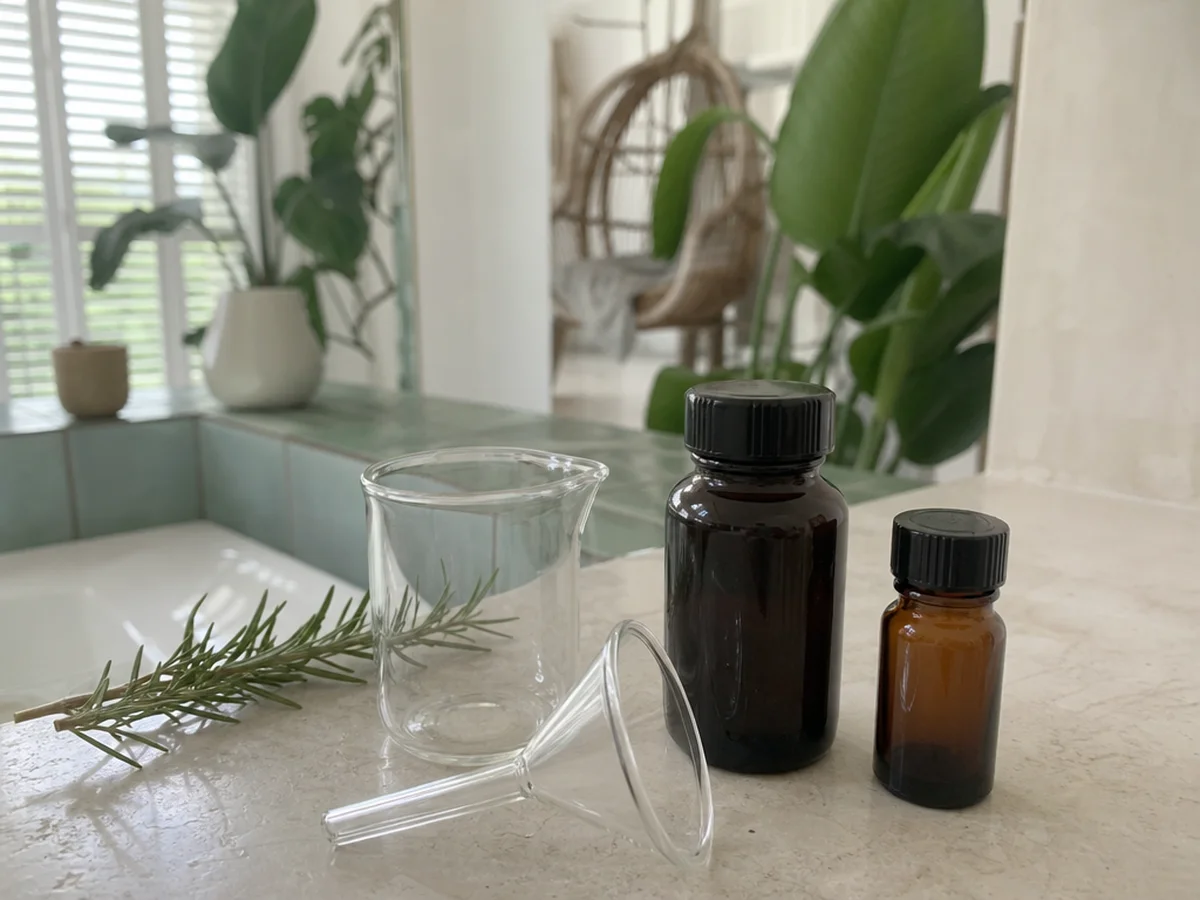
A kitchen scale that reads to 0.1 g beats counting drops, because droppers differ. For 100 g of finished body oil (roughly a 100 ml bottle), the maths looks like this. The drop counts assume the common convention of about 20 drops per millilitre and the density of 0.941 measured on the batch our Certificate of Analysis covers, so treat them as rough.
| Share of the blend | Turmeric oil by weight | Roughly in drops |
|---|---|---|
| 0.5% | 0.5 g | about 11 |
| 1% | 1 g | about 21 |
| 2% | 2 g | about 43 |
For a smaller 30 ml bottle, our usual 3 to 12 drops per ounce of carrier lands in the same range. Stir gently rather than shaking, and label the bottle with the percentage and the date so next month's you knows which batch is which.
Before you bottle a big batch, think about how you will use it. A body oil in a bottle with a narrow neck is easier to control than a wide jar, and a small bottle means you finish it while the scent is still fresh. Making a modest amount at a time also lets you change the percentage next time without wasting anything.
Choosing the base
The carrier is what makes this feel like body oil, and it is something you will find at a craft or cosmetic-ingredient supplier rather than here. Jojoba and sweet almond are the two we mention most often. If anyone using the blend has a tree-nut allergy, pick jojoba and check with an allergist before using any nut-derived oil on skin. A single carrier plus a single essential oil also keeps the formula easy to trace if your skin ever objects.
This is a water-free blend, which keeps it simple: there is no water phase to preserve. Keep the cap on between uses and avoid dripping shower water into the bottle.
Patch test, then be patient
Dab the finished blend, not the neat oil, on the inside of your forearm and leave it. Allergic reactions can be delayed, so waiting a day or two before you try a bigger area costs you nothing. The National Center for Complementary and Integrative Health notes that topical curcumin can cause hives or itching. That page is about turmeric and curcumin products rather than a distilled oil, but it is the same plant, so it is a fair cue to stop at the first itch. Skip broken or freshly shaved skin: America's Poison Centers advise against essential oils on damaged skin and call dilution in a carrier the best way to avoid a bad reaction.
Who should sit this one out
- Anyone who has reacted to turmeric, kumkum or turmeric-containing cosmetics before.
- Anyone pregnant, nursing or with a medical condition: our disclaimer asks you to consult your physician first. Our pregnancy post goes through what sources say.
- Households where small children or pets might touch freshly oiled skin. We keep the oil away from both, and our pets post explains why.
How it should feel and smell
A well-made body oil should feel light and slip easily, and the scent should be a quiet background to your evening, not an announcement. At 0.5%, turmeric oil gives a soft, warm, gingery impression with a woody-spicy edge, and as a base to middle note it stays with you a little longer than a bright citrus would. Apply it to slightly damp skin after a shower and use less than you think you need. A small amount goes a long way, and it leaves a gentle scent trail you will notice when you move.
Towels and what comes next
Wondering what a golden-looking oil does to a white towel? Our stain post takes that question on its own. If you would like something firmer than a pourable oil, the body butter formulation uses the same arithmetic, and our dilution guide covers other bottle sizes.
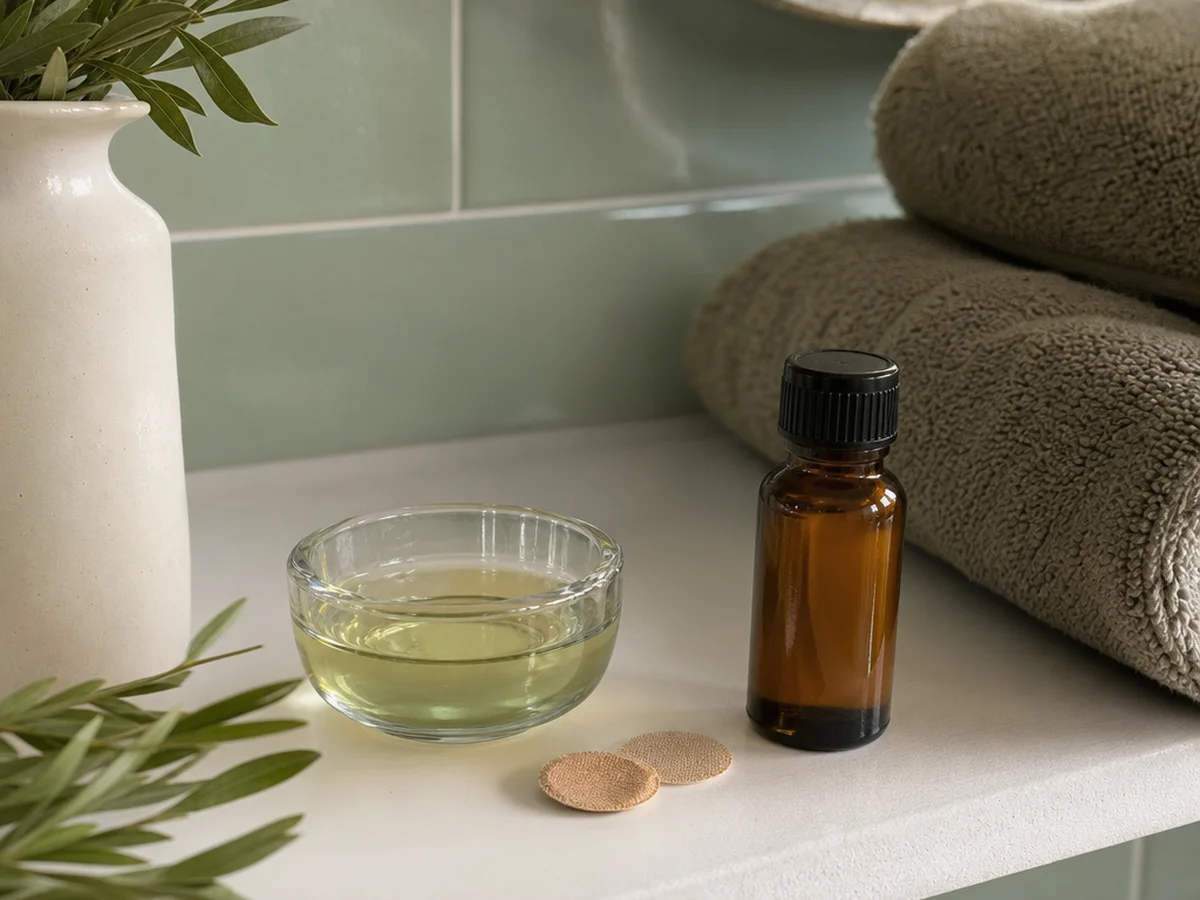
A good body oil is mostly about consistency: the same small amount of the same oil, on skin that has said yes in a patch test. Start at the bottom of the range and enjoy the warm, earthy scent without hurrying it.
Turmeric Essential Oil
Turmeric Essential Oil from our own shop, in sizes from 0.5 oz to bulk.
From $12.99
Shop Now →Sources & Further Reading
- Saavedra DI et al., 2026. Turmeric (curcuma longa) rhizome essential oil: analytical profile of authenticated and commercial samples, safety and pharmacology review. Pharmaceutical Biology. pmc.ncbi.nlm.nih.gov/articles/PMC12954815
- US Food and Drug Administration. Aromatherapy. fda.gov/cosmetics/cosmetic-products/aromatherapy
- Poison Control. Essential oils: Poisonous when misused. poison.org/articles/essential-oils
- National Center for Complementary and Integrative Health. Turmeric (page last updated April 2025). nccih.nih.gov/health/turmeric