
Turmeric Oil vs Curcumin for Joints: The Research
Search for "turmeric for joints" and nearly every result is really about curcumin, the golden pigment, usually swallowed as a supplement. Our turmeric essential oil is a different material altogether, and sorting out that difference is the most useful thing you can do before reading any headline on the subject.
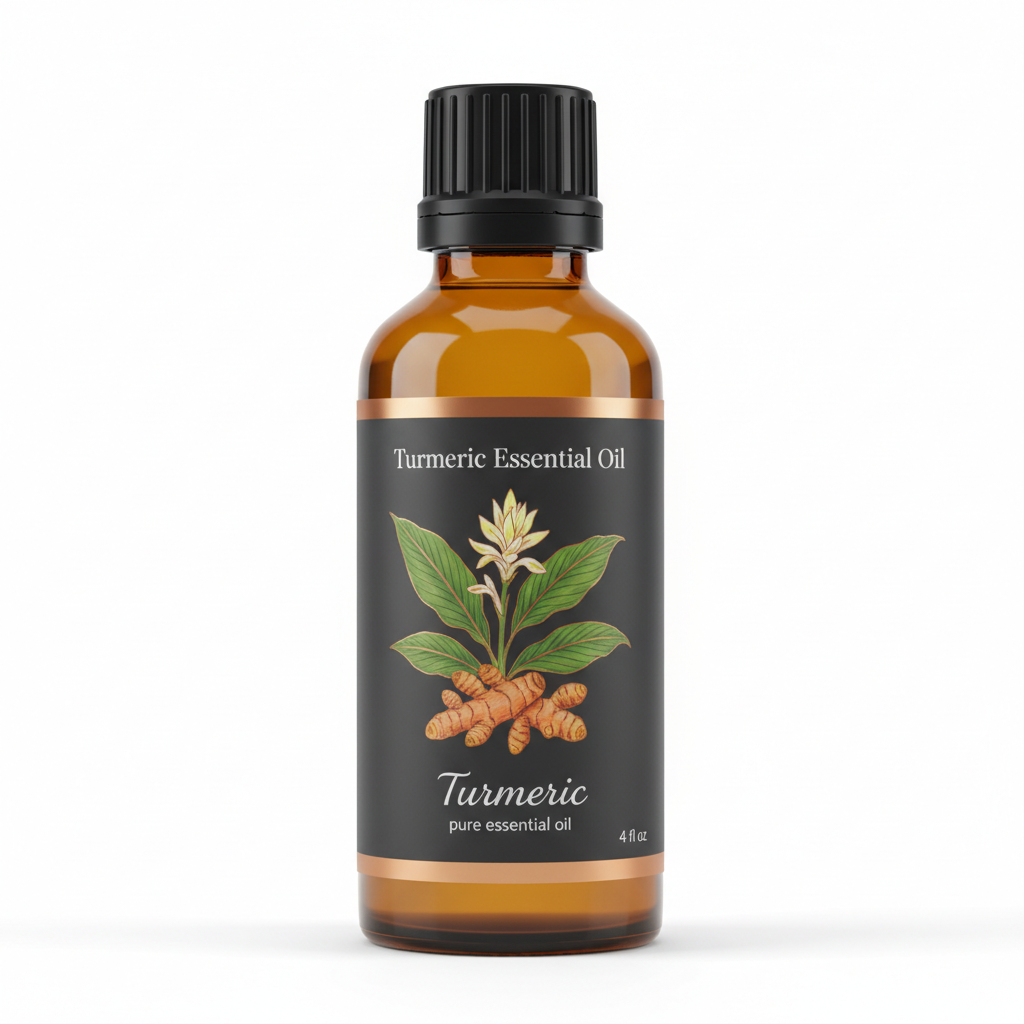
Turmeric Essential Oil
Our own Turmeric Essential Oil, in sizes from 0.5 oz to bulk.
From $12.99
Shop Now →Curcumin and the oil are two different things
Curcumin is not volatile, which means it does not travel over in the still and does not end up in a steam-distilled oil. What does come over is the aromatic fraction of the rhizome, the turmerones and zingiberene among them. So the large body of joint research that carries the word "turmeric" in its title is research on curcumin products, and none of it describes a bottle like ours.
The US National Center for Complementary and Integrative Health sums up that curcumin literature carefully. For oral turmeric or curcumin in osteoarthritis, it says the initial evidence is positive and that higher-quality evidence is needed to reach definitive conclusions. For topical curcumin ointment, it says it is unclear whether it has an effect on knee osteoarthritis pain. It also notes that topical curcumin can cause hives or itching. That is a thoughtful, middle-of-the-road verdict on the very ingredient our oil does not contain.
What about essential oils rubbed into skin?
A fairer question is whether aromatic oils as a group, applied in massage, have been studied for muscle and joint complaints. They have. A 2023 systematic review pooled eight randomized trials and found pain was rated lower with the oil than with placebo right after the treatment, by a little under one point on a pain scale. The effect was still present at four weeks but was not clear at one week.
Two things are worth keeping in mind when you read a result like that. The abstract does not tell us which oils were pooled, so we cannot say turmeric was among them. And in a massage trial, the touch, the warmth and the attention are part of what is being measured, which is our reading rather than something the authors state. It is a modest signal about a whole category, not a statement about any single oil.
It can be disorienting to see how many different materials share one name. Powder, capsule, paste, extract and essential oil all say "turmeric" on the label, and each is a different thing. A good rule of thumb is to look for the botanical name and the form, and let those two lines tell you what a headline is really about.
Turmeric essential oil on its own
A 2026 review of turmeric rhizome oil, written by authors from an essential oil company, puts it plainly: "Clinical studies on turmeric essential oil and its constituents are scarce." The same review explains why the picture is muddy: several of the human joint studies it discusses combined the oil with curcuminoid formulations, so a benefit cannot be credited to the oil.
That honest state of the evidence is why we describe our oil the way we do. It is an aromatic and cosmetic oil with a warm, earthy, gingery scent and a woody-spicy edge, and it is sold for the things aromatic oils are for: diffusing, and blending at modest dilutions into massage and body oils. We make no pain or joint claim for it. If sore muscles or aching joints are what brought you here, that is a conversation for a physician or physiotherapist, and a scented body oil is a pleasant extra at most.
The massage is the pleasure
Whatever the research says, a slow massage with a warm-smelling oil is an enjoyable thing to do for yourself or a friend. The scent sets the mood, the oil gives your hands a little glide, and the whole thing takes a few unhurried minutes. That is the experience we are happy to describe for our oil, and it asks for nothing more than a measured dilution.
If you enjoy it in a massage oil
We recommend diluting to 0.5% to 2% in a carrier oil and patch testing first. For a 30 ml (about 1 oz) bottle that works out to roughly 3 to 12 drops of oil, which is simple arithmetic at about 20 drops per ml. Turmeric oil can be sensitising for some people, so a light hand serves better than a generous one, and we like to begin at the lower end. Our walkthrough on diluting turmeric oil covers carriers and patch tests step by step, and our body oil formulation shows the maths on a full bottle.
For an easy first try, a small bottle of massage oil, made at the low end of the range and patch tested, is a pleasant way to meet the scent. Keep it simple, label the bottle, and enjoy the warmth of the aroma while you work.
If you take blood thinners or other medicines, or are pregnant or nursing, check with your doctor before using any essential oil; our medication notes and pregnancy article explain what the sources do and do not cover. And if you are curious how the oil's chemistry differs from the spice, turmerones and curcumin is the place to go next.
A practical tip: blend a small bottle rather than a large one. Turmeric oil has a strong character, and a small batch lets you adjust the next one, either with less oil or with a partner oil you enjoy alongside it, without wasting what is left.
Warm spice has a way of making a massage oil feel like an occasion, and that scent is what we are happy to promise.
Turmeric Essential Oil
Turmeric Essential Oil from our own shop, in sizes from 0.5 oz to bulk.
From $12.99
Shop Now →Sources & Further Reading
- National Center for Complementary and Integrative Health: Turmeric
- Bakó E, et al. Efficacy of Topical Essential Oils in Musculoskeletal Disorders: Systematic Review and Meta-Analysis of Randomized Controlled Trials. Pharmaceuticals (Basel), 2023
- Turmeric (curcuma longa) rhizome essential oil: analytical profile of authenticated and commercial samples, safety and pharmacology review. Pharmaceutical Biology, 2026