The History of Turmeric: From Ancient Pots to Perfume
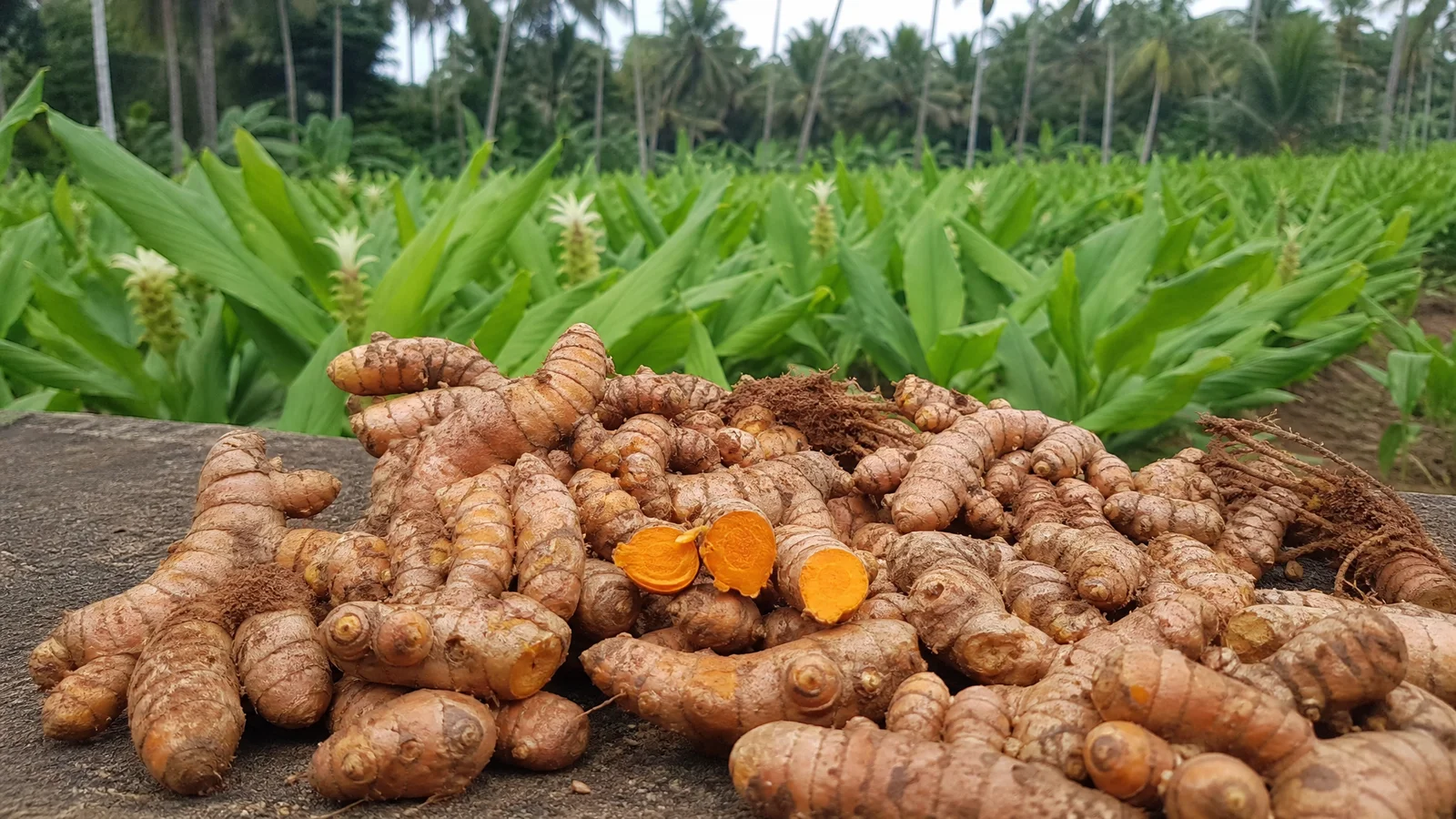
"Turmeric has been used for 4,000 years" is the line on nearly every spice jar, and it is, if anything, modest. Archaeologists have now found turmeric in cooking pots, in the teeth of people who ate from them, and on grinding stones in places that sit thousands of miles apart. The rhizome has a remarkable story. The distilled oil is a newer chapter, and it is worth telling the two apart.

Turmeric Essential Oil
Our own Turmeric Essential Oil, in sizes from 0.5 oz to bulk.
From $12.99
Shop Now →Turmeric in the oldest kitchens
Turmeric can now be identified from microscopic starch grains and even from ancient proteins, and the finds read like a travel itinerary. A 2023 study of grinding stones from Oc Eo, a trading town in southern Vietnam, summarises the earlier discoveries: turmeric starch was extracted from Harappan cooking pots and human teeth at Farmana in Haryana, dated 2600 to 2200 BCE. Turmeric protein was identified in the dental calculus of a person from Bronze Age Megiddo in present-day Israel, which tells us the rhizome was moving between South Asia and the Mediterranean by the middle of the second millennium BCE. It also appears in Assyrian medical texts from Ashurbanipal's library at Nineveh in the seventh century BCE (Wang et al., "Earliest curry in Southeast Asia and the global spice trade 2000 years ago.").
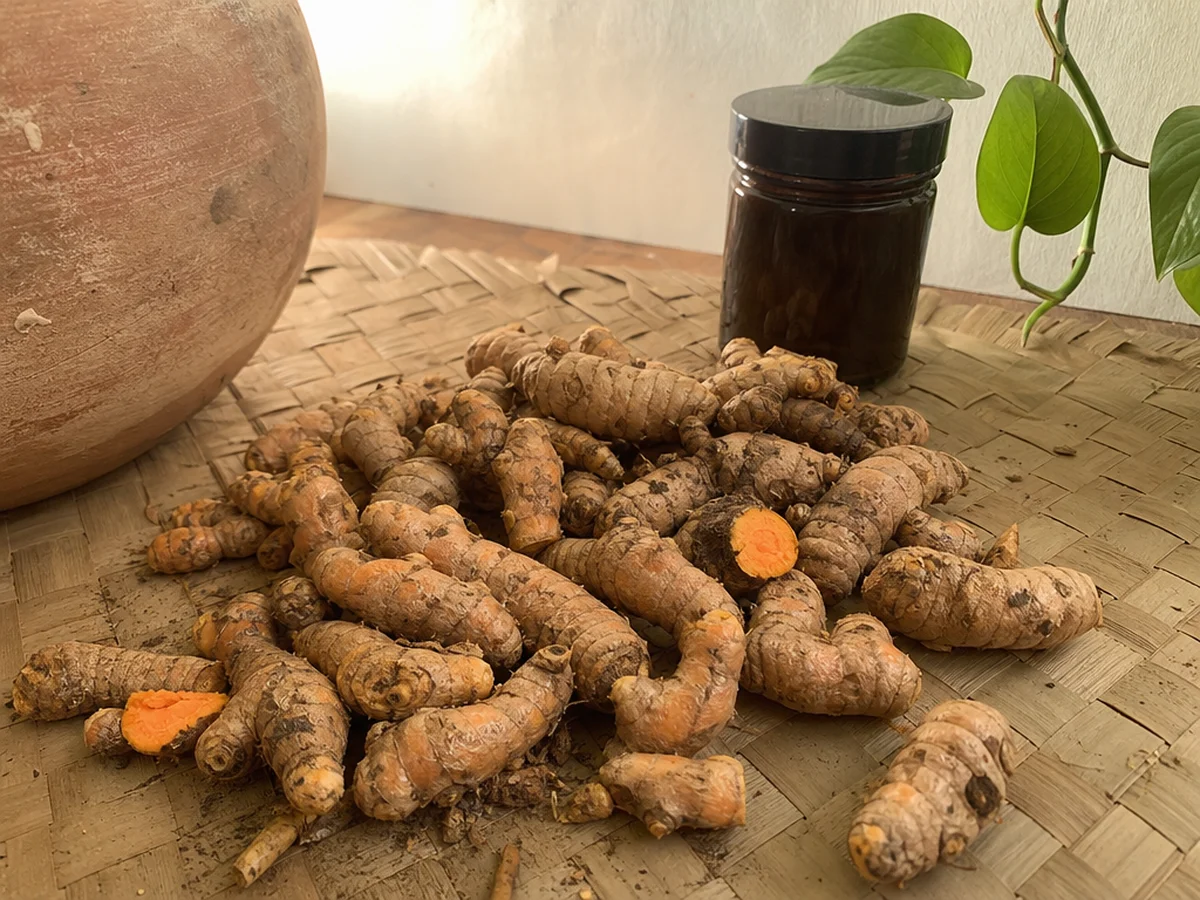
The Megiddo find comes from a separate 2021 study of dental calculus, whose authors said it pushes back the earliest evidence of turmeric in the Mediterranean by centuries (Scott et al., "Exotic foods reveal contact between South Asia and the Near East during the second millennium BCE.").
A curry in Vietnam, two thousand years ago
Our favourite detail is Oc Eo itself. The researchers examined 12 stone tools used to prepare food and counted 316 starch grains from ginger-family plants, turmeric making up the largest share, alongside ginger, fingerroot, galangal, clove, nutmeg and cinnamon. That is the pantry of a South Asian curry, ground in the Mekong Delta around 2,000 years ago. The authors suggest that turmeric may also have travelled for another job, yellow dye for the robes of Buddhist monks, though they say "perhaps" and so should we.
As for where turmeric began, the same paper says it most probably originated in South Asia, where the greatest diversity of Curcuma species and the earliest remains occur. There are roughly 93 to 100 accepted Curcuma species, and the exact number is debated (Dosoky and Setzer, "Chemical Composition and Biological Activities of Essential Oils of Curcuma Species."). That matters whenever someone says "turmeric" and means something else, a theme we take up in our comparison of black, wild and common turmeric oils.
Why the story still matters at the bottle
It is easy to treat history as trivia, but it changes how you hold a bottle of oil. When you smell turmeric oil, you are smelling the volatile side of a root that people have carried across oceans, ground on stones and cooked in clay for millennia. The aroma is warm, earthy and gingery, with a woody-spicy edge, and it is not hard to imagine that same family of scents rising from an ancient kitchen. We find that a little imagination makes the ordinary act of opening a bottle feel like a small journey.
Where the oil comes in
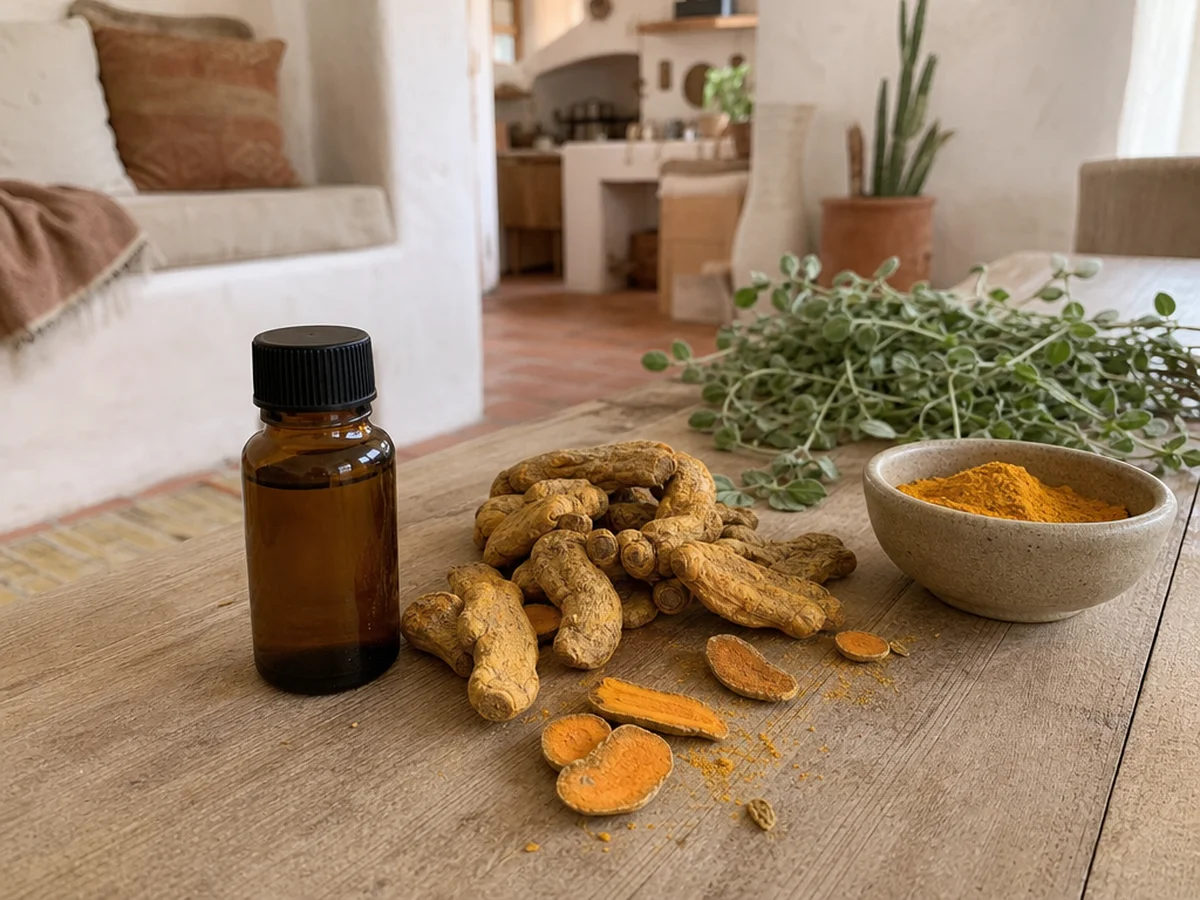
All of that evidence is about the root as food, dye and medicine. The essential oil is a separate material. Turmeric's yellow comes from curcumin, which is not volatile and does not travel through a still; steam distillation carries over the volatile part, the turmerones, ar-turmerone chief among them, along with zingiberene. The 2026 review of the oil puts the oil yield of the rhizome at roughly 0.5% to 6% and notes its long use in perfumes of heavy oriental character (Saavedra et al., "Turmeric (curcuma longa) rhizome essential oil: analytical profile of authenticated and commercial samples, safety and pharmacology review.").
So the thread to follow in the oil's own history runs through perfumery. A bottle of oil is about aroma, and the aroma is the heritage worth enjoying: the same rhizome that coloured and flavoured those ancient pots, expressed through its volatile side. We sell one turmeric oil, Curcuma longa, steam-distilled from the dried rhizomes, for aromatic and cosmetic use only, never for the kitchen. If you want to see how the oil is made, our steam distillation walkthrough picks up where this story leaves off, and turmerones and curcumin explains what the oil carries and what the powder does.
A way to enjoy the connection
If you are curious, try this at home: warm a spoonful of milk with a pinch of the spice from your pantry, and separately put a drop of the oil on a cotton pad. Smell them one after the other. The first is a kitchen smell, powdery and comforting; the second is the aromatic part only, lighter and more perfumed. The comparison is a lovely way to understand why a spice jar and an essential oil are two different objects, and why we keep the oil strictly for aroma and cosmetic use.
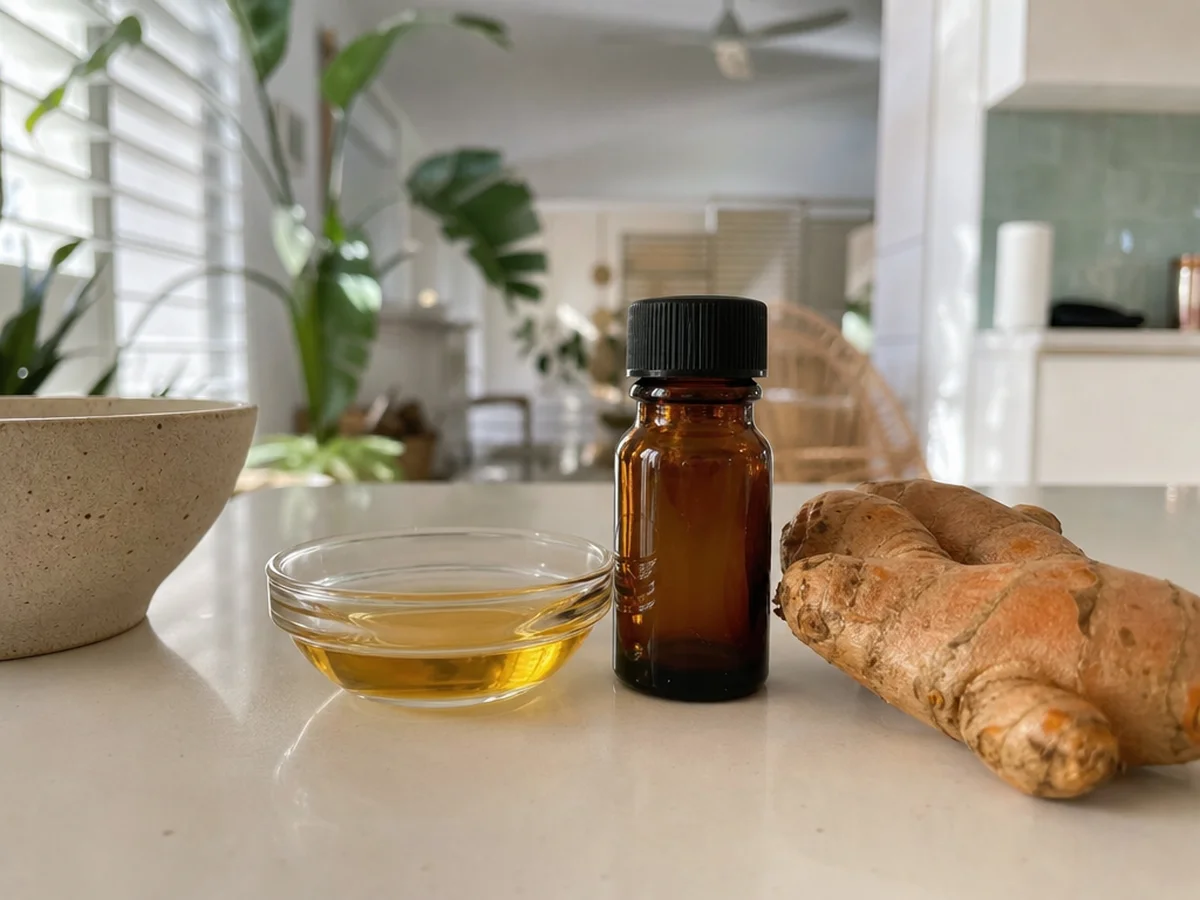
It is a lovely thing to hold a few millilitres of something whose source plant has been feeding, colouring and travelling with people for four and a half thousand years.
Turmeric Essential Oil
Turmeric Essential Oil from our own shop, in sizes from 0.5 oz to bulk.
From $12.99
Shop Now →Sources & Further Reading
- Wang W et al. Earliest curry in Southeast Asia and the global spice trade 2000 years ago. Sci Adv, 2023
- Scott A et al. Exotic foods reveal contact between South Asia and the Near East during the second millennium BCE. Proc Natl Acad Sci U S A, 2021
- Dosoky NS, Setzer WN. Chemical Composition and Biological Activities of Essential Oils of Curcuma Species. Nutrients, 2018
- Saavedra DI et al. Turmeric (curcuma longa) rhizome essential oil: analytical profile of authenticated and commercial samples, safety and pharmacology review. Pharm Biol, 2026