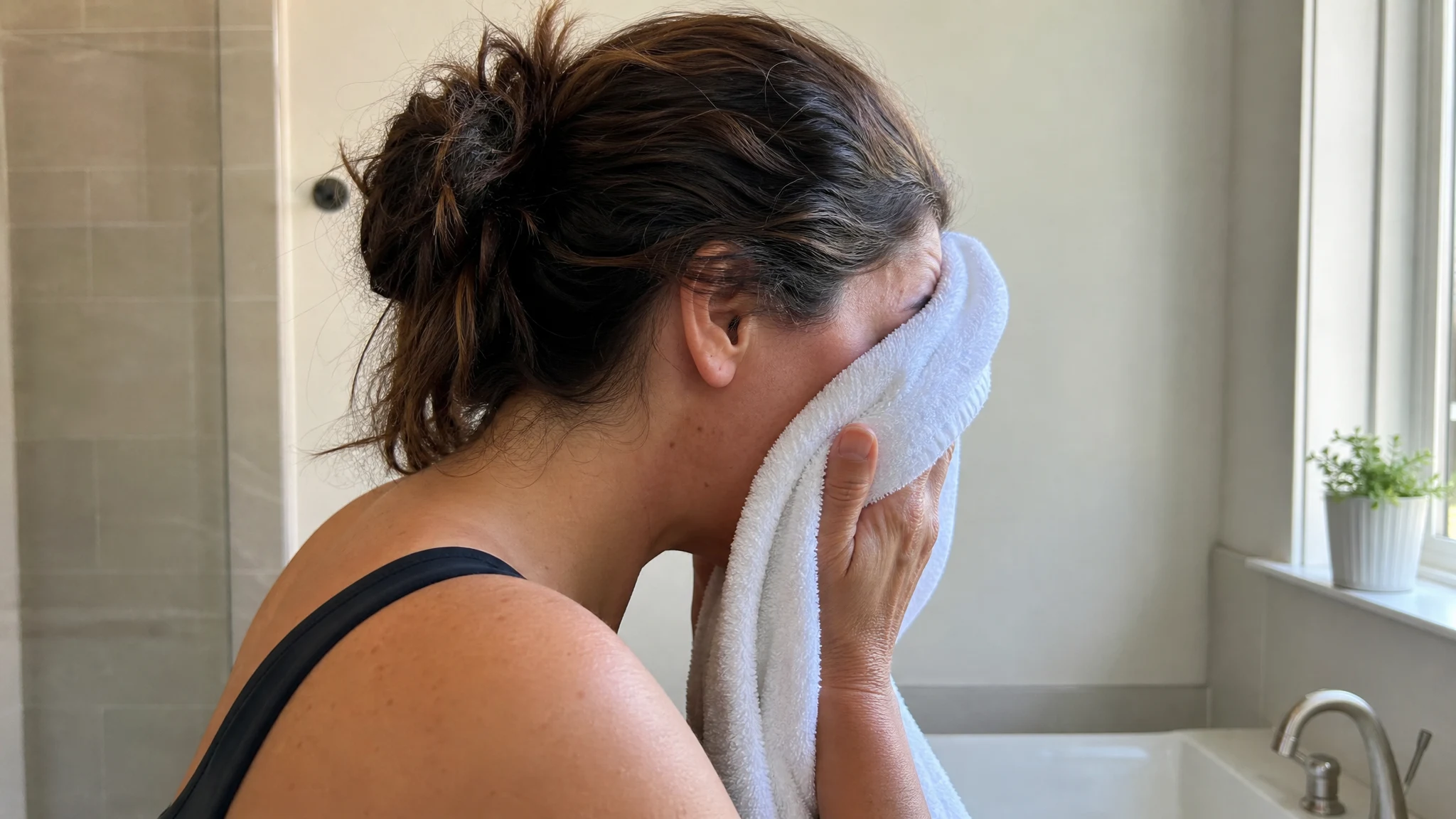
Turmeric Oil Antioxidant Claims: Test Tube vs Skin
"Rich in antioxidants" is one of the most reliable phrases on a turmeric product page, and one of the least explained. It sounds like a promise about skin. In fact it usually describes something that happened in a test tube. Understanding that gap makes you a sharper shopper for any botanical oil, ours included.
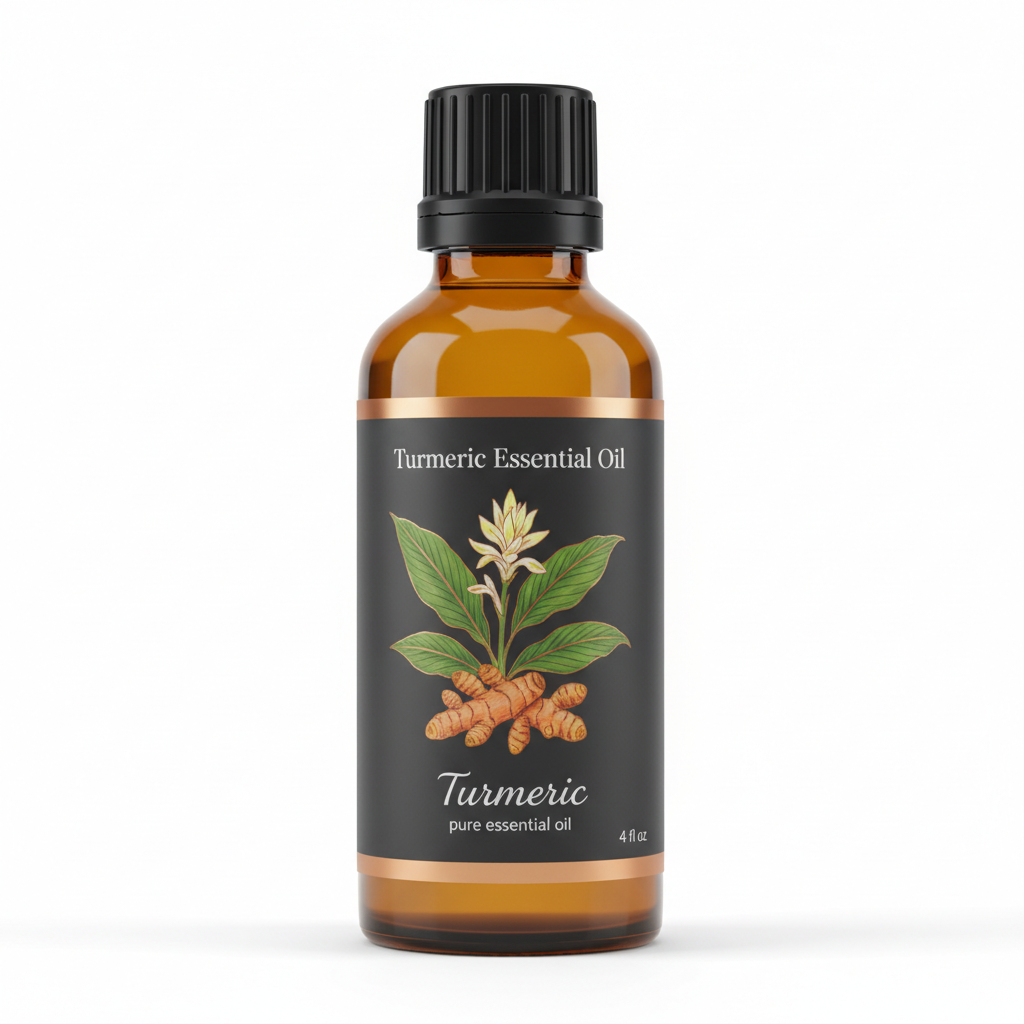
Turmeric Essential Oil
Our own Turmeric Essential Oil, in sizes from 0.5 oz to bulk.
From $12.99
Shop Now →What an antioxidant assay actually does
An assay measures how readily a material neutralises a test radical in a flask. It is a useful way to compare materials in a lab. It does not tell you whether the material reaches the right layer of skin, stays there, or changes anything you could see in a mirror. That is our reasoning, but the oil's own literature draws a similar line: the 2026 review of turmeric rhizome essential oil notes that clinical validation is limited by small samples and variability in oil composition, and that its human oxidative-stress findings came from curcumin boosted with turmeric oil rather than the oil alone (Turmeric (curcuma longa) rhizome essential oil: analytical profile of authenticated and commercial samples, safety and pharmacology review).
Composition matters here too. The GC-MS report we publish leaves its three largest peaks unnamed, so we do not quote a turmerone figure for our oil, and an assay on someone else's oil does not describe ours. We would rather say that plainly than borrow a number.
Which turmeric did the skin studies use?
This is where the material question earns its keep. One Japanese study of a turmeric rhizome extract found it inhibited a skin enzyme called gelatinase in the lab, and a cream containing the extract improved measured elasticity on human facial skin; the authors identified curcuminoids as the active components (Inhibitory effect of the extract of rhizome of Curcuma longa L in gelatinase activity and its effect on human skin). Curcuminoids are the yellow pigments, and they do not come across in steam distillation, so the finding belongs to the extract, not to an essential oil.
A mouse study found that ordinary curcumin gels struggled to deliver an effect, and that a specially built vesicle formulation did better (Development and evaluation of vesicular system for curcumin delivery). Reviews of turmeric and curcumin in skin health call the clinical evidence early and limited (Effects of Turmeric (Curcuma longa) on Skin Health: A Systematic Review of the Clinical Evidence). We make no claim that our oil changes how skin looks as the years pass, and we would encourage you to be wary of any bottle that does.
A four-question habit for any label
Here is a checklist we would use ourselves, offered as our own suggestion rather than a published standard. Ask which material was used (oil, extract or curcumin), which system it was tested in (tube, cells, mice or people), what was measured (a radical score, elasticity, something visible), and what it was compared with. A claim that cannot answer all four is a lab result wearing a skincare label.
The pleasure of plain language
There is something refreshing about a label that simply says what is in the bottle and how to use it. We try to write that way ourselves. Name the plant, name the part, say how it is made, and describe the smell. Everything beyond that should be earned with a source you can follow, and until it is, a modest sentence is better than an impressive one.
What dermatologists lean on
The American Academy of Dermatology's list of eleven ways to look after skin over time starts with daily protection from the sun, through shade, clothing and broad-spectrum products, and goes on to avoiding tanning, not smoking, a balanced diet, gentle cleansing, a daily moisturizer and, notably, stopping any product that stings or burns (11 ways to reduce premature skin aging, AAD). It is a refreshingly practical list, and none of it requires an essential oil.
Why marketing loves the word
"Antioxidant" is a comforting word. It sounds protective, scientific and a little bit magical, and shoppers recognise it instantly. That is exactly why it turns up on so many labels, usually without an explanation. A good habit is to treat the word as an invitation to ask a question rather than as an answer. What was measured, in what, and by whom? If the page cannot tell you, the word is decoration. We would rather describe our oil by what you can actually check, which is its aroma.
So what is turmeric oil for?
Aroma, mostly, and we think that is plenty. It is warm, earthy and gingery with a woody-spicy edge, and it blends well with sweet orange, ylang ylang, sandalwood, patchouli and cedarwood. If you like it in a body oil for the scent, we recommend 0.5% to 2% in a carrier, a patch test first, and a light hand. Our post on turmeric oil and skin covers who should skip it, and the turmerones and curcumin explainer shows why the pigment and the oil are different things.
For the record, that aroma is warm, earthy and gingery, with a woody-spicy edge, a base to middle note that opens slowly. Put a drop on a strip of paper and see how it changes over the next quarter of an hour. That is a more honest test of an oil than any claim on a label.
Enjoy the scent, keep the daily habits that dermatologists actually name, and treat every "antioxidant" label with a friendly question mark.
Turmeric Essential Oil
Turmeric Essential Oil from our own shop, in sizes from 0.5 oz to bulk.
From $12.99
Shop Now →Sources & Further Reading
- Turmeric (curcuma longa) rhizome essential oil: analytical profile of authenticated and commercial samples, safety and pharmacology review
- Inhibitory effect of the extract of rhizome of Curcuma longa L in gelatinase activity and its effect on human skin
- Development and evaluation of vesicular system for curcumin delivery
- Effects of Turmeric (Curcuma longa) on Skin Health: A Systematic Review of the Clinical Evidence
- 11 ways to reduce premature skin aging (American Academy of Dermatology)