
Turmeric Oil and Sensitive Skin: Who Should Wait
We love turmeric oil, and we would still tell a friend with eczema or easily irritated skin to leave it off their skin and keep to what their dermatologist suggests. That is not a legal formality. It follows from how eczema organizations talk about fragrance and essential oils, and from how little published skin data exists for this particular oil. Our oil is an aroma-and-cosmetic product, and nothing here says it eases dry or itchy skin.
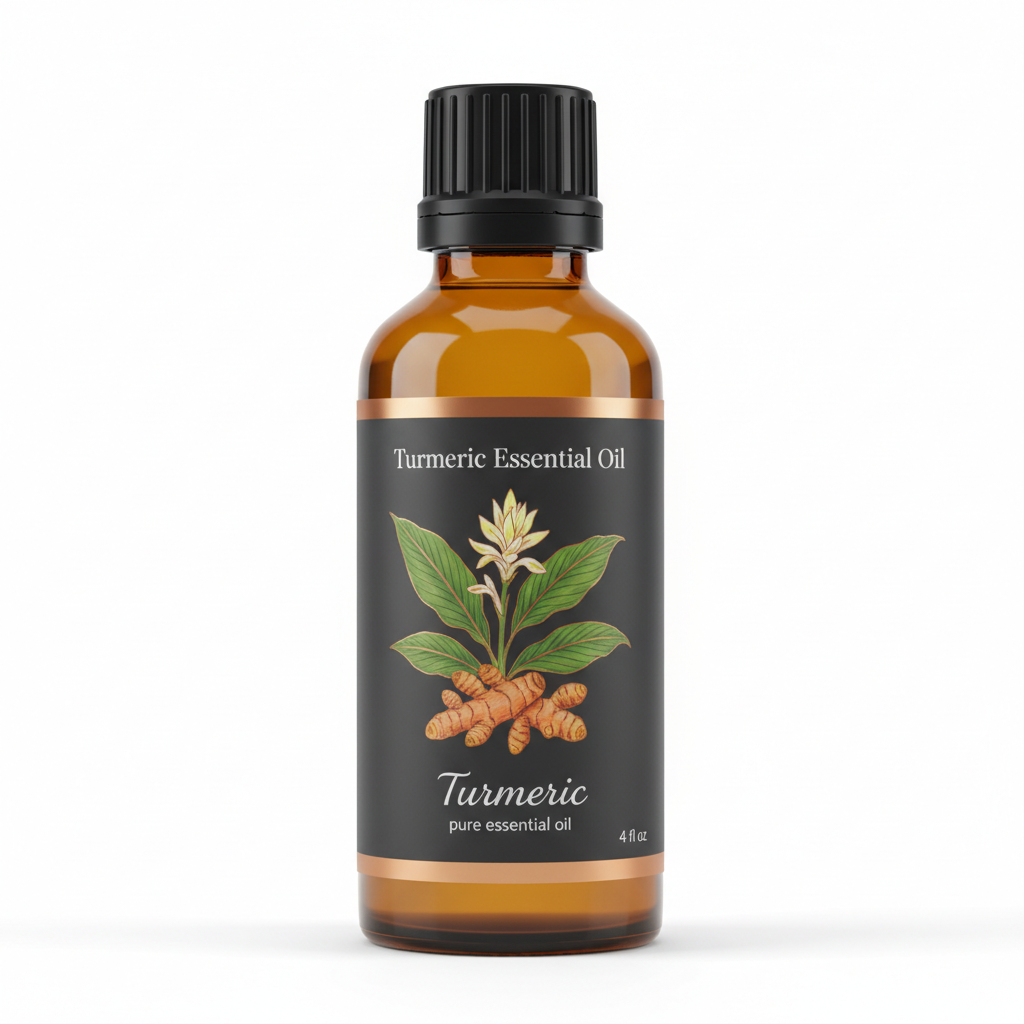
Turmeric Essential Oil
Our own Turmeric Essential Oil, in sizes from 0.5 oz to bulk.
From $12.99
Shop Now →Which of three situations are you in?
Diagnosed eczema, or a rash that comes and goes. Skip it on skin and take product questions to a dermatologist. The National Eczema Association's page on eyelid eczema is blunt: "Do not use essential oils on or around the eyelids", and it extends that to aromatherapy diffusers because airborne particles can also cause eyelid reactions (Eyelid Eczema: Symptoms, Causes & Treatment, National Eczema Association). We would not diffuse it near that person either.
Dry skin that is easily irritated, without a diagnosis. You may still react, and only a patch test will tell you. We would wait.
Calm, normal or dry skin that has never been reactive. If you simply want a lovely aroma in a body oil, low strength and a patch test are the way in, described below.
What the eczema authorities favour
The same organization advises choosing moisturizers that are fragrance-free, and says products high in oil content, such as petroleum jelly and mineral oil, are particularly good for eczema. It suggests trying a pea-sized amount on the wrist and watching for redness, rash or itchiness (The Best Eczema Lotions and Moisturizers, National Eczema Association). That is a useful template for anyone: moisture comes first, scent is optional.
Why we lean cautious
We would rather lose a sale than have anyone treat a bottle of aromatic oil as a skin remedy. Reactive skin is personal, and what feels fine to a friend may not feel fine to you. If you are not sure which of the three situations above is yours, treat yourself as being in the more careful one until a dermatologist tells you otherwise.
How common is essential oil allergy?
Common enough that dermatologists test for it. A large analysis of patch-test data from North America and central Europe covered 62,354 patients referred for suspected contact dermatitis. About 18.6 percent reacted to at least one fragrance marker or essential oil, and 1.4 percent reacted to an essential oil while testing negative to all three fragrance markers (Positive Patch-Test Reactions to Essential Oils in Consecutive Patients From North America and Central Europe). Those were patients with skin problems rather than the general public, and turmeric oil was not among the oils tested, which were sandalwood, ylang ylang, jasmine, peppermint, lavender and oxidised tea tree. The takeaway is about essential oils as a category: sensitivity happens, and testing helps.
For turmeric specifically, published work is thin. The reports we found involve turmeric powder, kumkum (a turmeric-based cosmetic powder where dyes and preservatives were often implicated) and curcumin, not the distilled oil. They include 46 patients with kumkum dermatitis, in which pigmented contact dermatitis predominated (Kumkum-induced dermatitis: an analysis of 46 cases), and two cases of contact urticaria from curcumin (Contact urticaria from curcumin). For the oil, a review reports a 1983 study with no irritation or sensitisation at 4 percent in 25 healthy volunteers (Chemical Composition and Biological Activities of Essential Oils of Curcuma Species), which says little about skin with a weakened barrier. Honestly, "tolerated by most" is not something anyone can document yet.
If your skin is calm and you want the aroma
Our guidance is to dilute to 0.5% to 2% in a carrier oil, patch test first, and keep it away from eyes, children and pets; we suggest starting at the low end, which works out to about 3 drops per ounce of carrier by our rough count. Apply a little to the inner forearm, wait a day, and use it only on healed, intact skin if nothing happens. Turmeric oil can be sensitising for some people, so stop if irritation appears. A body area is a more forgiving place to start than the face, and our under-eye post explains why we keep it away from the eye area entirely.
Pregnant, nursing, or living with a medical condition? Our disclaimer asks you to consult your physician first. The dilution guide and side effects post fill in the details.
A patch test you can repeat
If you are in the third group and decide to try a diluted blend, a little routine makes the test easier to trust. This is our practical advice, nothing more.
- Mix a small amount of blend at the low end of our 0.5% to 2% range, never neat oil, and label the container with the date.
- Choose a clean patch of inner forearm and note which arm and where, so you can find the spot again.
- Leave the spot alone and look at it after a day, then again after a few more. Redness, itching or swelling means stop and do not use the blend again.
- Write down what you saw, even if the answer is nothing, so the next blend you make has a record behind it.
For anyone with reactive skin, distance is the simplest rule of all. A drop on a paper strip left on a shelf across the room lets you find out whether you enjoy the aroma before you decide anything else. Open the bottle briefly, cap it, and keep it upright and out of reach of children and pets.
A diffuser, a candle or a perfume blend can bring turmeric's warmth into your day without ever touching reactive skin, and that is a perfectly good way to enjoy it.
Turmeric Essential Oil
Turmeric Essential Oil from our own shop, in sizes from 0.5 oz to bulk.
From $12.99
Shop Now →Sources & Further Reading
- Eyelid Eczema: Symptoms, Causes & Treatment (National Eczema Association)
- The Best Eczema Lotions and Moisturizers (National Eczema Association)
- Positive Patch-Test Reactions to Essential Oils in Consecutive Patients From North America and Central Europe
- Kumkum-induced dermatitis: an analysis of 46 cases
- Contact urticaria from curcumin
- Chemical Composition and Biological Activities of Essential Oils of Curcuma Species