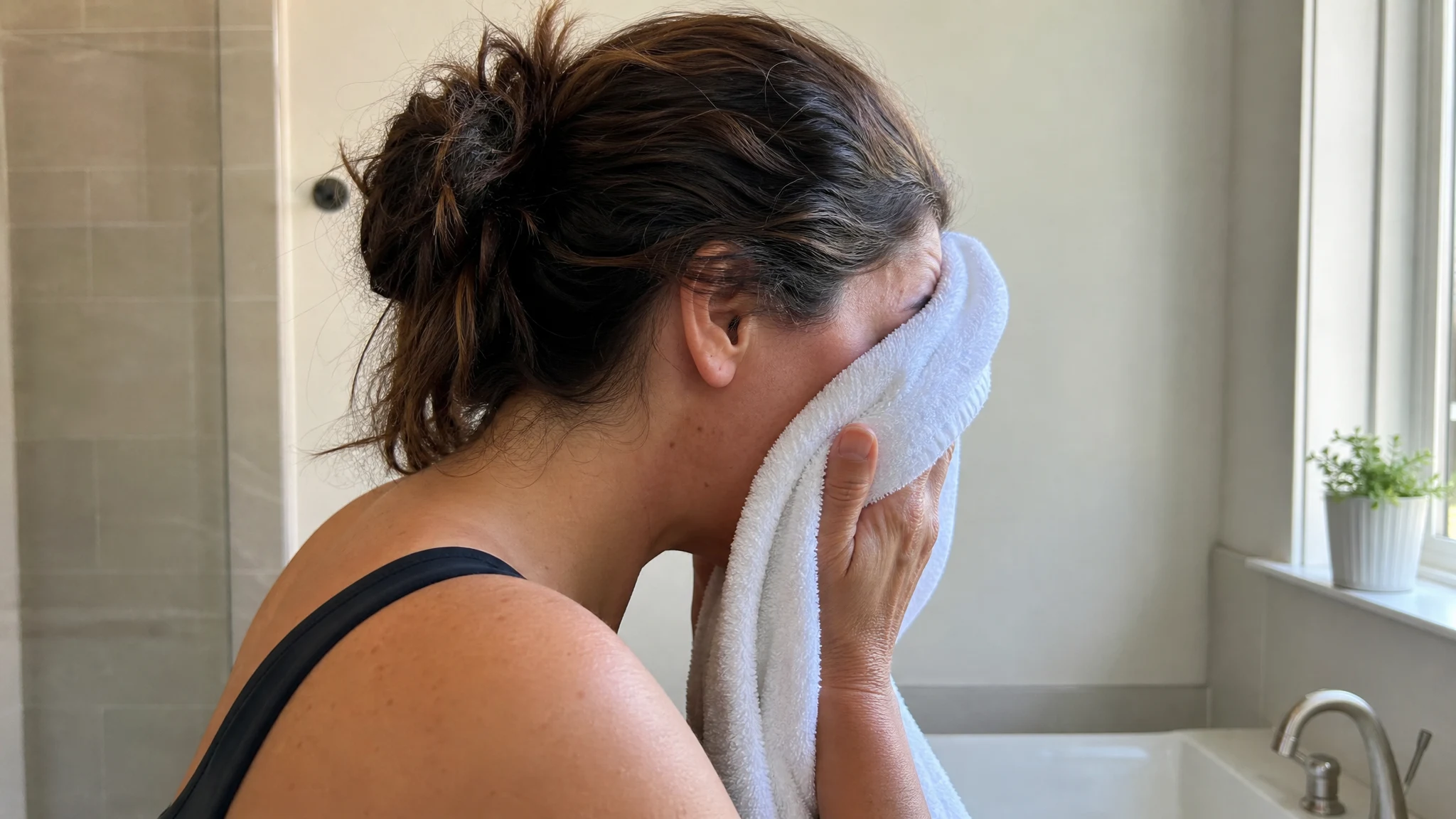
Turmeric Oil and Dark Spots: Which Turmeric Is Studied?
"Turmeric" on a label can mean the powder, a curcumin-rich extract, curcumin itself, or a steam-distilled essential oil, and the research behind skin-tone claims tends to involve only one of those at a time. Sort the claim by material before anything else, and most of the confusion clears up. Ours is the distilled oil, sold for aroma and cosmetic use, and we do not claim it fades spots.
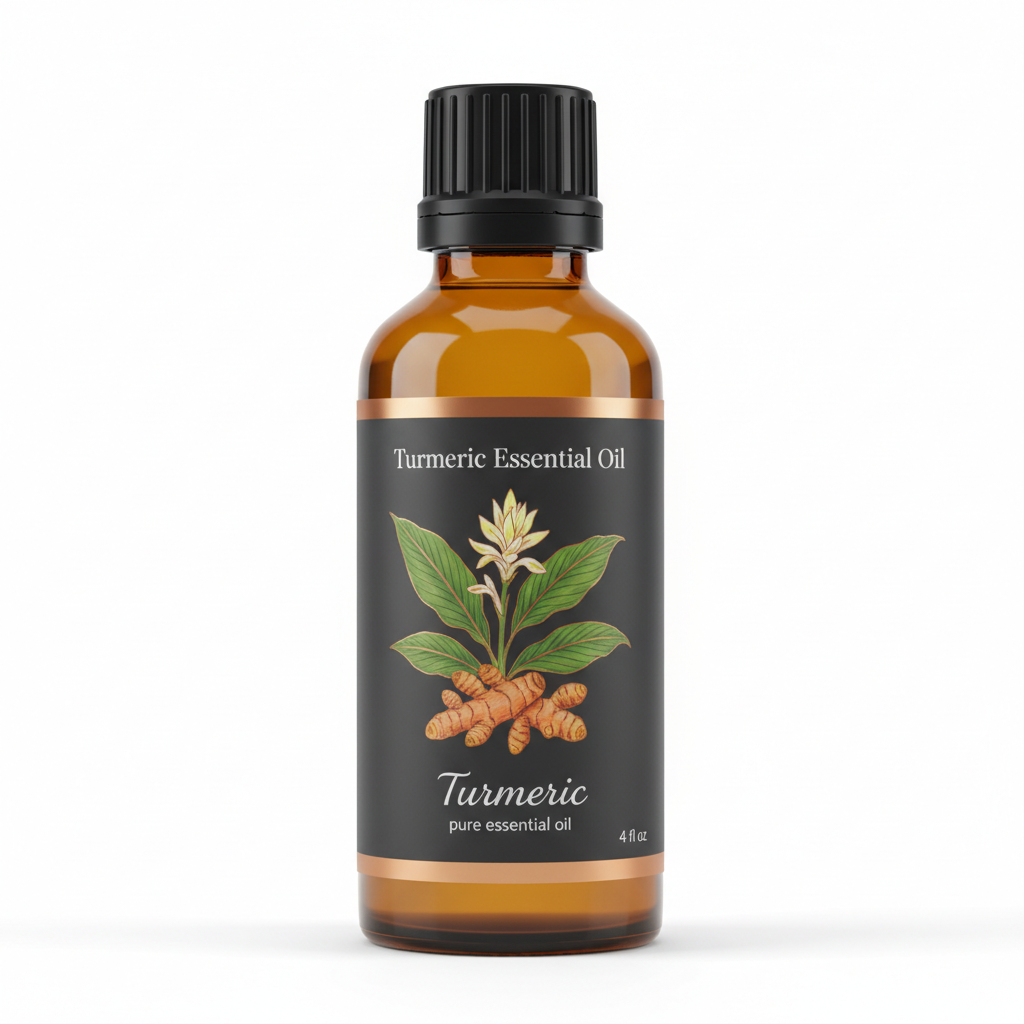
Turmeric Essential Oil
Our own Turmeric Essential Oil, in sizes from 0.5 oz to bulk.
From $12.99
Shop Now →The study everyone cites
The result most often borrowed for "brightening" copy is a cell-culture experiment. Researchers treated mouse melanoma cells with ar-turmerone, one of the aromatic compounds in turmeric, and found it reduced melanin production and the activity of the pigment enzyme tyrosinase, with stronger effects than curcumin in the same dish. The authors suggested it might be worth exploring for freckles and melasma (Aromatic-turmerone inhibits α-MSH and IBMX-induced melanogenesis by inactivating CREB and MITF signaling pathways).
It is a fascinating finding, and also a good example of why a dish is not a face. The test compound was purified, the cells were mouse cells, and the abstract does not report a concentration you could convert into a percentage in a bottle. A compound bathing cells has to cross the outer skin and reach pigment-making cells at comparable levels, and nothing in the paper addresses that. Reasoning from it, the paper is a reason to design a human study, not a reason to expect an effect from a diluted oil. Our GC-MS report leaves its three largest peaks unnamed, so we do not give an ar-turmerone figure for our oil either.
What the clinical reviews cover
Systematic reviews of turmeric and curcumin in skin conditions describe the clinical evidence as early and limited. One looked at 18 human studies across conditions including acne, photoaging, psoriasis and vitiligo (Effects of Turmeric (Curcuma longa) on Skin Health: A Systematic Review of the Clinical Evidence); another, restricted to randomised trials of curcumin, lists conditions such as psoriasis, radiation dermatitis and vitiligo (Evaluation of curcumin for dermatologic conditions: a systematic review). Neither lists hyperpigmentation. A review of the turmeric oil literature adds that clinical studies on the oil and its constituents are scarce (Turmeric (curcuma longa) rhizome essential oil: analytical profile of authenticated and commercial samples, safety and pharmacology review). In an overview of treatments for dark circles, curcumin appears among natural agents, though the authors name other ingredients as having the more significant reported benefits (Management of periorbital hyperpigmentation: An overview of nature-based agents and alternative approaches).
Why a gentle approach matters on pigmented skin
There is also a reason to be careful that runs the other way. In India, kumkum, a cosmetic powder traditionally based on turmeric, is a well-documented cause of dermatitis that can show up as darkened patches. In a series of 46 patients, 35 had pigmented contact dermatitis and 11 had allergic contact dermatitis, though the leading patch-test reactions were to preservatives and gallates rather than turmeric (Kumkum-induced dermatitis: an analysis of 46 cases). A second study patch-tested 18 people and concluded that both dyes and turmeric contributed (Kumkum-induced allergic contact dermatitis: Are we missing the actual culprit?). That was a powder with additives, not our oil, but it illustrates a general point: irritation and skin tone can be linked, so patch testing and a light hand are good habits on any pigmented skin.
A reading habit for skin claims
Skin-tone claims are everywhere, and a few reading habits make them less confusing. Look for the ingredient form first: powder, extract, curcumin or distilled oil. Then look for the setting, whether a dish of cells, a mouse or a person. Finally look for who looked at the result and how. A claim that skips any of those steps is telling you a story, not showing you a measurement. It takes a minute, and once you start doing it you will notice how many pages leave out the very details that matter.
How we would use the oil
We would enjoy it for what it is. Turmeric oil has a warm, earthy, gingery aroma with a woody-spicy edge, and it can sit in a diffuser, a perfume blend or a lightly scented body oil. For skin, our guidance is 0.5% to 2% in a carrier oil, a patch test first, and a start at the low end. The oil carries turmeric's aroma without the pigment that stains raw powder, though it is wise to keep it away from light fabrics until you know how it behaves. Our skin post covers who should skip it, the turmerones and curcumin explainer describes what is in the bottle, and the research overview places studies on a map.
In the meantime, the oil does have a pleasure of its own. Open the bottle and let the scent speak: warm and earthy first, then gingery, with a woody-spicy edge that lingers as a base to middle note. That is the experience we are happy to stand behind, and it needs no claims at all.
If uneven tone concerns you, a dermatologist can tell you what is behind it and what is worth trying. We will stick to the aroma.
Turmeric Essential Oil
Turmeric Essential Oil from our own shop, in sizes from 0.5 oz to bulk.
From $12.99
Shop Now →Sources & Further Reading
- Aromatic-turmerone inhibits α-MSH and IBMX-induced melanogenesis by inactivating CREB and MITF signaling pathways
- Effects of Turmeric (Curcuma longa) on Skin Health: A Systematic Review of the Clinical Evidence
- Evaluation of curcumin for dermatologic conditions: a systematic review
- Turmeric (curcuma longa) rhizome essential oil: analytical profile of authenticated and commercial samples, safety and pharmacology review
- Management of periorbital hyperpigmentation: An overview of nature-based agents and alternative approaches
- Kumkum-induced dermatitis: an analysis of 46 cases
- Kumkum-induced allergic contact dermatitis: Are we missing the actual culprit?