Using Turmeric Oil on Skin: Dilution and Patch Test
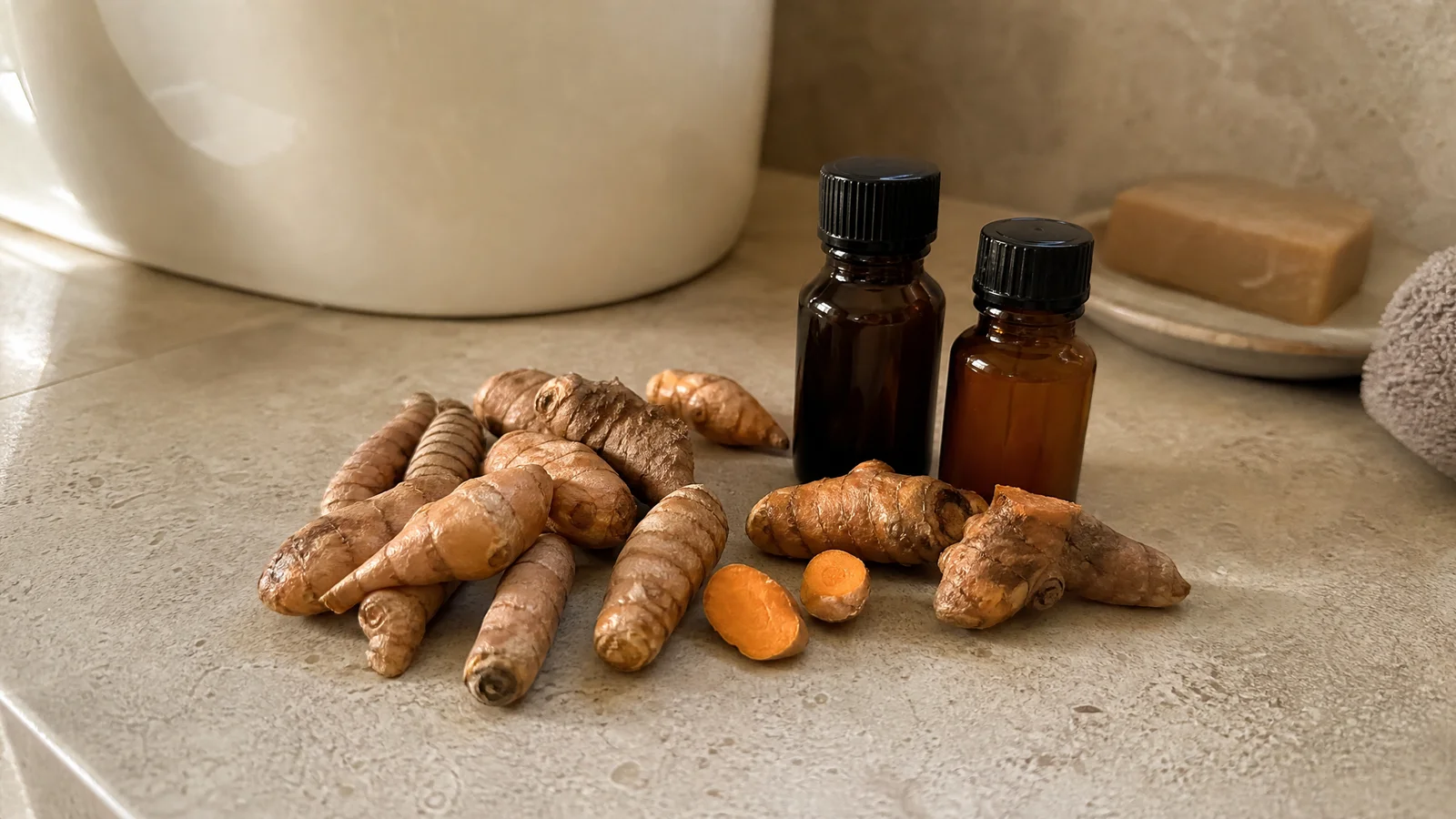
Buying a bottle of turmeric oil because of what you read about turmeric and skin is a bit like buying orange peel because you liked the juice. They come from the same plant, but they are different materials. Once that clicks, the question stops being "what will this do" and becomes "how do I enjoy this aromatic oil on my skin in a way that is sensible?" That one has a clear answer.

Turmeric Essential Oil
Our own Turmeric Essential Oil, in sizes from 0.5 oz to bulk.
From $12.99
Shop Now →Oil, powder and curcumin are three different things
Most of the excitement about turmeric on skin comes from research on turmeric or curcumin products. A systematic review of clinical studies screened 234 articles and included 18, covering ingested and topical turmeric and curcumin in people with a range of skin conditions, and its authors described the published studies as limited (Vaughn, Branum and Sivamani, Effects of Turmeric (Curcuma longa) on Skin Health: A Systematic Review of the Clinical Evidence). Those were not diluted essential oils. Curcumin is not volatile, so steam distillation leaves it behind; what ends up in our bottle is the aromatic fraction of the rhizome. The 2026 review of the oil itself notes that clinical studies of turmeric oil are scarce (Saavedra et al., 2026).
That is no reason to put the bottle back. It simply means we describe it for what it is: a warm, earthy, gingery aroma that can be diluted into a body oil or a blend you will enjoy using.
Dilution is the real recipe
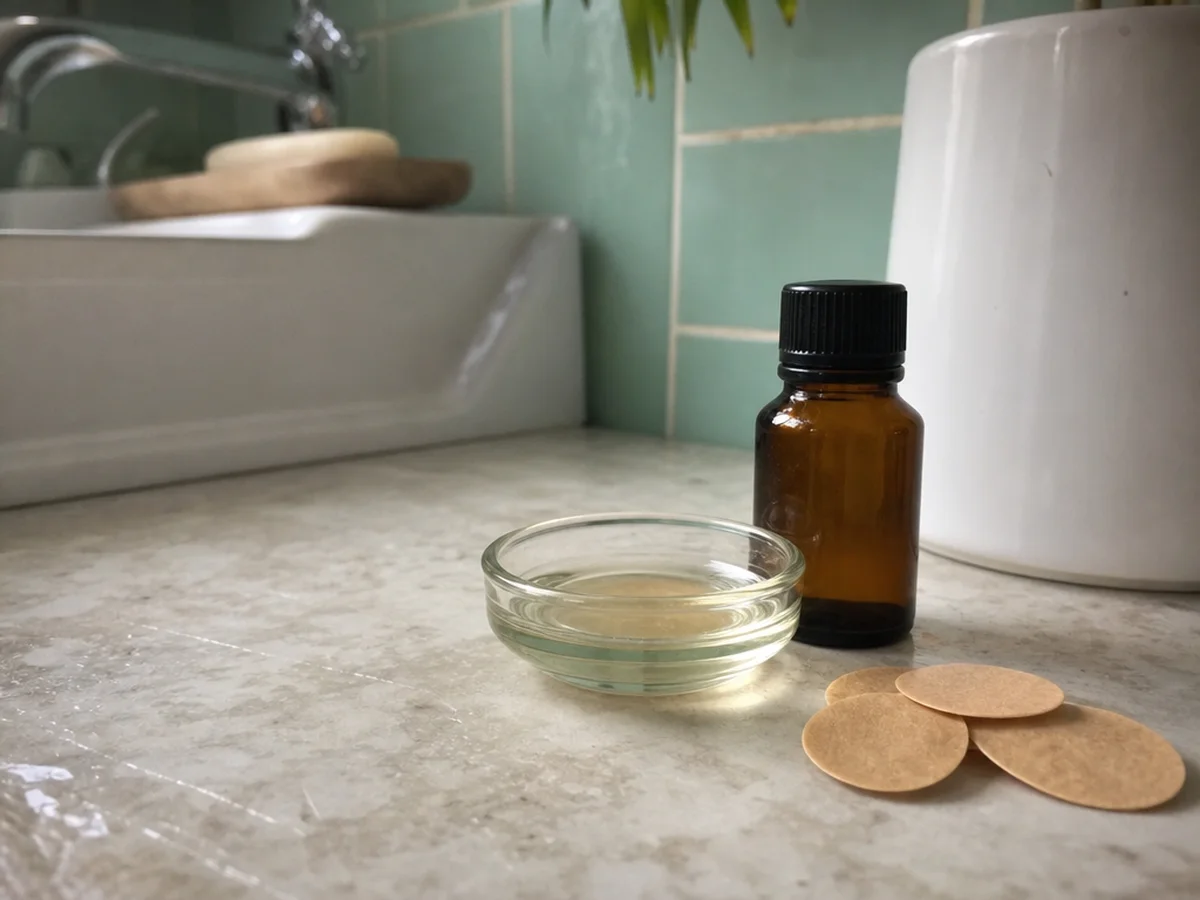
We sell the oil neat, so the maths is yours. Our guidance is 0.5% to 2% in a carrier oil such as jojoba or sweet almond, patch tested first and kept away from the eyes. Turmeric oil can be sensitising for some people, so we like to begin at the bottom of that range. Here is the arithmetic, at the usual 20 drops per ml and 29.57 ml in an ounce:
| Strength | Drops per 1 oz of carrier |
|---|---|
| 0.5% | about 3 |
| 1% | about 6 |
| 2% | about 12 |
Droppers differ, so a scale or a measuring syringe is more dependable than counting. The 2% line is the top of our range, not a target, and we suggest 0.5% for a first try and for the face.
The published skin data on the oil are modest. The Saavedra review reports that the oil, tested at 4% on the forearms of 25 volunteers, showed no irritating or sensitizing effects, and that undiluted oil under occlusion was slightly irritating to the abraded skin of rabbits. That is a small body of evidence, which is exactly why we would rather stay low and test than lean on one number.
Try to choose a carrier you already know and like for the first blend. When only one thing in the bottle is new, any change you notice is easier to understand.
The week-long patch test
The American Academy of Dermatology describes a simple method: pick a quarter-sized spot, such as the underside of the arm, where the product will not be rubbed or washed away, apply it twice a day for seven to ten days, and watch for red, itchy or swollen skin. If a reaction appears, wash it off and do not use the product again (How to test skin care products). Test the diluted blend, not the neat oil, and use the carrier you plan to apply. Delayed reactions are why the full week matters.
The National Center for Complementary and Integrative Health notes that topical curcumin can cause hives or itching (Turmeric: Usefulness and Safety). That is about curcumin rather than our oil, but it is a good reminder that skin is individual.
One small habit makes the whole process easier: write the date and the percentage on the bottle of your blend. When you come back to it, you will know exactly what you made, and if you ever want to adjust, you have a number to change rather than a guess to repeat.
When to skip or ask first
- Broken, sore or reaction-prone skin. If a rash or other skin reaction occurs, America's Poison Centers advises stopping right away and gently washing it off (Essential oils: Poisonous when misused). For eczema-prone skin, our allergy-first post is a useful read.
- Around the eyes. Keep the oil away from them; this post explains why.
- Pregnancy, nursing or a medical condition. Our disclaimer asks you to consult your physician first.
- Children and pets. Keep the bottle out of reach of both.
If you are hoping to address a particular skin concern, a dermatologist is the right person to ask, and we do not sell this oil for that purpose.
What to look for in a finished blend
When you open a bottle of diluted turmeric oil, the scent should be warm and earthy with a gingery edge, softer than the neat oil. If it seems loud, you have probably added too much, and the fix is to start a fresh bottle with fewer drops rather than topping up. If it seems faint, give it a day before judging, since a scent often settles after blending.
Enjoying it
With a measured dilution and a clean patch test behind you, turmeric oil is a pleasure to work with in a body oil. It also pairs nicely with other warm scents; our post on a turmeric body oil shows how the numbers look in a finished blend, and the dilution guide covers small batches. Go gently, take notes of your own, and let the aroma lead.
Turmeric Essential Oil
Turmeric Essential Oil from our own shop, in sizes from 0.5 oz to bulk.
From $12.99
Shop Now →Sources & Further Reading
- Vaughn AR, Branum A, Sivamani RK. Effects of Turmeric (Curcuma longa) on Skin Health: A Systematic Review of the Clinical Evidence. Phytotherapy Research, 2016. PubMed 27213821
- Saavedra DI et al. Turmeric (curcuma longa) rhizome essential oil: analytical profile of authenticated and commercial samples, safety and pharmacology review. Pharmaceutical Biology, 2026. PMC12954815
- American Academy of Dermatology. How to test skin care products. aad.org
- NCCIH. Turmeric: Usefulness and Safety. nccih.nih.gov/health/turmeric
- America's Poison Centers. Essential oils: Poisonous when misused. poison.org/articles/essential-oils