Is Turmeric Oil Phototoxic? Sun and Skin Explained
Citrus oils have taught everyone to ask a sensible question about any essential oil that goes on skin: what happens if I step into the sun? For turmeric oil the honest answer is encouraging but not finished, and it is worth explaining how the evidence stands so you can decide how to use it.
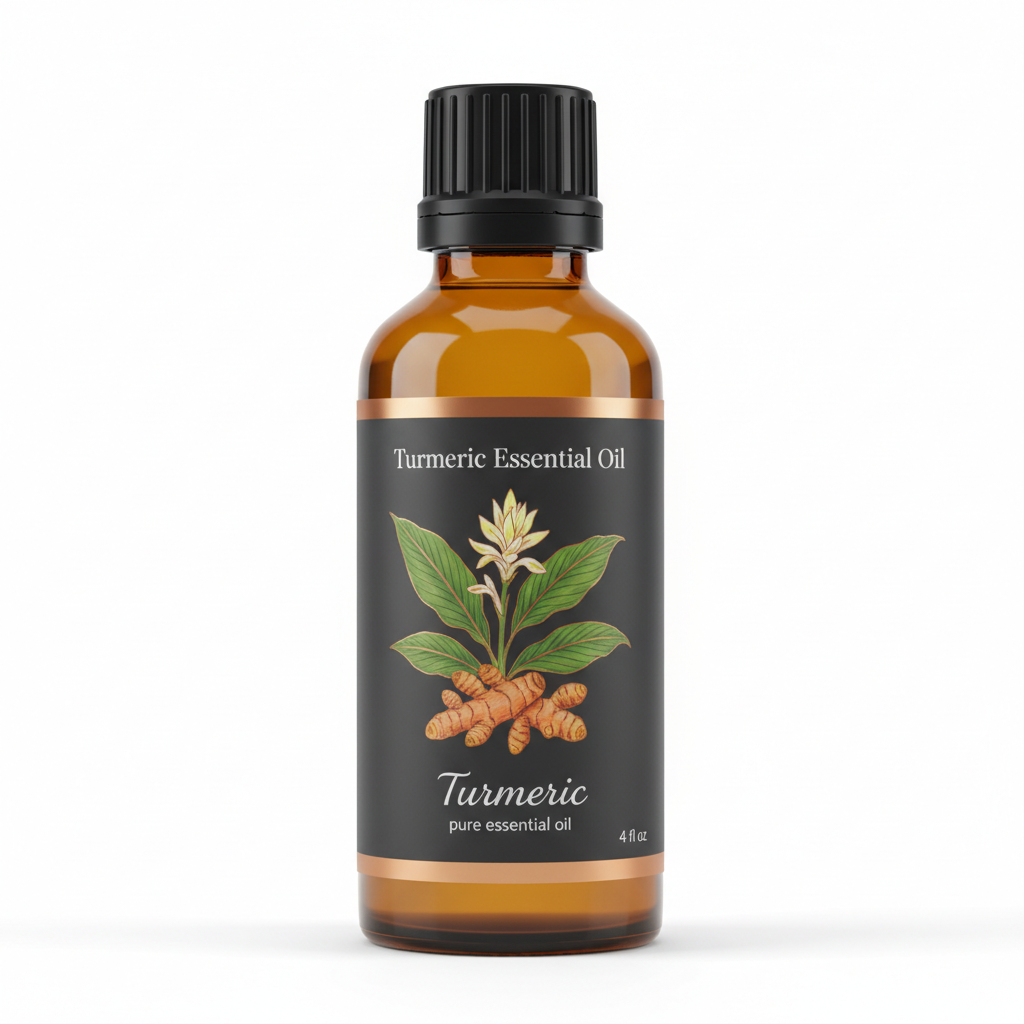
Turmeric Essential Oil
Our own Turmeric Essential Oil, in sizes from 0.5 oz to bulk.
From $12.99
Shop Now →What phototoxic actually means
A phototoxic reaction is skin damage that needs both a plant compound and ultraviolet light. A 2024 review in the journal Life describes how photosensitising compounds, mainly furanocoumarins and psoralens, enter the skin and stay latent until activated by UVA light, setting off a chemical reaction that can damage skin cells. It describes this as non-immunologic, meaning it is not an allergy, and notes that symptoms typically appear within 24 to 48 hours, sometimes up to two or three days later. The plant families it names most often are the carrot family (Apiaceae), the citrus family (Rutaceae) and the fig family (Moraceae).
Turmeric belongs to none of them. It is a ginger-family rhizome, and as far as we can tell the furanocoumarins behind classic reactions are not what its oil is known for. That is reasoning from the plant's family, not a test, but it is a reassuring place to start.
What the safety reviews report
Two published reviews address turmeric oil's skin safety directly. A 2026 review in Pharmaceutical Biology, written by authors from an essential oil company, reports that turmeric essential oil was determined not to be phototoxic and that a 4% application to the forearms of 25 volunteers produced no irritating or sensitising effects, both attributed to a 1983 fragrance-ingredient monograph. A 2018 review of Curcuma oils in Nutrients says Curcuma oils are generally considered nonphototoxic and relays the same 4% volunteer result. Both reviews are relaying the same old source, and we have not read the original, so we treat this as a good sign and not a final word.
There is also a nuance worth being open about. The 2024 review's table of phototoxic plants lists turmeric, with curcumin and turmerone named as the compounds, and cites a review of light-activated plant compounds in photodynamic therapy. That literature is about the pigment and related compounds being used with light on purpose in a lab or clinic, not about reactions to a diluted aromatic oil. Curcumin does not distil over into our oil, but turmerones are part of the aromatic fraction, so we do not call the matter closed.
How we suggest using it
We make no sun-related claim of any kind for our oil, and our recommendation follows from the evidence above: treat turmeric oil like any new leave-on product. A few habits cover it.
- Dilute. Our guidance is 0.5% to 2% in a carrier oil, and we suggest starting at the lower end; at that level, a 30 ml (about 1 oz) bottle holds roughly 3 to 12 drops.
- Patch test first, on the inner forearm, which is our standing advice for every skin use.
- Cover up if you are heading out. Applying a turmeric blend to skin that clothing will cover is an easy precaution, and it is our own, not a rule from the studies. Shade and ordinary sun habits apply as always.
- Keep it for the evening if you like. Saving a leave-on blend for after a shower, or for covered skin, takes the question off the table entirely.
It also helps to keep two reactions apart. Phototoxicity, as the 2024 review describes, is not an immune reaction. A skin reaction without sunlight is a separate matter, and turmeric oil can be sensitising for some people, which is why a patch test and a light hand are our advice whatever the weather. If you notice redness or a rash that appears after sun on skin you have treated, stop using the product and speak with a doctor or pharmacist.
It also helps to think about timing. Because a leave-on blend stays on your skin for hours, the evening, after a shower and before you settle in for the night, is the easiest time to use one. You can enjoy the scent and the ritual without planning your outfit or your day around it.
Keep a simple record
A habit we like for any new leave-on blend is a short note: the date you made it, the percentage, where you patch tested and what the spot looked like afterward. If redness ever shows up, a note tells you what you used, where and when, and that makes a conversation with a doctor or pharmacist much easier. Without it, memory fills in the gaps unreliably.
Storing the oil itself
Our oil comes in an amber bottle, which helps with light, and we suggest keeping it in a cool, dark place away from heat and direct sun. A shelf in a cupboard works well. Keep the cap tight and the bottle upright, and keep it out of reach of children and pets. Typically it keeps three to four years unopened, so a bottle you look after will still be there when you are ready to use it.
For more on carriers and ratios, our guide to diluting turmeric oil covers the arithmetic, and turmeric oil safety and side effects cover the wider picture. Our after-shower body oil is built around exactly that evening habit.
Turmeric oil rewards patience and a light touch, and the evening is a lovely time for it.
Turmeric Essential Oil
Turmeric Essential Oil from our own shop, in sizes from 0.5 oz to bulk.
From $12.99
Shop Now →Sources & Further Reading
- New Insights Concerning Phytophotodermatitis Induced by Phototoxic Plants. Life, 2024
- Turmeric (curcuma longa) rhizome essential oil: analytical profile of authenticated and commercial samples, safety and pharmacology review. Pharmaceutical Biology, 2026
- Dosoky NS, Setzer WN. Chemical Composition and Biological Activities of Essential Oils of Curcuma Species. Nutrients, 2018