How Turmeric Oil Is Made: Steam Distillation Explained
Turmeric oil is not pressed or squeezed out of the root, and it is not soaked out either. It is carried off on steam, condensed back into liquid and skimmed from the water. That is why it smells of the rhizome yet has none of the spice's powdery character, and why two bottles of "turmeric oil" can be quite different. Here is how the process works and what to take from it when you shop.

Turmeric Essential Oil
Our own Turmeric Essential Oil, in sizes from 0.5 oz to bulk.
From $12.99
Shop Now →What the steam does
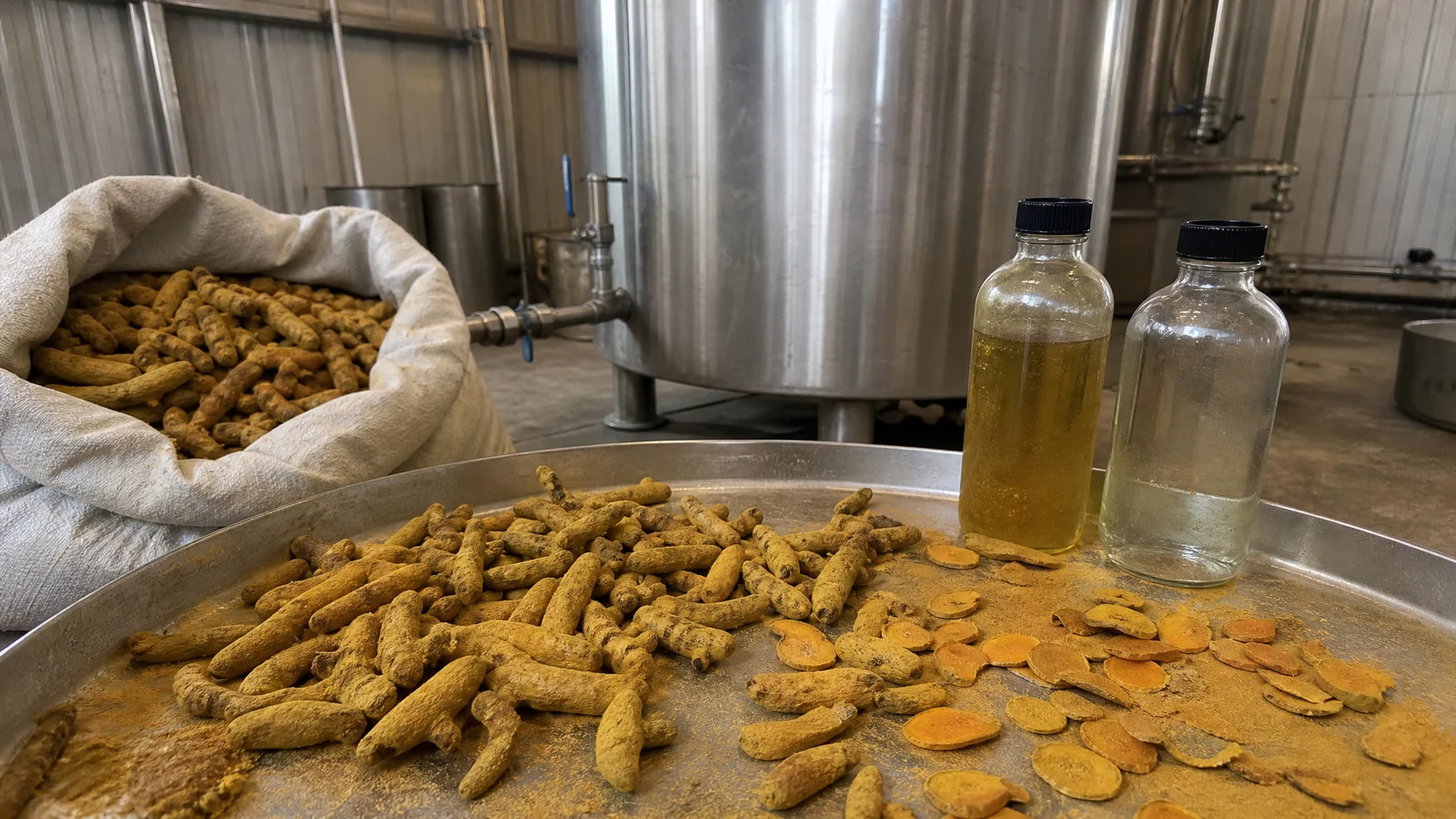
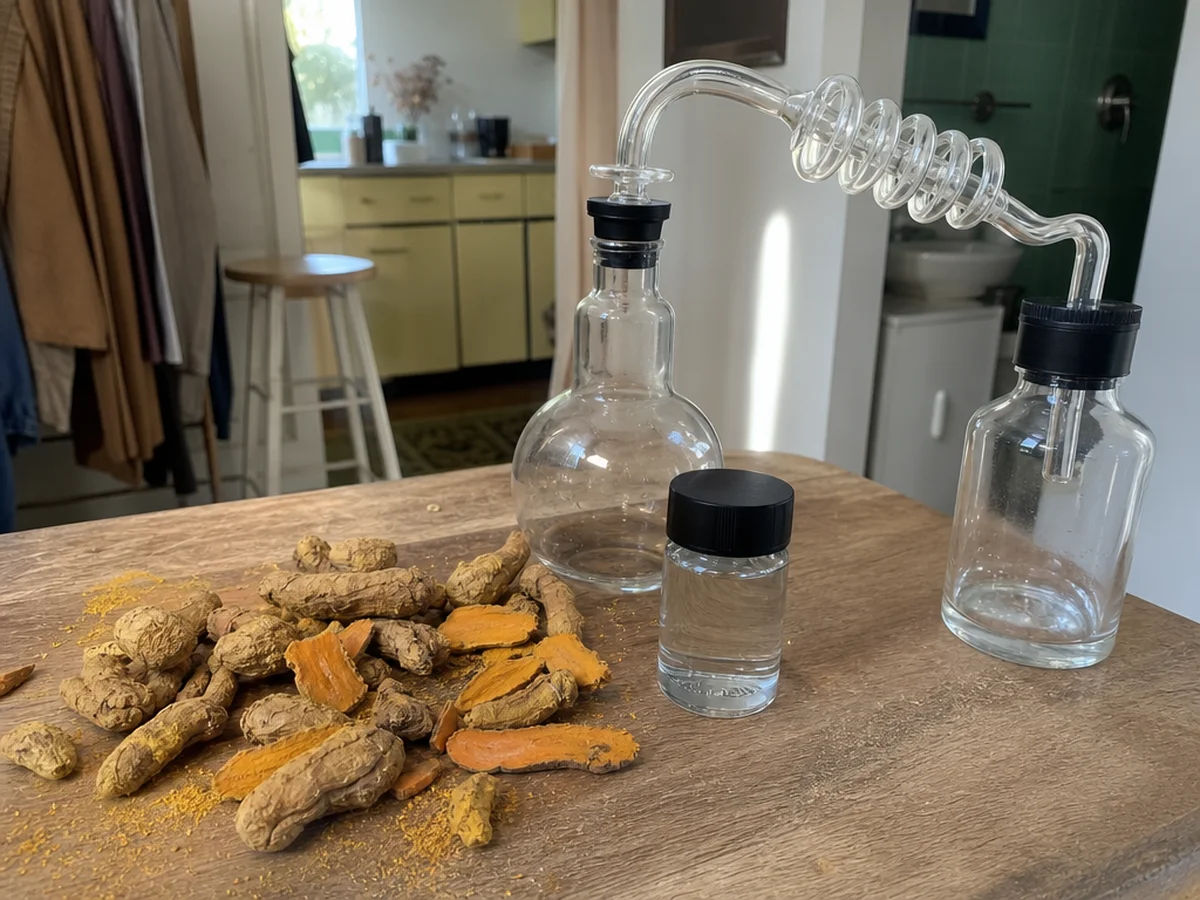
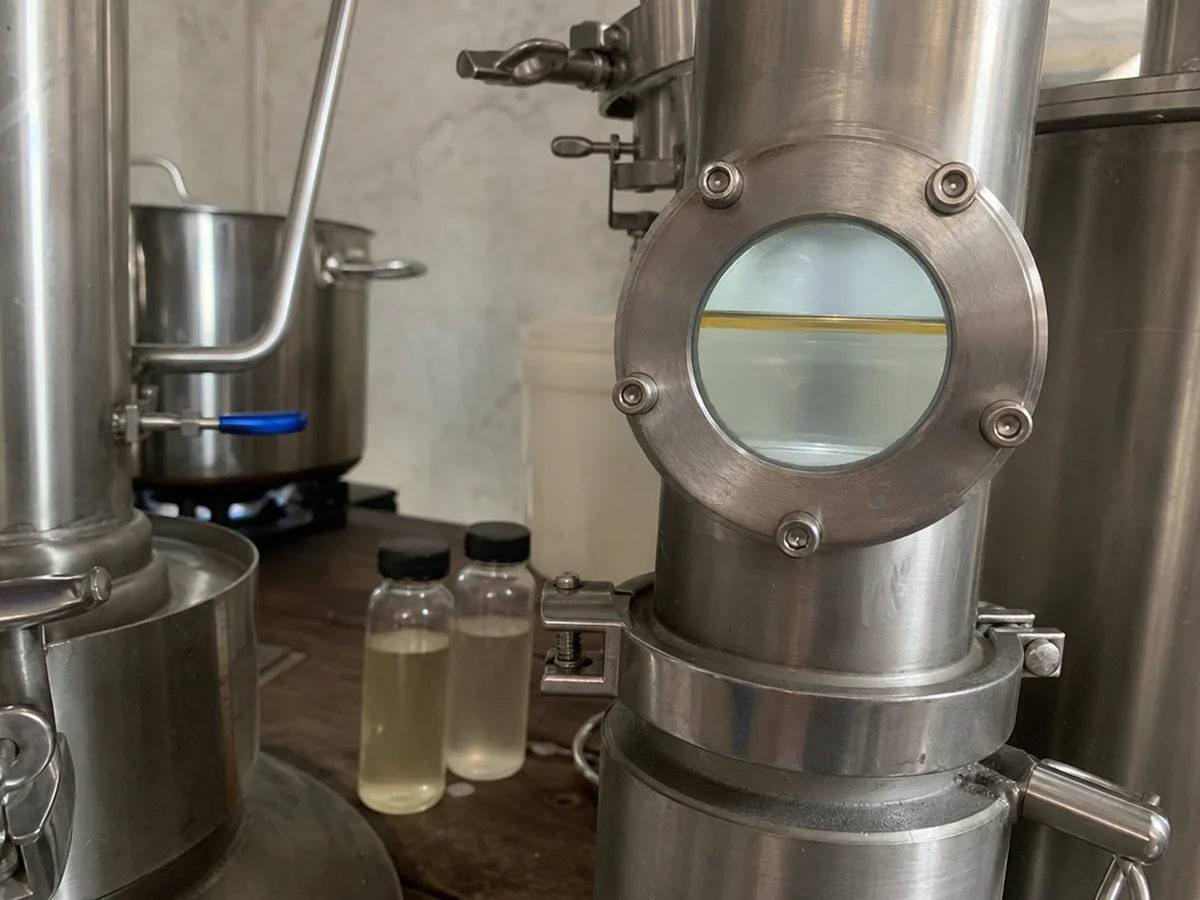
In the usual setup, dried or fresh rhizome sits on a perforated plate, and a blast of steam rises through it, dragging the volatile aroma compounds along. The vapour is cooled, the liquid separates into oil and water because the two do not mix, and the oil is collected. A 2020 review of turmeric rhizome oil in Plants calls steam distillation the most commonly chosen method, and notes its drawbacks at industrial scale: it takes a lot of raw material and a lot of time.
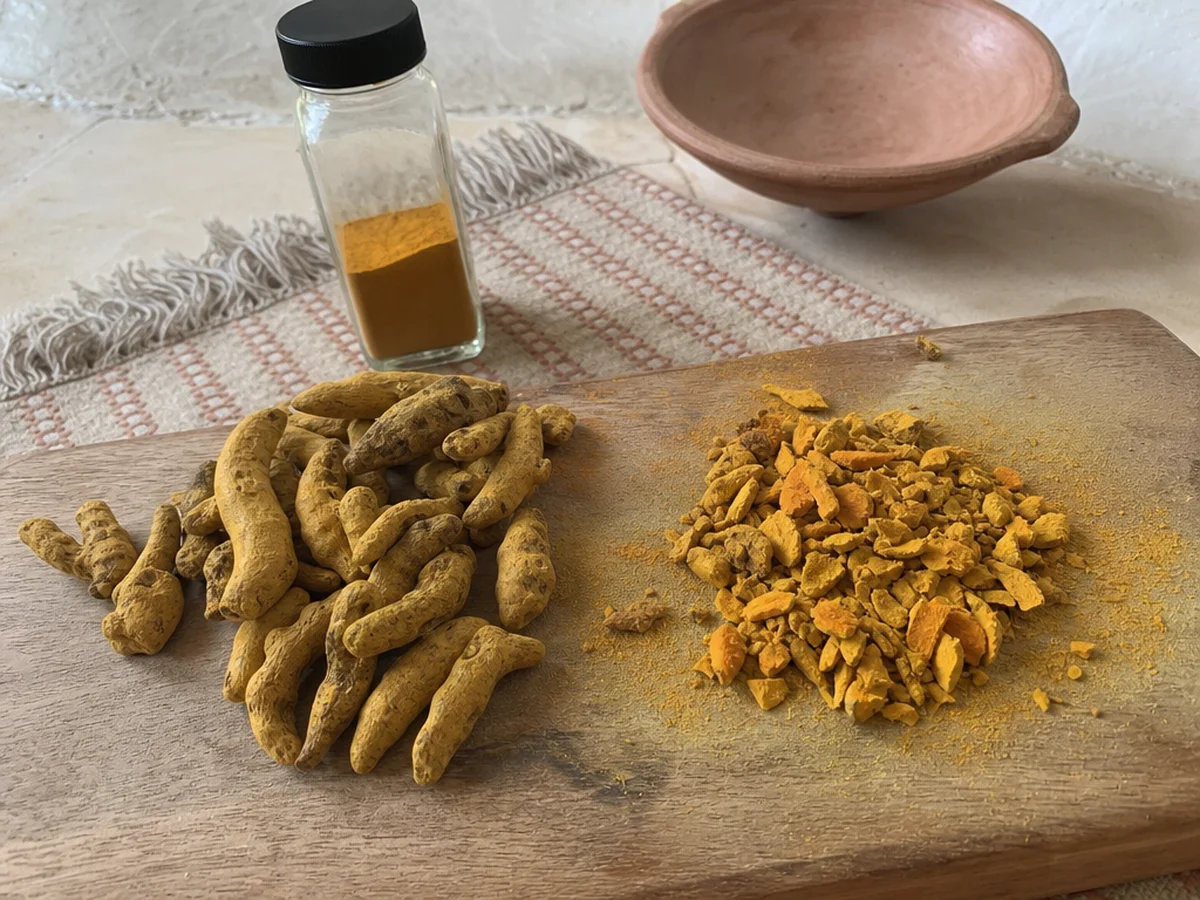
Only what vaporizes with steam makes the trip. Curcumin, the yellow-orange pigment people associate with turmeric, is not volatile, so it stays behind. The turmerones, ar-turmerone chief among them, and zingiberene are volatile, so they travel. This is the neat chemical reason an essential oil and the spice are different products, and our post on oil versus powder picks up what that means in practice. Our oil is steam-distilled from dried rhizomes of Curcuma longa, and the Certificate of Analysis we publish for one batch lists the part used as root and the method as steam distilled.
Picturing it in your own kitchen
You can understand the principle with a saucepan. When water boils in a covered pot, steam collects on the lid and drips back down; a still does the same job on purpose, and carries the aroma of whatever sits in its path. Anyone who has simmered a pot of spices has smelled the idea at work: the scent fills the room because the aromatic molecules ride the steam. A still just captures that scent, cools it and gathers it into a small amount of oil.
Why no two turmeric oils are identical
Distillers tune things: fresh or dried material, how mature the rhizome is, the shape of the still. The same Plants review tabulates studies, and the spread is striking. Oil from fresh Ecuadorian rhizome was rich in ar-turmerone (45.5%), while oil from fresh rhizome in France had only 7.7% ar-turmerone and more alpha-turmerone, terpinolene and zingiberene. A study the review cites even raised oil yield by 13% for rhizomes just by adding continuous water circulation to the distillation. Different cultivars, equipment and counting methods sit behind those numbers, so they are not a ranking of countries. The takeaway is easier: "turmeric oil" names a family of oils.
Fresh versus dried matters too. In a 2026 analysis of authenticated oils, sesquiterpenes were more abundant in the oil from ground material, while monoterpenes were more prevalent in the oil from fresh rhizomes.
The sensible questions to ask a seller
That variety is why we would ask any seller, ours included, three plain questions. Which species and plant part? Which method? Does a chemistry report tie to the batch you are buying, with a batch number and an analysis date, and does it name the major compounds? We tell you the first two directly: Curcuma longa, rhizome, steam distillation. The GC-MS report we publish is qualitative, carries no batch number or analysis date, and leaves its three largest peaks unnamed, so we cannot give you the turmerone share of our oil from it. If you need a batch-matched report, ask us in writing through the contact page before ordering. Our GC-MS walkthrough goes line by line, and turmerones and curcumin explains the chemistry in more depth.
What to notice in the finished oil
A distilled oil like this one is aromatic first. When you open a bottle of ours, expect a warm, earthy, gingery scent with a woody-spicy edge, a base to middle note that develops over several minutes. Put a drop on a strip of paper and come back to it after a while, and you will notice the opening freshness settling into something deeper. That slow change is one of the best clues that you are smelling a real distillate and not a one-note fragrance.
Why the process explains the bottle
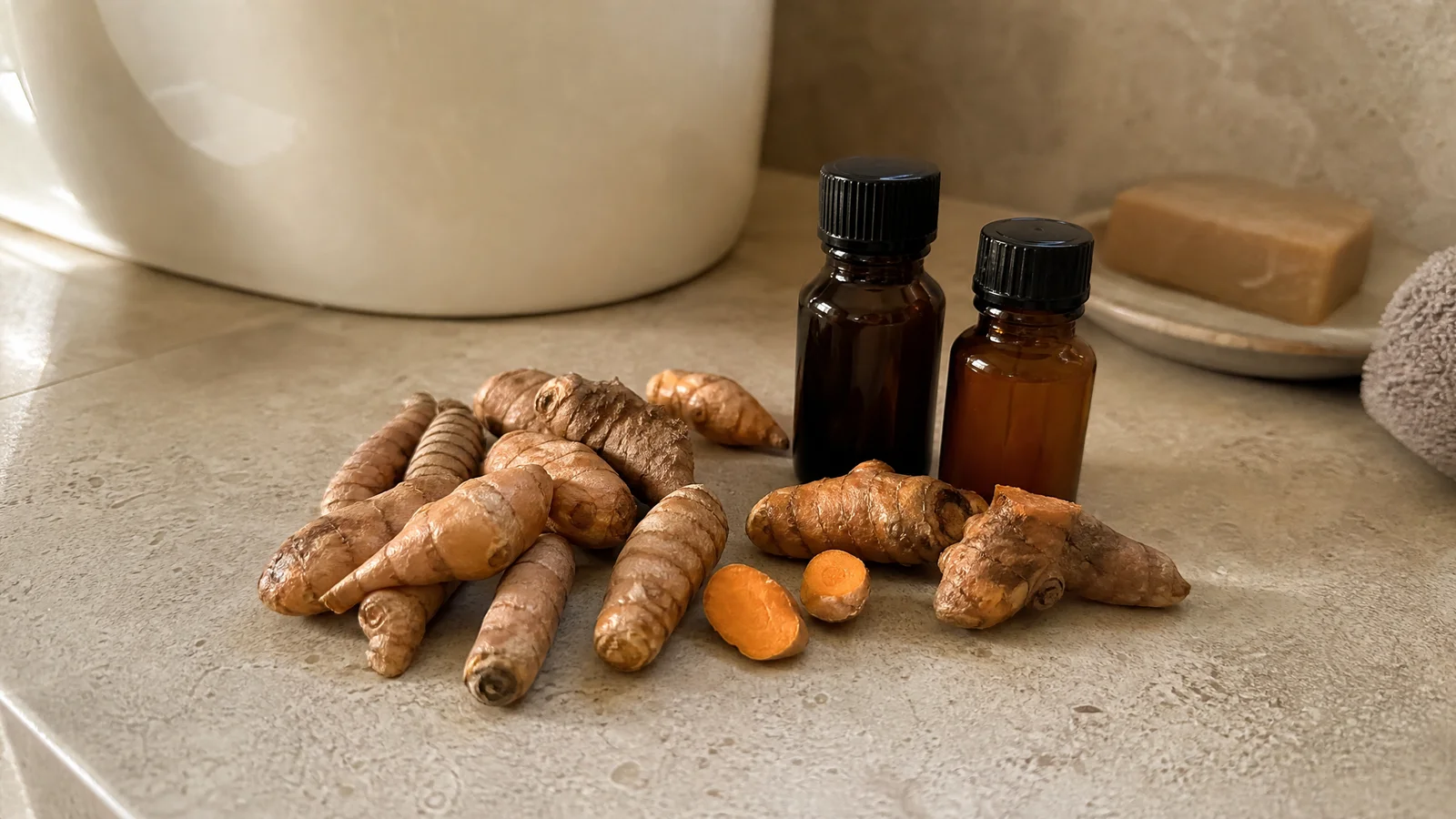
Once you know the steps, a bottle makes more sense. The amber glass, the small size and the tight cap all suit something made of fragile aroma molecules that heat and light can wear down. We recommend keeping it in a cool, dark place, and putting the cap back on straight away after every use. A distillate is the whole rhizome's perfume packed into a few millilitres, so it is worth looking after.
Using a concentrated distillate
A distillate this concentrated is a thing to dilute. It does not mix with water, and we recommend 0.5% to 2% in a carrier oil for skin, always with a patch test first, with the lower end a sensible place to start. Our dilution guide has the arithmetic. It is for aromatic and cosmetic use only, never for internal use.
There is something quietly satisfying about the whole process: a dried root, some steam, a cooling coil and a few drops of fragrant oil. The picture is simple even when the chemistry is not, and knowing it makes a bottle easier to appreciate.
Turmeric Essential Oil
Turmeric Essential Oil from our own shop, in sizes from 0.5 oz to bulk.
From $12.99
Shop Now →Sources & Further Reading
- Ibáñez MD, Blázquez MA, 2020. Curcuma longa L. Rhizome Essential Oil from Extraction to Its Agri-Food Applications. A Review. Plants. europepmc.org/article/MED/33379197
- Saavedra DI et al., 2026. Turmeric (curcuma longa) rhizome essential oil: analytical profile of authenticated and commercial samples, safety and pharmacology review. Pharmaceutical Biology. pmc.ncbi.nlm.nih.gov/articles/PMC12954815