Turmeric Oil vs Powder: What Each One Is For
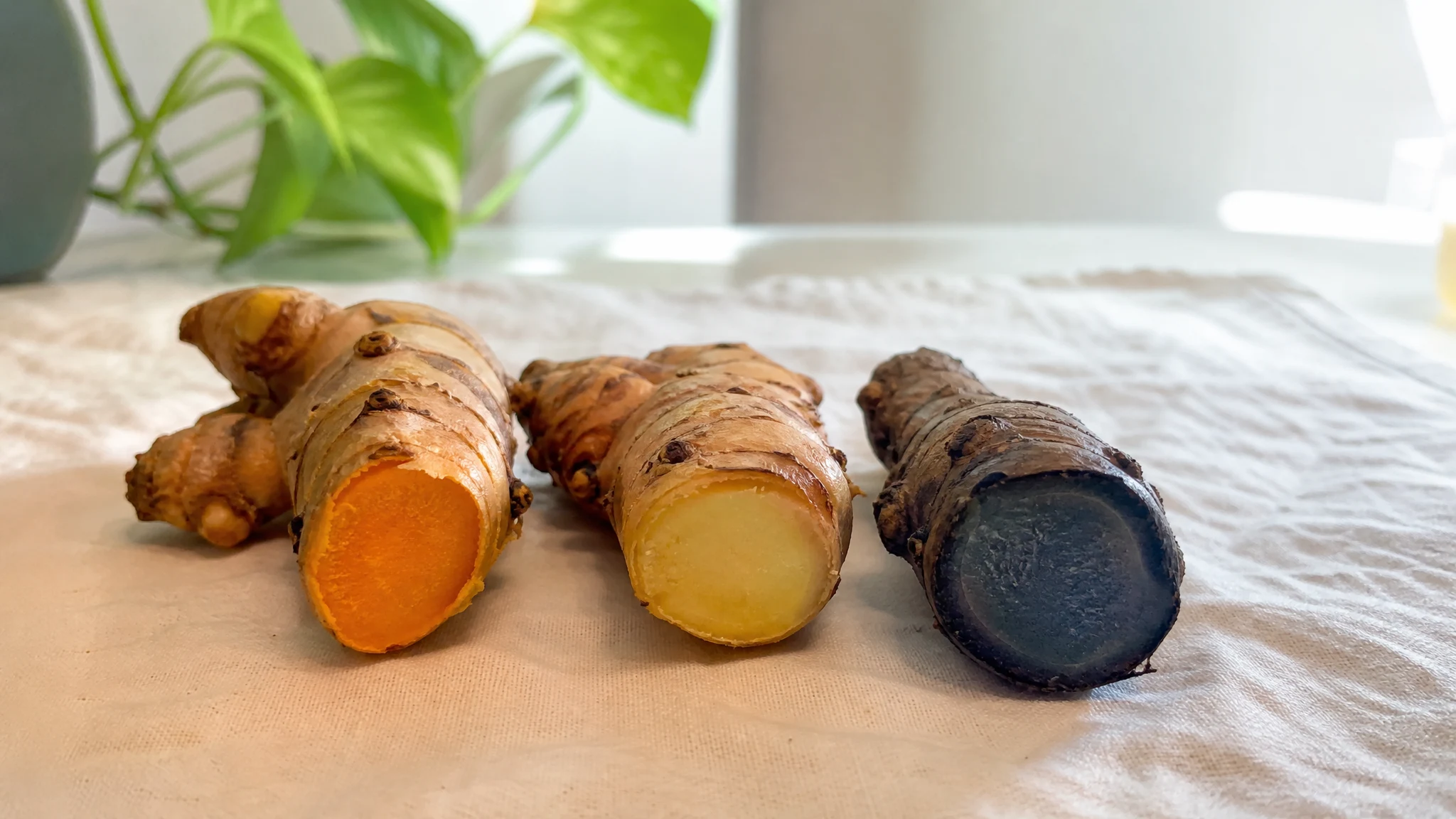
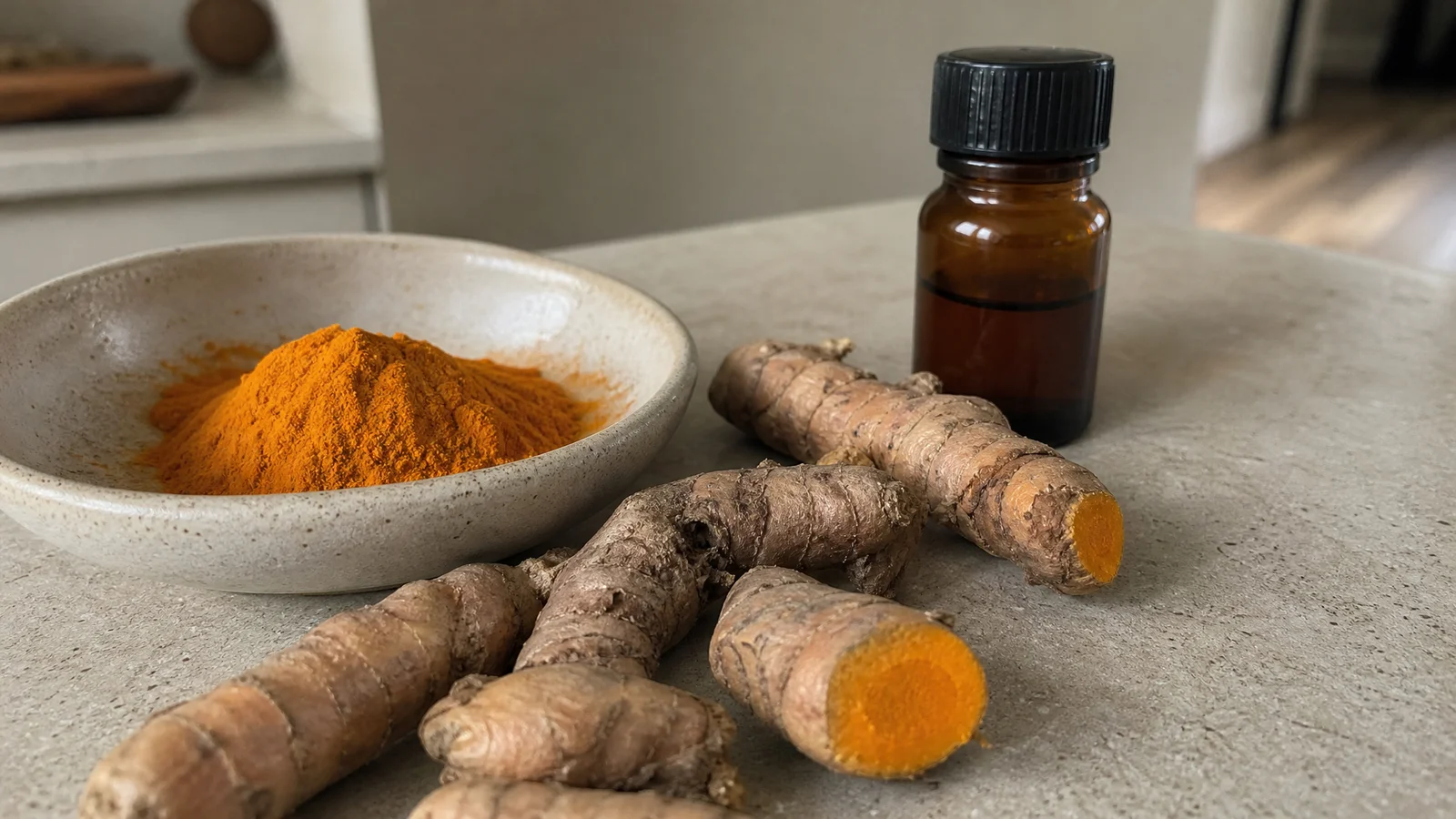
Open a jar of turmeric powder and the first thing you notice is the color, a staining, unmistakable yellow-orange. Open a bottle of turmeric oil and the story changes: it is all about the aroma. Both come from the same rhizome, but steam distillation sorts what the root holds into two very different piles, and understanding that split makes it much easier to know what each one is for.

Turmeric Essential Oil
Our own Turmeric Essential Oil, in sizes from 0.5 oz to bulk.
From $12.99
Shop Now →Two families of molecules, two jobs
Turmeric rhizomes contain two major groups of compounds. Curcuminoids, curcumin among them, carry the yellow color. Turmerones carry the characteristic aroma and flavor. That is how a 2026 review of turmeric essential oil puts it, and it explains nearly everything about powder versus oil.
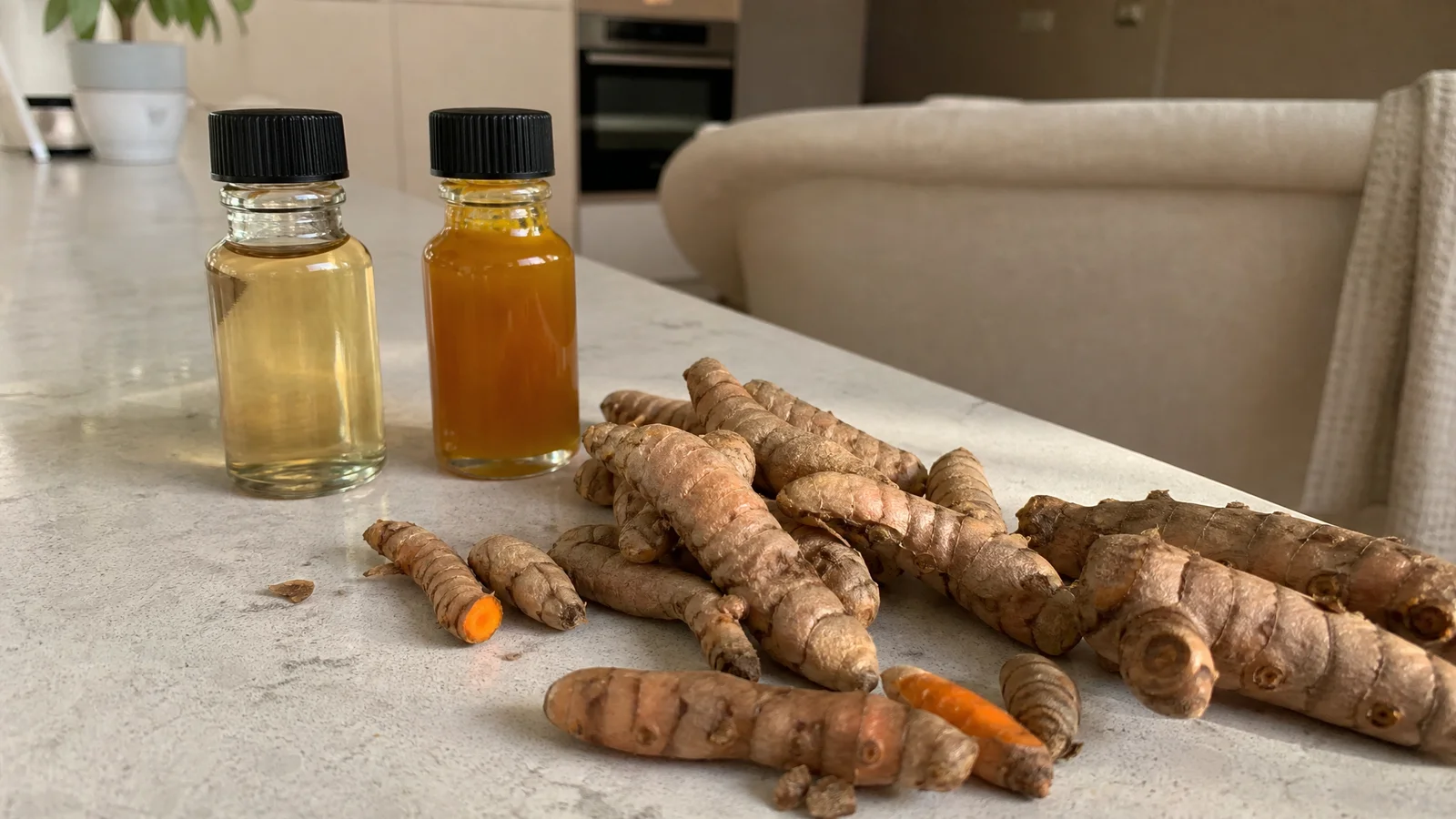
Curcumin is not volatile, which means it does not travel with the steam during distillation. What comes over is the volatile fraction, which is where the aromatic compounds live. A rhizome holds only a small amount of it, roughly 0.5% to 6% by weight according to the same review, which is why a little bottle of oil represents a lot of root. The powder is the whole ground rhizome with its pigment, fiber and starch, and the oil is the fragrant essence of it.
On a spoon and on a strip
You can feel the difference between the two before you read a word about chemistry. Powder is something you see: a fine, dry, bright heap that clings to the spoon and the countertop. Oil is something you smell. Put a drop on a paper strip and the strip tells you nothing visual at all, while the aroma slowly opens into something warm, earthy and gingery with a woody-spicy edge. One speaks to the eyes and the other to the nose, and that is a decent summary of the whole comparison.
What that means for color
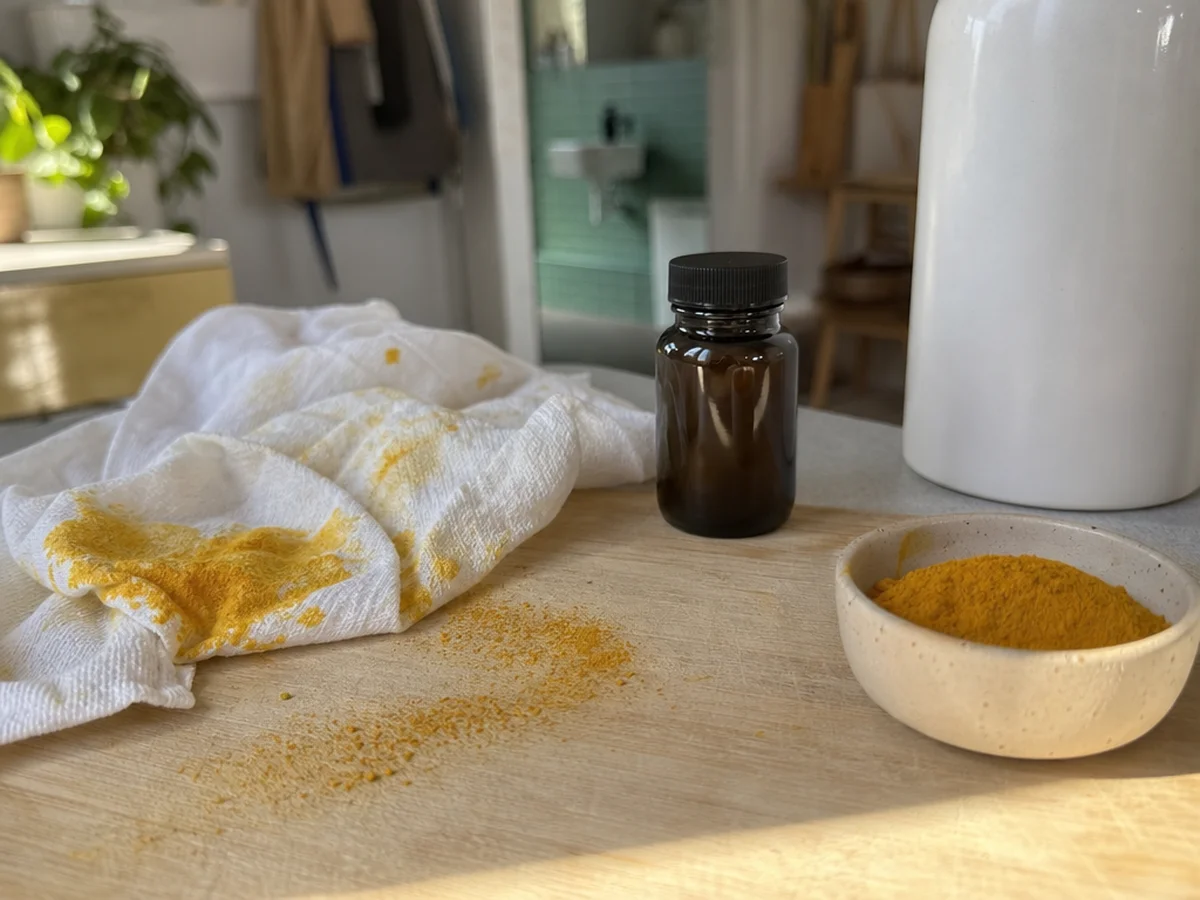
We describe the oil as carrying turmeric's aroma without the pigment that stains raw powder, and soap makers should know that it will not reliably color a batch on its own. If you want a golden bar or candle, a supply shop's powder or colorant is the tool for it. If you want the aroma, the oil does that job. We do not describe the oil's own shade, because the pigment is not what it is for.
A side note on buying powder
The same appetite for brightness has a darker side in the spice trade. A 2019 study across Bangladesh found lead chromate, a yellow pigment, added to turmeric roots during polishing in 7 of the 9 major turmeric-producing districts it surveyed, because merchants and consumers prefer a vivid color. That is one reason a deep, glowing yellow is not proof of quality in a powder, and a reason to buy kitchen turmeric from sources you trust.
For a sense of scale on the spice itself, a 2006 analysis of 28 turmeric and curry powder products found the best turmeric powder averaged 3.14% curcumin by weight, while curry powders varied widely. Even the top powder is mostly everything else. Powder is a food ingredient and an interesting one, and none of this makes it better or worse than the oil, only different.
Which jar for which job
- Cooking: the powder, from a grocery or spice shop. Our oil is never for food or drinks.
- Colouring a project: a powder or colorant from a supply shop. The oil will not reliably colour a batch on its own.
- Scenting a diffuser, a perfume or a handmade product: the oil, kept within the dilution guidance for anything that touches skin.
- Anything medical: a conversation with a doctor or pharmacist, not either of these bottles.
Seen that way, the two are not rivals. They are tools for different jobs, cut from the same root.
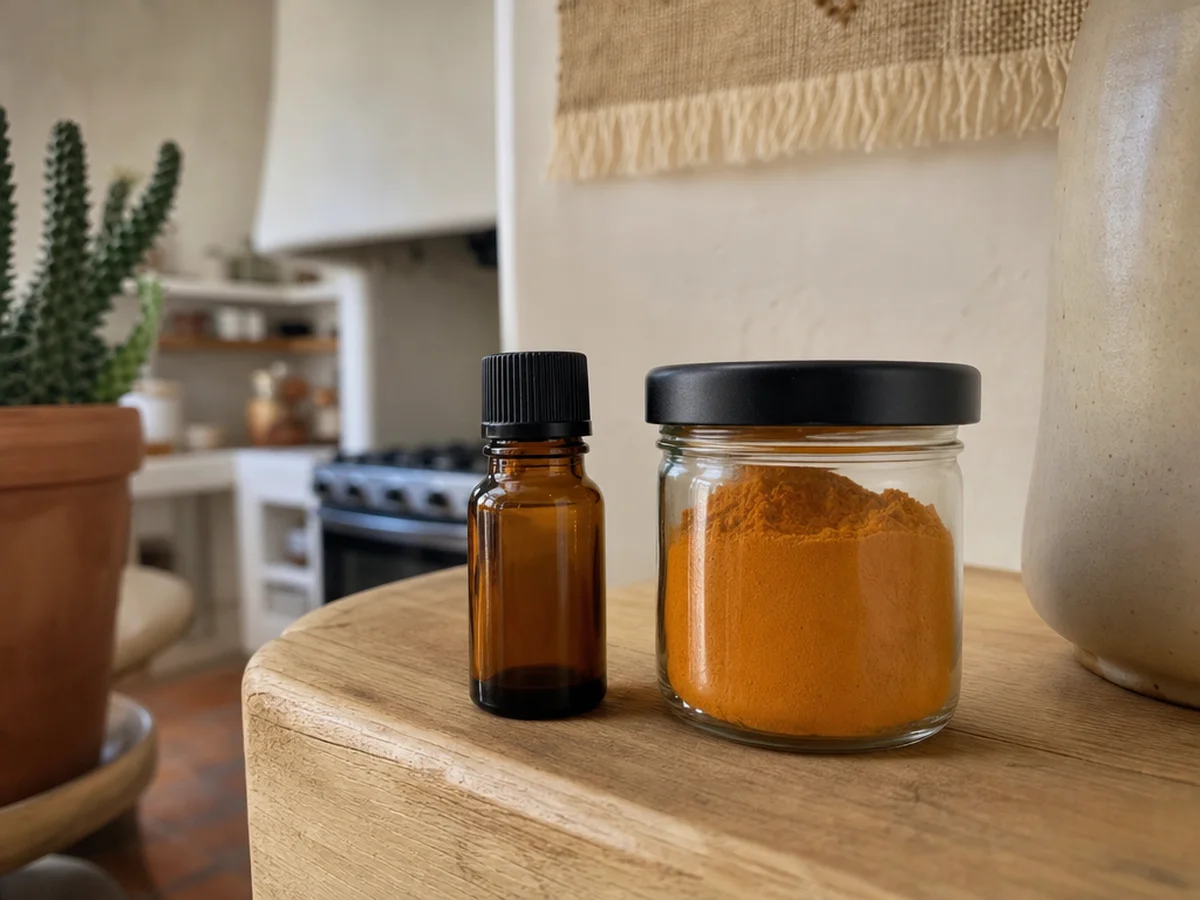
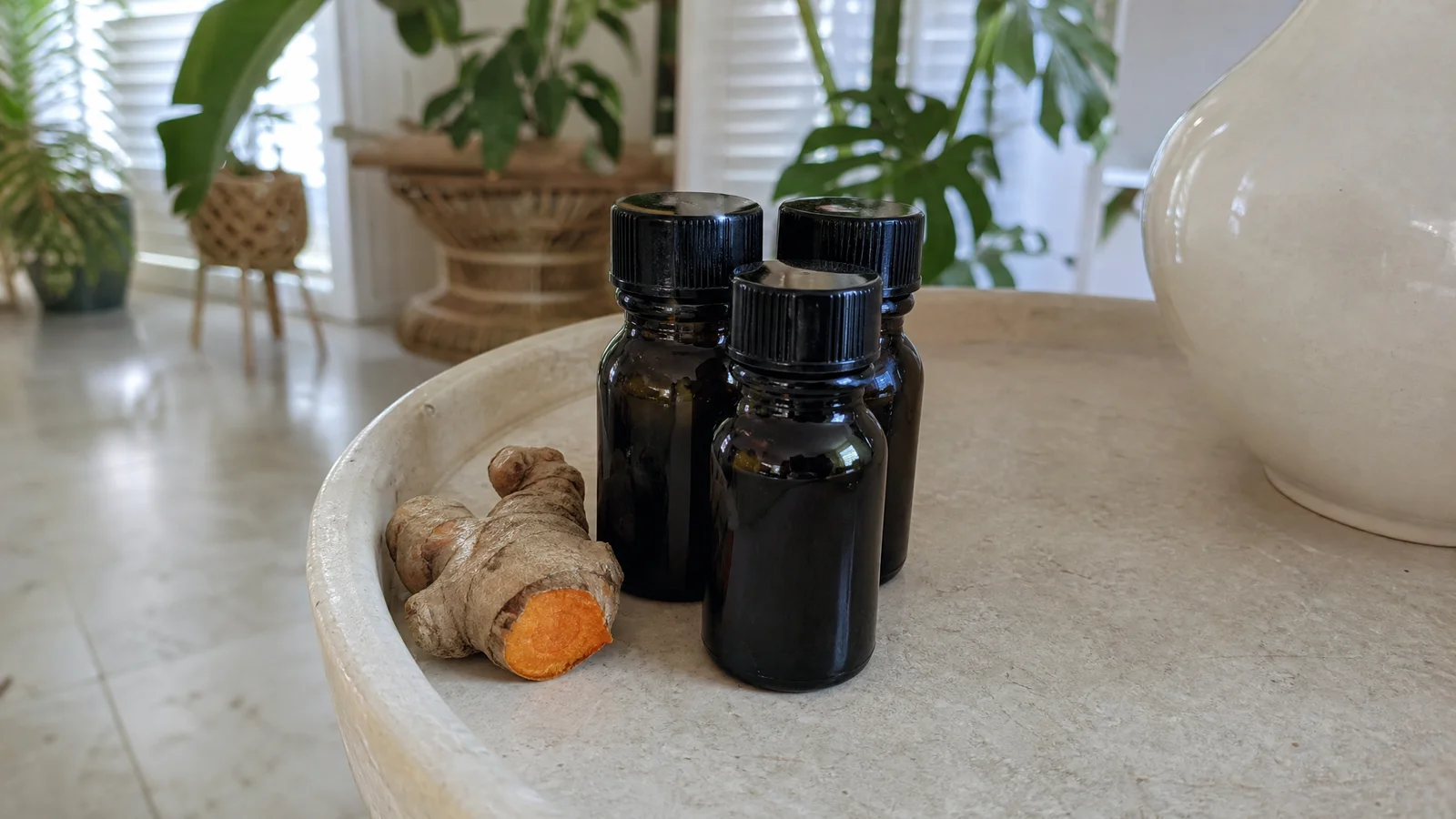
Storage tells the same story. A spice jar belongs in a cupboard away from steam and sunlight, and so does our oil, which comes in an amber bottle and keeps best in a cool, dark place with the cap tight. Neither likes a sunny windowsill, and both reward you for treating them well.
Keeping them in their lanes
We sell the essential oil and nothing else from the turmeric family, so the powder, supplements and kitchen jars come from a grocery or spice shop. Our oil is for aromatic and cosmetic use only, never for internal use, so it should never go in food or drinks, and the powder's reputation does not transfer to it. The National Center for Complementary and Integrative Health says we do not know enough to definitively conclude that turmeric or curcumin is beneficial for any health purpose, which is a good reason to treat the oil as what it is: a lovely aromatic.
If you are curious about the chemistry, our turmerones and curcumin article goes further. Our staining article covers the practical side of pigment, and the steam distillation explainer shows how the oil is made.
We love the oil for its aroma. If you are new to it, give yourself a few quiet minutes with a strip, and notice how different it is from the spice you know.
Powder for the curry, oil for the aroma. Once you see them as two halves of one root, the choice gets easy.
Turmeric Essential Oil
Turmeric Essential Oil from our own shop, in sizes from 0.5 oz to bulk.
From $12.99
Shop Now →Sources & Further Reading
- Saavedra DI et al., 2026. Turmeric (curcuma longa) rhizome essential oil: analytical profile of authenticated and commercial samples, safety and pharmacology review. Pharmaceutical Biology.
- Forsyth JE et al., 2019. Turmeric means "yellow" in Bengali: Lead chromate pigments added to turmeric threaten public health across Bangladesh. Environmental Research.
- Tayyem RF et al., 2006. Curcumin content of turmeric and curry powders. Nutrition and Cancer.
- NCCIH. Turmeric: Usefulness and Safety.