Choosing Turmeric Oil: Which Documents Actually Matter
Standing in front of five bottles that all say "100% turmeric essential oil", it is natural to reach for a brand name you recognise. A better habit is to reach for paperwork. When a research team bought 25 turmeric oils online in March 2025, all labelled as 100% turmeric oil, and put them through GC-MS analysis, four of the 25 were confirmed as inauthentic. The label was identical on every bottle. The chemistry was not.

Turmeric Essential Oil
Our own Turmeric Essential Oil, in sizes from 0.5 oz to bulk.
From $12.99
Shop Now →What that study tells a shopper
That comparison comes from a 2026 review by authors at an essential-oil company, who also profiled authenticated turmeric oils for reference (Turmeric (curcuma longa) rhizome essential oil: analytical profile of authenticated and commercial samples, safety and pharmacology review). The products were not named, so it ranks nobody, and the authors have a commercial interest worth bearing in mind. Its practical message is modest and sound: a label is not evidence of contents, and a GC-MS profile that names the compounds is the usual way to find out. Authenticated oils in the study were dominated by turmerones, the aromatic compounds that give turmeric oil its character, and the review notes that composition shifts with the plant material and how it is handled, so a result near the edge of a range is not automatically a red flag.
Four documents, and what each one can do
A GC-MS report that belongs to your lot
This is the most informative paper a seller can hand you, provided it carries a lot number matching your bottle, an analysis date, a laboratory name, named compounds with percentages, and the method. Missing details make a report less useful than it first appears. If you are comparing sellers, look at whether the dominant compounds are named, not at a tidy summary line.
A certificate of analysis
A certificate usually reports physical properties. The one we publish covers a single batch and lists a measured relative density of 0.941 at 20 C, a refractive index of 1.512 and an optical rotation of +0.68 degrees, each beside its stated range, plus the batch's best-by date. Our reading is that such values confirm a batch sits within an expected range and are handy for spotting drift from one lot to the next, but they do not by themselves identify an oil. That is why we pair them with the next document.
A GC-MS report, as we publish it
Ours is a qualitative report that groups compounds by family and lists named compounds such as zingiberene, ar-curcumene and beta-sesquiphellandrene. Its three largest peaks carry no names, it does not state a batch or analysis date, and it says a comprehensive report is available on request. If you need a batch-matched report with an analysis date and compound names, ask us in writing through the contact page before ordering, and keep the reply. Our line-by-line GC-MS post shows how to read each part.
A safety data sheet, allergen declaration or IFRA certificate
Formulators and resellers often need these for compliance. If your use needs one, ask for it in writing before you buy, since the answer will decide whether a given oil suits your project.
Let the aroma confirm what the paperwork says
Documents tell you one story and your nose tells you another, and the two together are better than either. When a new oil arrives, smell it from the bottle and then from a drop on paper. Turmeric oil should read as warm, earthy and gingery, with a woody-spicy edge, and it should not smell like a candy-shop fragrance or a hardware store. If something about the scent surprises you, write down what you noticed and ask the seller. A good seller will welcome the question, and your notes make the conversation specific.
It is also worth keeping every document you receive in one folder, beside the invoice, with the date. Months from now, when someone asks which batch went into a product, a tidy folder saves a long search.
Questions that cost nothing
Beyond paperwork, a few plain questions separate sellers quickly. Does the label name the species and the plant part? That matters, because black and wild turmeric are different plants with different chemistry, which our species comparison explains. Is the process stated? Steam-distilled oil and a CO2 extract are different materials, and our oil versus CO2 extract post sets them side by side. Is it sold as an essential oil or as a fragrance oil? Our fragrance oil comparison covers that fork.
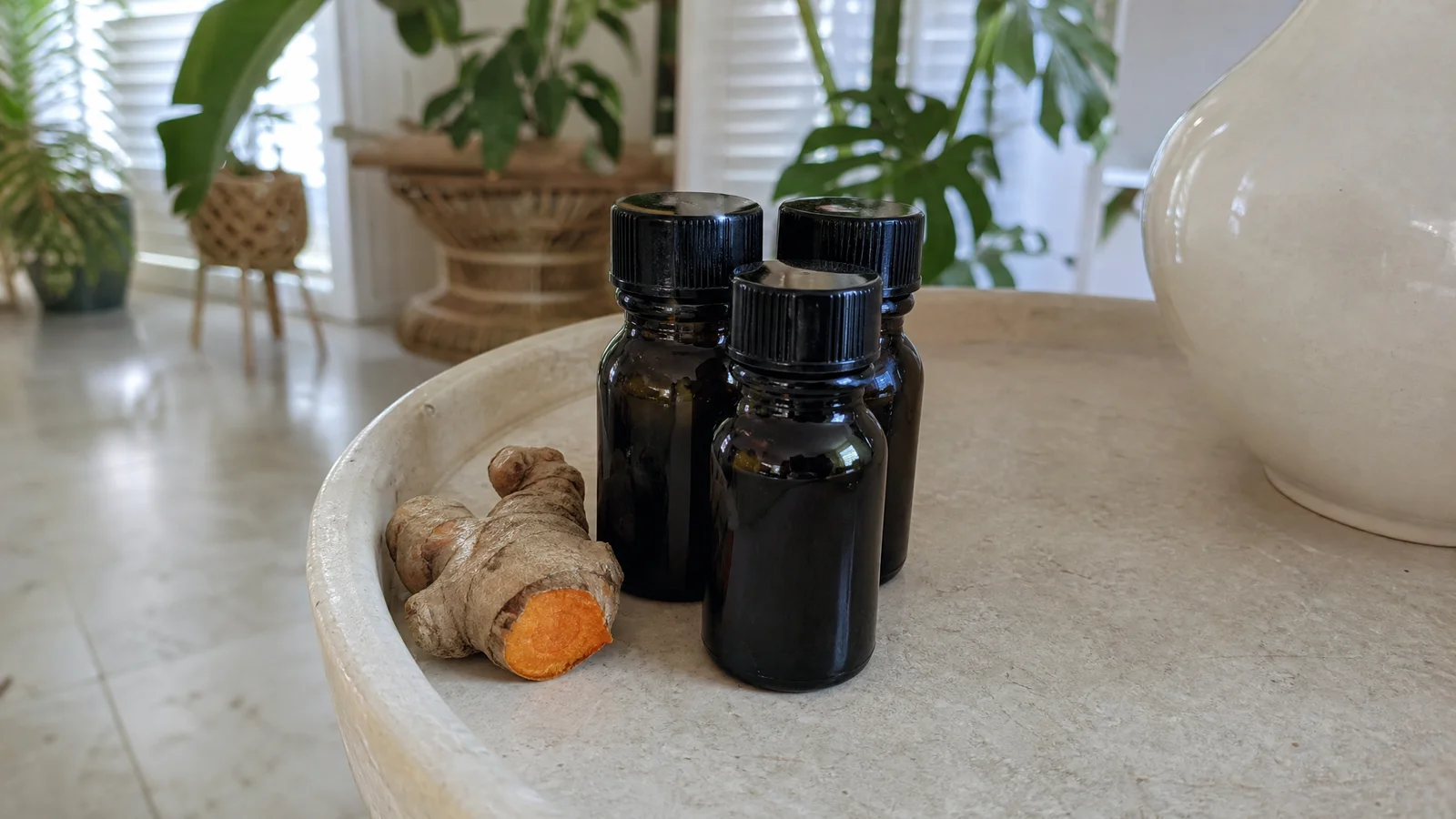
Our own bottle is a steam-distilled Curcuma longa oil, sold neat in nine sizes from half an ounce up to a 400 lb drum. Because it arrives undiluted, we suggest diluting to 0.5% to 2% in a carrier for skin, patch testing first, and using a light hand.
A short checklist to take with you
- The botanical name and plant part appear on the label.
- The process is stated, and it matches what you meant to buy.
- Any report names its batch, its date and its main compounds, or the seller says plainly that it does not.
- You have asked in writing for anything your project needs, and kept the answer.
Whichever seller you pick, hold them to the same standard: the documents are the conversation, and a good seller will be glad to have it.
Turmeric Essential Oil
Turmeric Essential Oil from our own shop, in sizes from 0.5 oz to bulk.
From $12.99
Shop Now →