Turmeric Essential Oil vs Fragrance Oil: Spot the Difference
"Turmeric" on a bottle can mean three quite different things: an essential oil steam-distilled from the rhizome, a fragrance oil composed in a lab to evoke the spice, or a carrier oil with a little turmeric steeped in it. They can sit side by side on a shelf with near-identical labels, and the differences matter if you are making soap, scenting candles or just buying a bottle for the diffuser. Here is how to tell them apart in about thirty seconds.
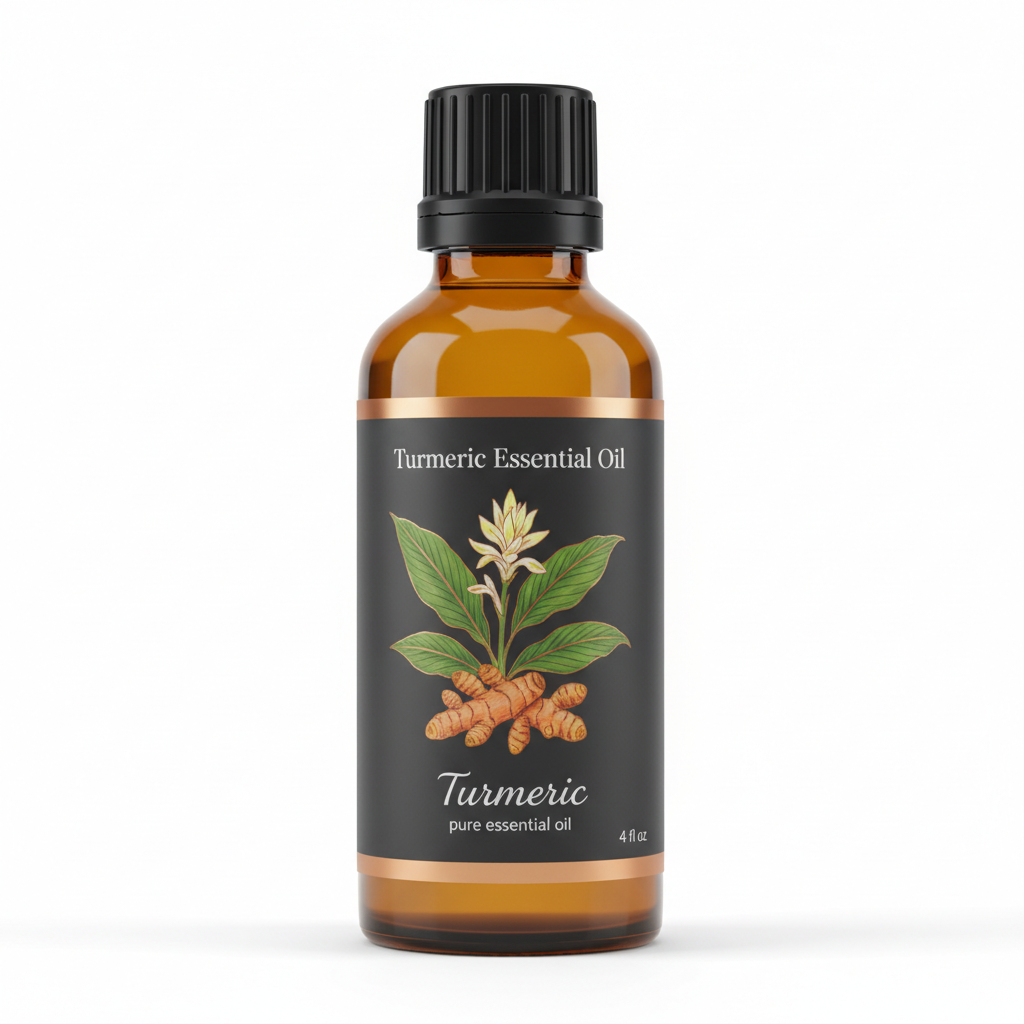
Turmeric Essential Oil
Our own Turmeric Essential Oil, in sizes from 0.5 oz to bulk.
From $12.99
Shop Now →Read the label for the plant, the part and the method
A real essential oil can say what it is. Ours is Curcuma longa, from the rhizome (root), steam distilled, and the Certificate of Analysis we publish for one batch lists the ingredient as "Curcuma longa (Turmeric) Root Oil." A Latin name, a plant part and an extraction method are the three details to look for. When all three are missing and the label only says "turmeric scent," you are most likely looking at a fragrance.
That is not a criticism of fragrance oils, which are designed for a different job. The International Fragrance Association describes fragrance formulas as a blend of natural and synthetic molecules, so a fragrance sold as "turmeric" is a scent target rather than a plant extract. It may contain some turmeric-derived material or none at all.
Why the ingredient list will not settle it
On a finished cosmetic, the FDA explains, fragrance ingredients can be listed collectively as "Fragrance," because formulas are treated as trade secrets and companies are not required to name each chemical. So "Fragrance" on an ingredient list tells you very little about whether any turmeric is inside. A labeled essential oil, by contrast, usually names the plant outright, which is why we encourage buyers to look for the Latin binomial.
Even a real essential oil deserves a look at the paperwork
A 2026 study of turmeric oils bought online is a useful reality check. Researchers analyzed 25 commercial samples that were all sold as 100% turmeric essential oil. Most showed the expected turmerone-rich profile, but 4 of the 25 were judged inauthentic, and one was dominated by a cosmetic-type ester that does not belong in turmeric oil at all. The authors are employees of an essential oil company that funded the work, so treat it as a snapshot rather than a verdict on the market, but it does show why a name on a bottle is only a starting point.
What helps is documentation. The Certificate of Analysis we publish for one batch lists measured density, refractive index and optical rotation, and our GC-MS report is a qualitative profile. If you need more for a project, such as a batch-matched GC-MS, an allergen declaration, an IFRA certificate or a safety data sheet, ask us in writing through our contact page before ordering and get the answer in writing. Our GC-MS walkthrough explains what the report shows and what it leaves open, and our buying guide lists the other questions worth asking any seller.
The thirty-second shelf check
Next time you hold a bottle labelled turmeric, run through this short list before you decide:
- Look for the Latin name. Curcuma longa tells you which plant the oil comes from.
- Look for the plant part. Rhizome or root should be named.
- Look for the method. Steam distilled is a specific answer, while "scent" is not.
- Look at the ingredient list. A single plant ingredient reads differently from the word "fragrance."
- Look for a way to ask questions. A contact page you can write to is a good sign.
It takes less time than choosing a candle. And it saves you from discovering halfway through a project that the bottle was never what you thought.
Trust your nose, then confirm it
Smell is the other half of the check. Put a drop of each oil on separate paper strips and smell them side by side, then again after an hour. You may find one reads as a single, immediate scent and the other changes as it settles. Noses differ, so use the strip to get to know your own preferences, and let the label and the paperwork settle what the bottle actually is.
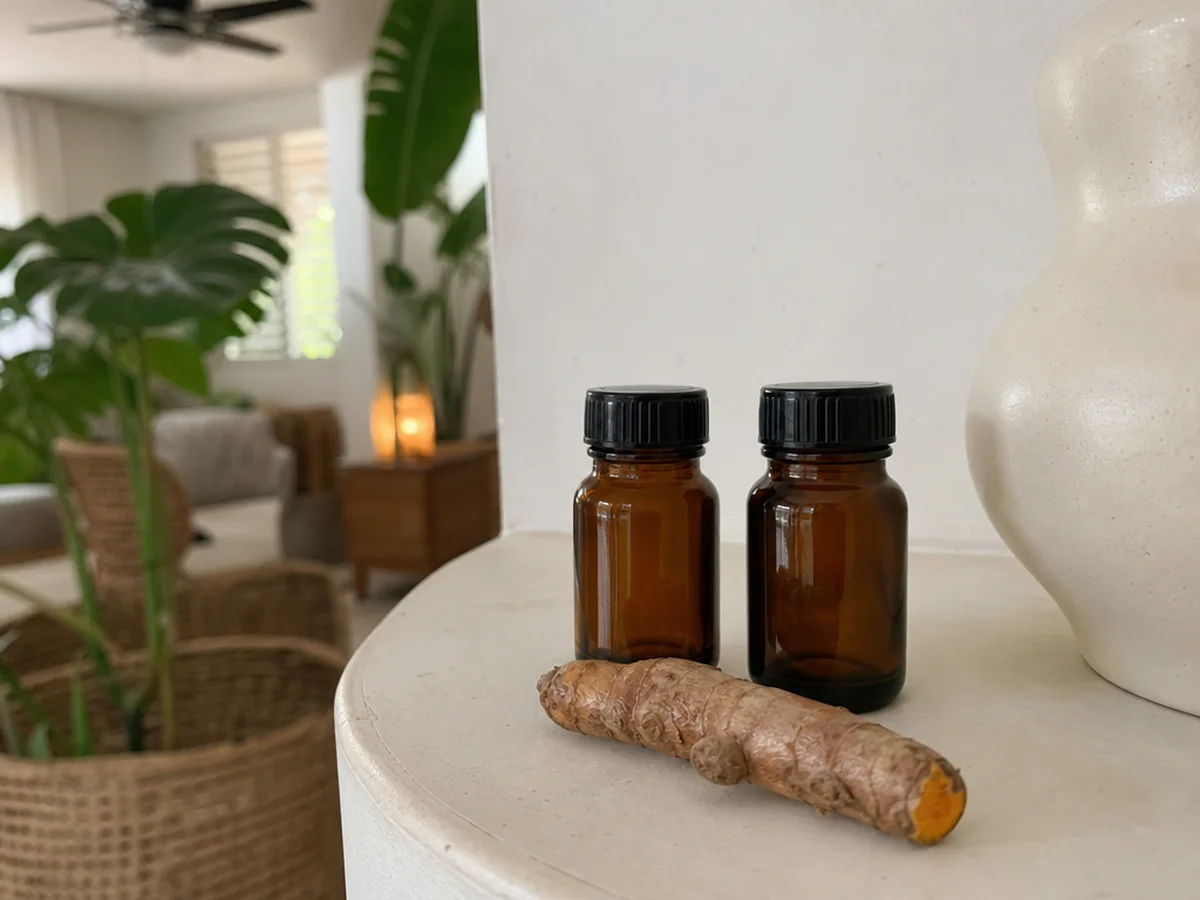
If you sell what you make, labels matter even more. Whatever you scent with, write down exactly what went into the product, name the ingredient the way your supplier names it, and keep the supplier paperwork where you can find it. A tidy record is a kindness to your future self and to anyone who asks you about the product later.
Which one should you reach for?
If you want turmeric's own warm, earthy, gingery aroma with a woody-spicy edge, an essential oil is the real thing. If you want a consistent, composed scent for a commercial candle line, a fragrance oil is a perfectly legitimate tool, just a different one, and it will not carry any turmeric claims. Whichever you choose, a clear label is a good sign of a seller who expects the question.
Our oil is for aromatic and cosmetic use only and is sold neat, so dilute it before it touches skin. Our safety overview covers the habits that go with it.
The next time you see "turmeric" on a bottle, ask what it is made from. A good label answers before you have to.
Turmeric Essential Oil
Turmeric Essential Oil from our own shop, in sizes from 0.5 oz to bulk.
From $12.99
Shop Now →Sources & Further Reading
- IFRA. Questions about fragrance.
- US FDA. Fragrances in Cosmetics.
- Saavedra DI et al., 2026. Turmeric (curcuma longa) rhizome essential oil: analytical profile of authenticated and commercial samples, safety and pharmacology review. Pharmaceutical Biology.