Buying Turmeric Oil: What to Check Before You Order
You cannot judge a bottle of turmeric oil by looking at it, and that is the whole difficulty of buying one. The word on the front is not a specification, and the paperwork that could settle your questions is easy to misread. So here is how we would size up a turmeric oil, ours included, in the order we would ask the questions.
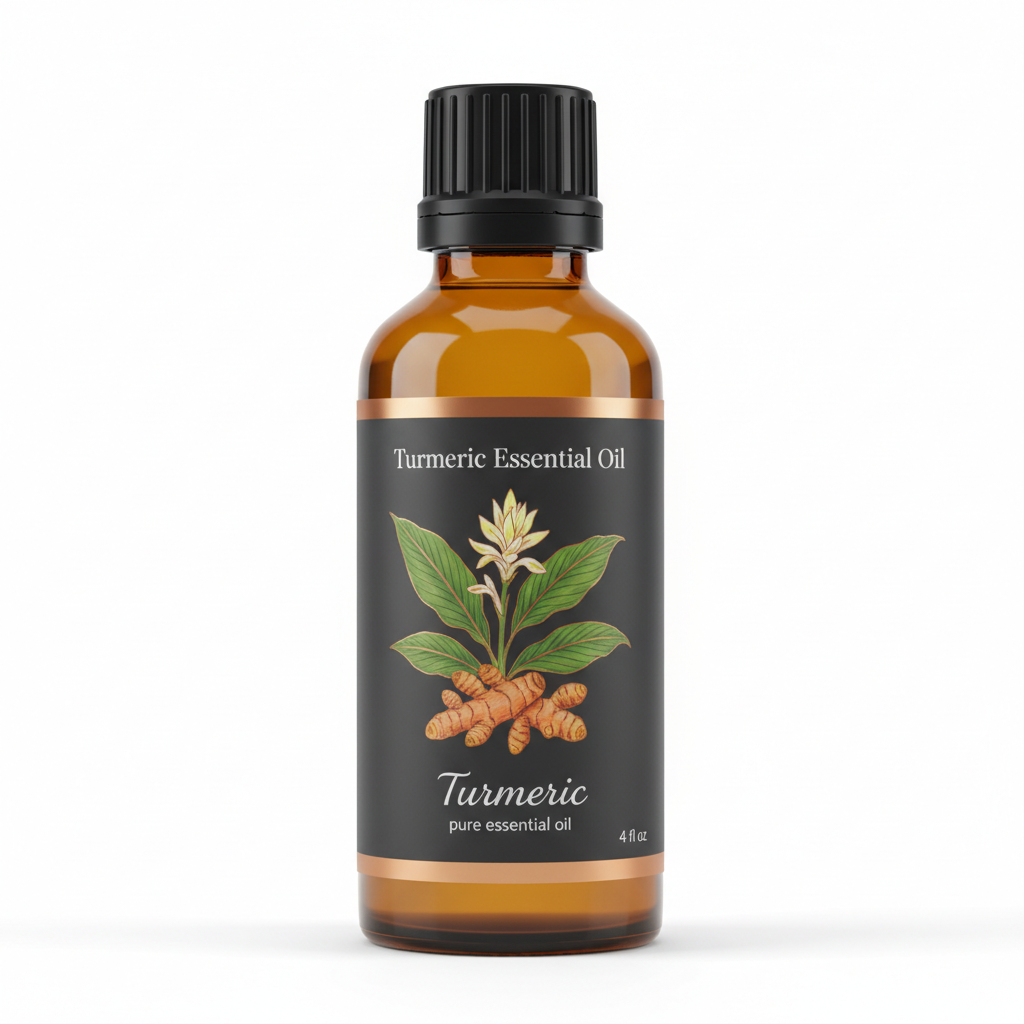
Turmeric Essential Oil
Our own Turmeric Essential Oil, in sizes from 0.5 oz to bulk.
From $12.99
Shop Now →First, which turmeric oil is it?
"Turmeric oil" covers a few different things: a steam-distilled essential oil, a CO2 extract, a carrier oil infused with turmeric, a fragrance oil, and the oils of other Curcuma species. Ours is the first kind, an essential oil from Curcuma longa, steam-distilled from dried rhizomes. Each of the others behaves differently, and we lay out the differences in our posts on CO2 extracts, fragrance oils and black and wild turmeric. A label that says only "turmeric oil", with no botanical name, is worth a question.
Then, what do the big words mean?
"Natural" and "organic" feel reassuring, but the FDA notes it has no regulations defining either term for cosmetics, and that plant-derived does not automatically mean gentle. We make no organic claim for our oil, and if a seller does, ask to see the certificate. Colour is another unreliable guide, which is why we will not tell you what shade a correct turmeric oil should be.
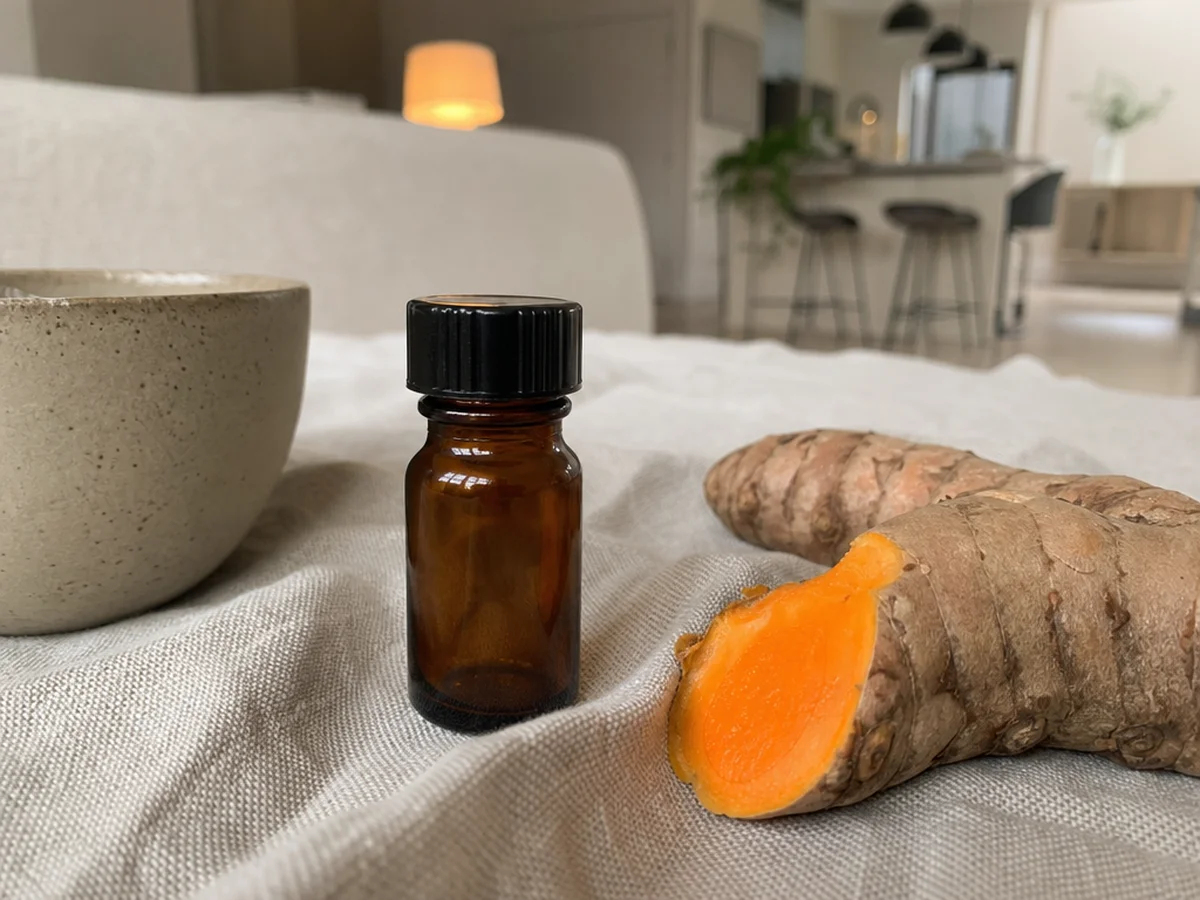
What a GC-MS report can and cannot tell you
A GC-MS report is a chromatogram: it shows what separated out of the sample and was identified. It is the best single document a buyer can ask for, but it works best when you know its limits. One study of essential oil quality control found that diluting an oil with a heavy vegetable oil changes neither the qualitative composition nor the normalised percentages, so catching that kind of dilution takes absolute quantitation. Another look at turmeric specifically, a 2026 analysis of 25 commercial oils, found that most were dominated by turmerones, while 4 of 25 showed markers of adulteration; one was mostly a fatty ester at 73.5%. That is a cautionary example from a small sample and was funded by an essential-oil company, so we use it as a reason to ask good questions, not as a market survey.
The questions are simple. Does the report carry a batch number and an analysis date? Does it name the major compounds? How much of the chromatogram is left unidentified? Does the batch match the one in your bottle?
Our own paperwork, read the same way
We offer two PDFs. The Certificate of Analysis covers one batch and lists three measured physical values, each beside its standard range: relative density 0.941, refractive index 1.512 and optical rotation +0.68 degrees, all at 20 C. The GC-MS report is qualitative, carries no batch number or analysis date, and leaves its three largest peaks unnamed, with about 45% of the area unassigned. Our line-by-line reading shows the numbers. In plain terms, those files describe the oil physically and give a broad profile; they do not tell you the turmerone share.
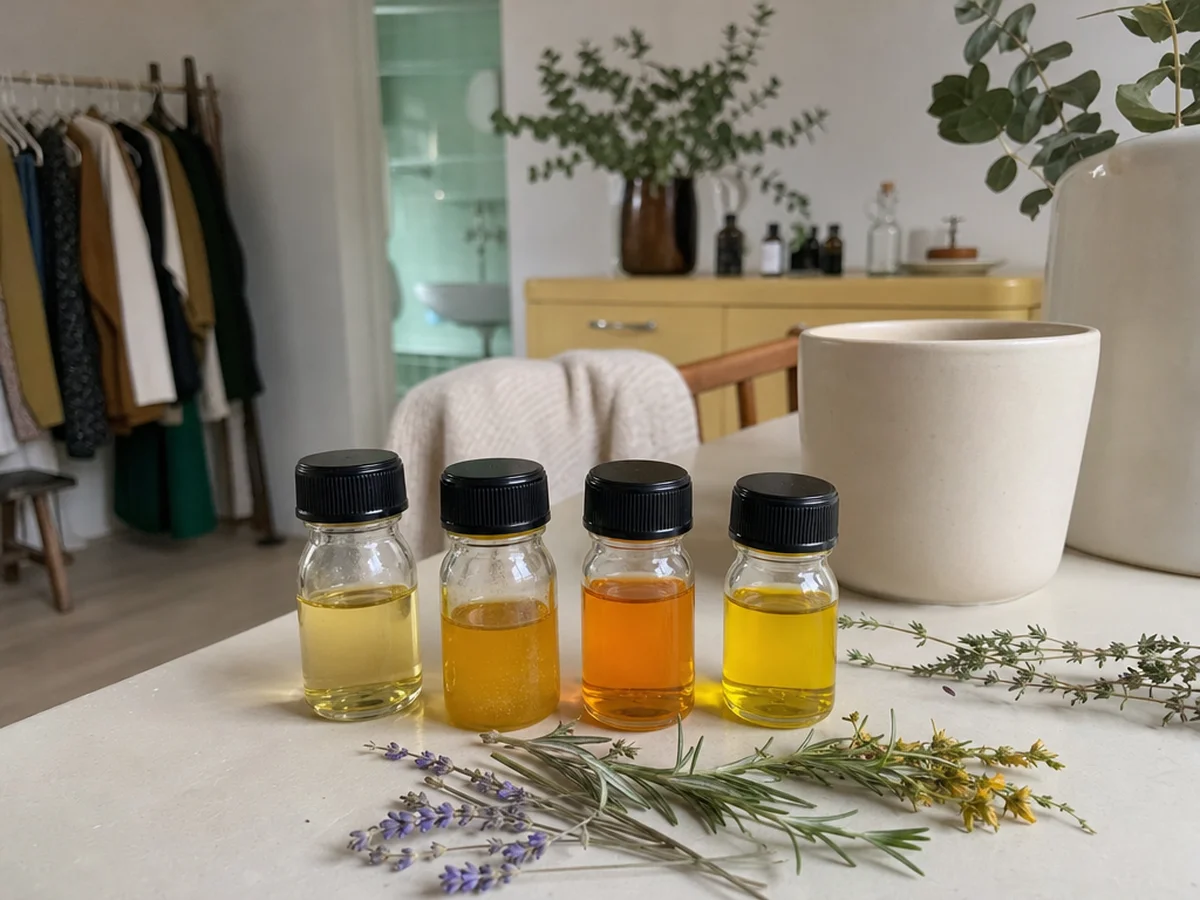
If your product needs more, such as a batch-matched GC-MS with compound names and an analysis date, an allergen declaration, an IFRA certificate or a safety data sheet, ask us in writing through the contact page before you order, and get whatever we agree to send in writing too.
Use your nose and your eyes when it arrives
Once a bottle is in your hands, a short routine helps. Check that the label names the botanical, the plant part and the size you ordered. Put a drop on a strip of plain paper or a cotton pad and smell it at arm's length first, then closer. You should find a warm, earthy, gingery aroma with a woody-spicy edge. Come back to it after ten minutes and notice how the scent has softened, since a base to middle note keeps changing as it dries down. It is a simple way to get to know an oil before you build a blend around it.
It also helps to keep a small notebook of your purchases: the oil, the size, the date it arrived and where you stored it. When the bottle is opened, add that date too. Two minutes of record keeping makes it much easier to ask a seller a precise question later, and to know how old your bottle really is.
Size, use and the sensible first order
We sell one turmeric oil in nine sizes, from 0.5 oz to 400 lb, and every size comes from the same standard. A bottle you will use in a year beats a bigger one you keep for four, and we say typically three to four years unopened in a cool, dark place. Current prices are on the shop page. For a first bottle, our sizes guide does the drops-per-use arithmetic, and businesses can look at bulk and wholesale.
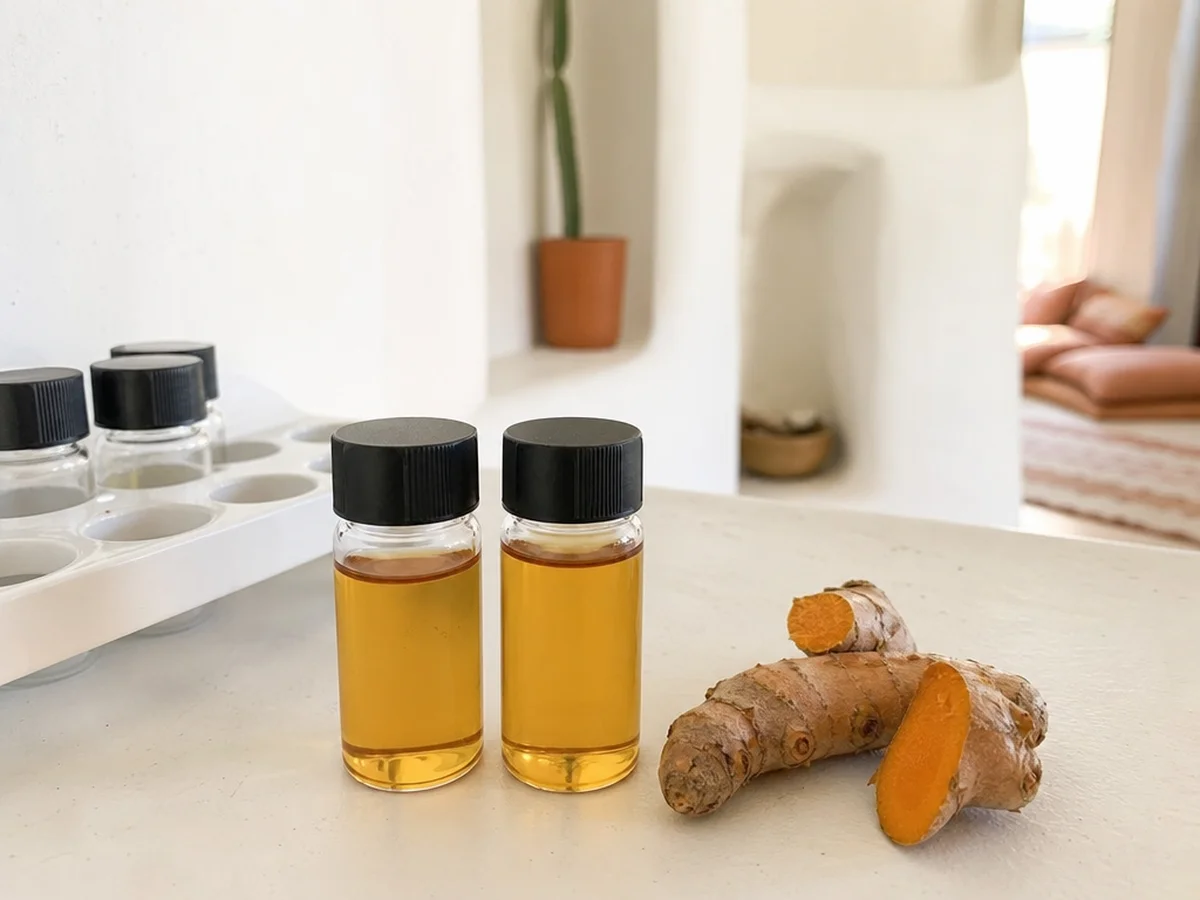
Buy it for aromatic and cosmetic use, diluted, and keep it away from children and pets. Our safety post covers the details. A good purchase is a documented one: the right species, a report you can read, and a seller who can say plainly what the paperwork covers. Ask us anything on this list before you decide.
Good buying is mostly patience, so read first, ask second, and let the scent have the last word.
Turmeric Essential Oil
Turmeric Essential Oil from our own shop, in sizes from 0.5 oz to bulk.
From $12.99
Shop Now →Sources & Further Reading
- Saavedra DI et al., 2026. Turmeric (curcuma longa) rhizome essential oil: analytical profile of authenticated and commercial samples, safety and pharmacology review. Pharmaceutical Biology. pmc.ncbi.nlm.nih.gov/articles/PMC12954815
- Capetti F et al., 2021. Adulteration of Essential Oils: A Multitask Issue for Quality Control. Three Case Studies: Lavandula angustifolia Mill., Citrus limon (L.) Osbeck and Melaleuca alternifolia (Maiden & Betche) Cheel. Molecules. pmc.ncbi.nlm.nih.gov/articles/PMC8471154
- US Food and Drug Administration. Aromatherapy. fda.gov/cosmetics/cosmetic-products/aromatherapy