What Is Turmeric Oil? How It Differs From Curcumin
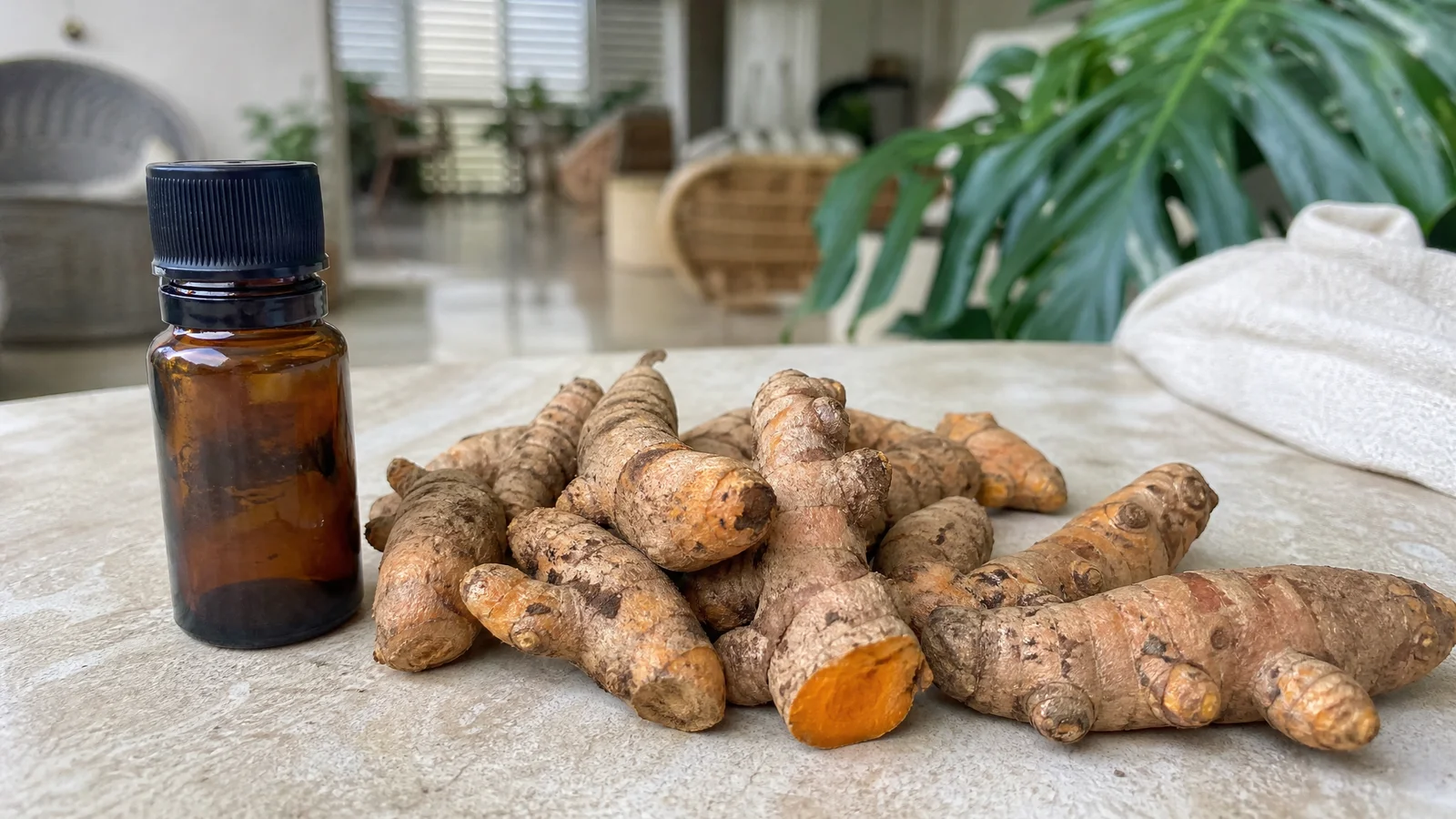
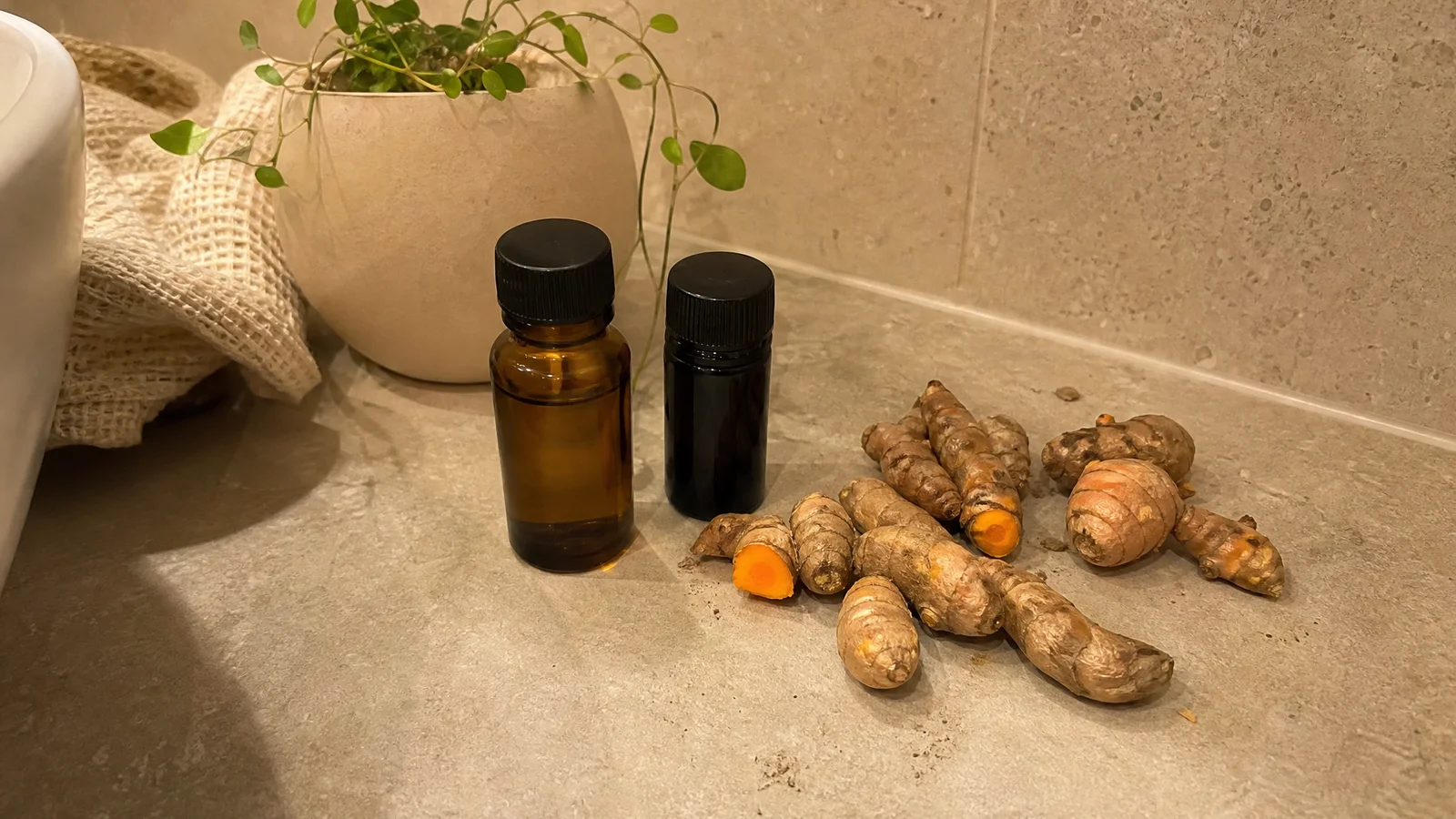
Turmeric oil is not liquid curcumin, and it is not the yellow spice in a bottle. It is the aromatic, volatile part of the turmeric rhizome, lifted off by steam and collected as an oil. That one distinction clears up most of the confusion around it, so it is where we like to start.

Turmeric Essential Oil
Our own Turmeric Essential Oil, in sizes from 0.5 oz to bulk.
From $12.99
Shop Now →One plant, two very different products
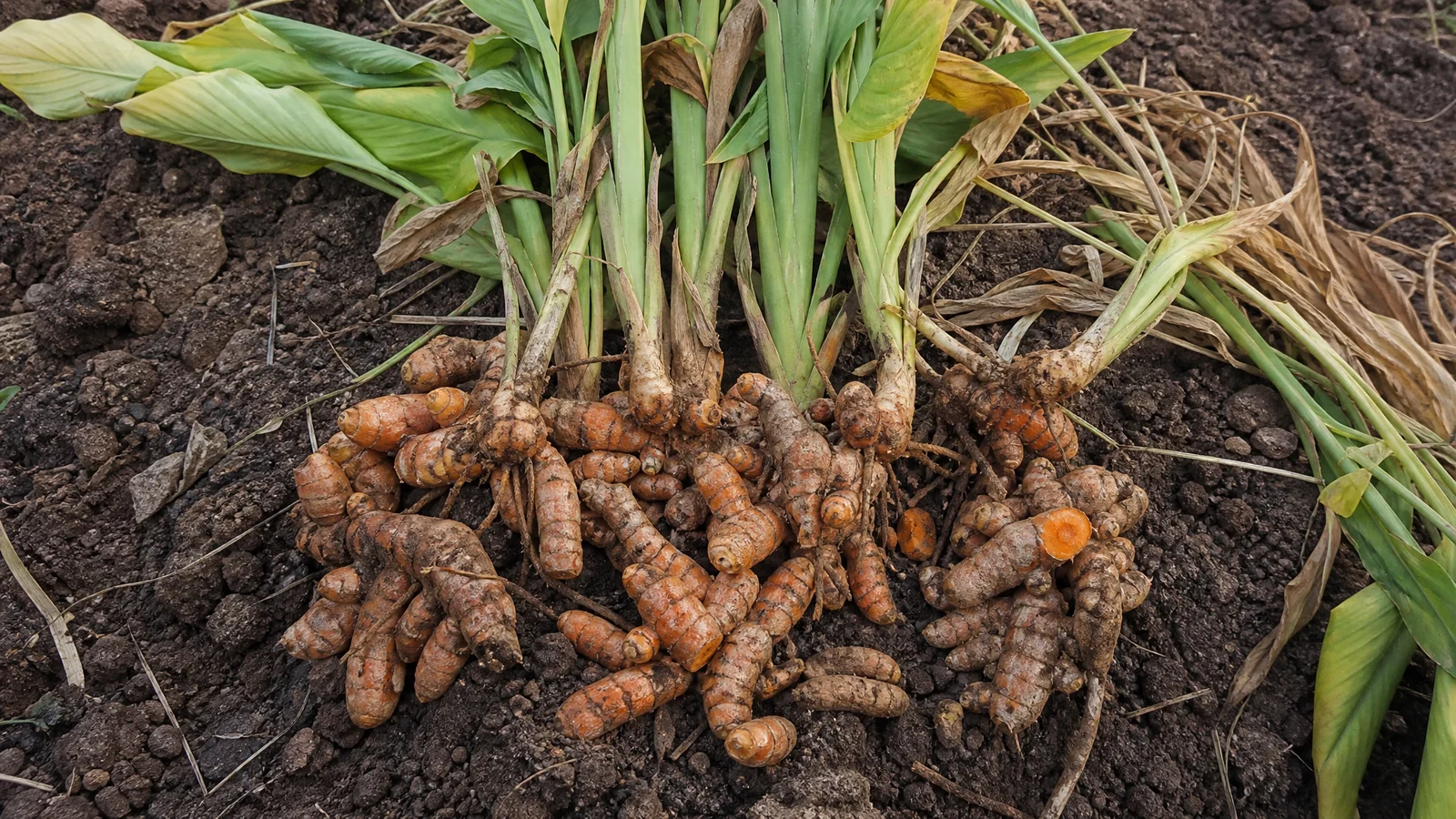
Turmeric is Curcuma longa, a member of the ginger family (GBIF lists it under Zingiberaceae). Its rhizome, the underground stem the spice comes from, holds two quite different families of compounds. The curcuminoids, curcumin among them, give the rhizome its orange-yellow colour. The essential oil is the other family, and the reviews we read describe the curcuminoids as nonvolatile and the oil as the volatile fraction (Dosoky and Setzer, 2018).
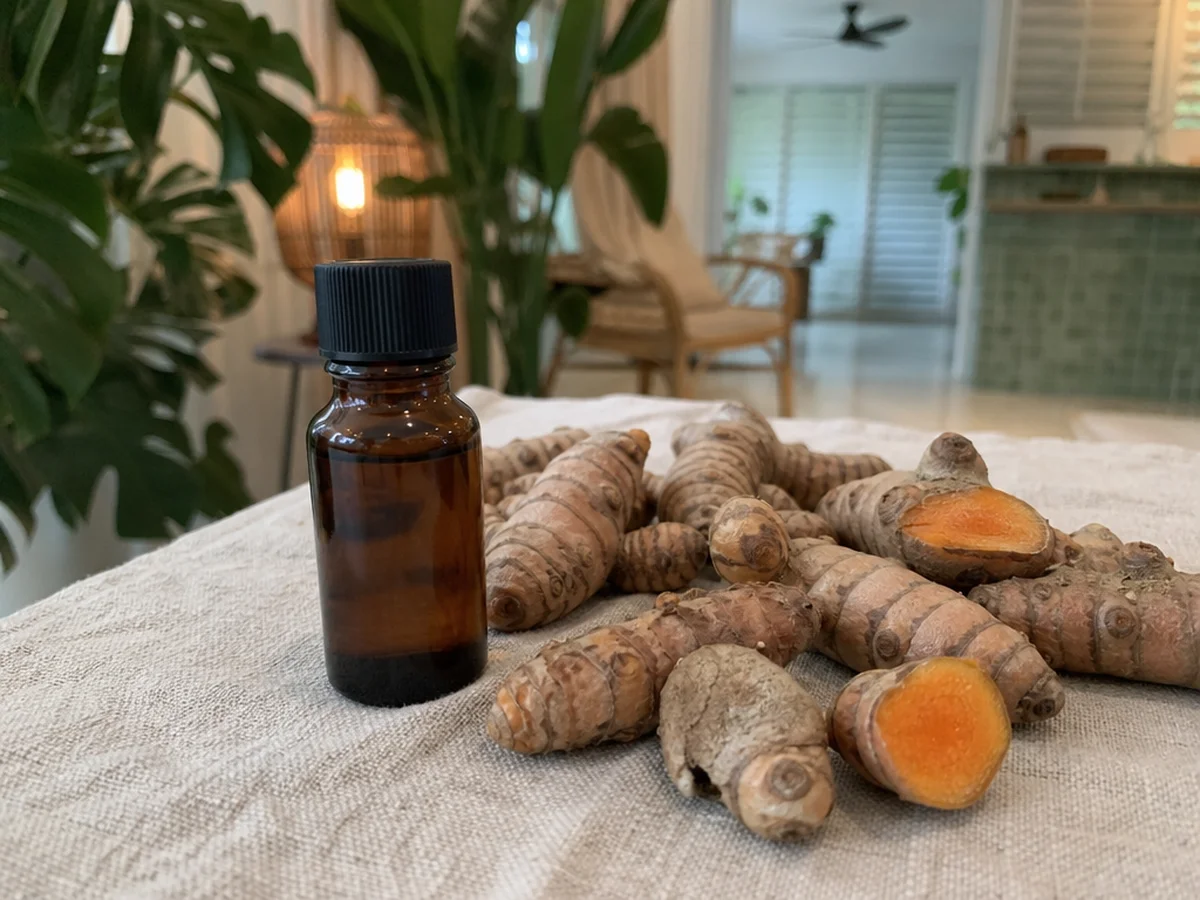
That is the reason steam can separate them. Steam distillation carries over compounds that travel with steam and leaves heavier, nonvolatile ones behind. Review authors call it the most commonly chosen way to make turmeric oil: steam passes up through the plant material and carries the aromatic compounds with it (Ibanez and Blazquez, 2020). Our turmeric oil is steam distilled from the dried rhizome, and the oil carries turmeric's aroma without the pigment that stains raw powder. If you want the process step by step, how turmeric oil is made walks through it.
What is inside the bottle
If you picture the oil as a crowd, the turmerones are the loudest voices. A 2026 survey of authenticated oils found they were dominated by turmerones and other sesquiterpenoids, which made up more than 85% of the oil, with smaller supporting roles for compounds such as zingiberene and ar-curcumene (Saavedra et al., 2026). That sesquiterpene backbone is a big part of why the scent is warm, woody and earthy rather than bright and citrusy.
It also helps to know that turmeric oil is not a single fixed recipe. The balance shifts with the plant material and how it was handled, and the same survey saw more of the lighter monoterpenes in oil from fresh rhizomes than in oil from ground ones. This is one of the reasons we encourage people to read the paperwork that comes with any oil. The certificate of analysis we publish covers one batch and lists density, refractive index and optical rotation, and if you need a batch-matched GC-MS with compound names, an allergen declaration or a safety data sheet, ask us in writing through the contact page before you order.
The turmerones have been studied in cell and animal work, and we cover that research carefully in our turmerones and curcumin post. For an honest grade of what that evidence can and cannot tell you, see what research says about turmeric essential oil.
What it is not
- Not the spice. Turmeric powder is the ground rhizome, with its curcuminoids and everything else. The oil is only the volatile part, so the two behave differently in the kitchen, on fabric and in a formula. Turmeric oil vs turmeric powder compares them side by side.
- Not an edible ingredient. We sell turmeric essential oil for aromatic and cosmetic use only, never for internal consumption, so keep it out of food and drinks. Why the spice is not the bottle explains the difference.
- Not another turmeric product. A CO2 extract, a turmeric-infused carrier oil and a fragrance oil are all different things that can share the word turmeric on the label. Black and wild turmeric (other Curcuma species) have their own chemistry as well.
Getting acquainted with the bottle
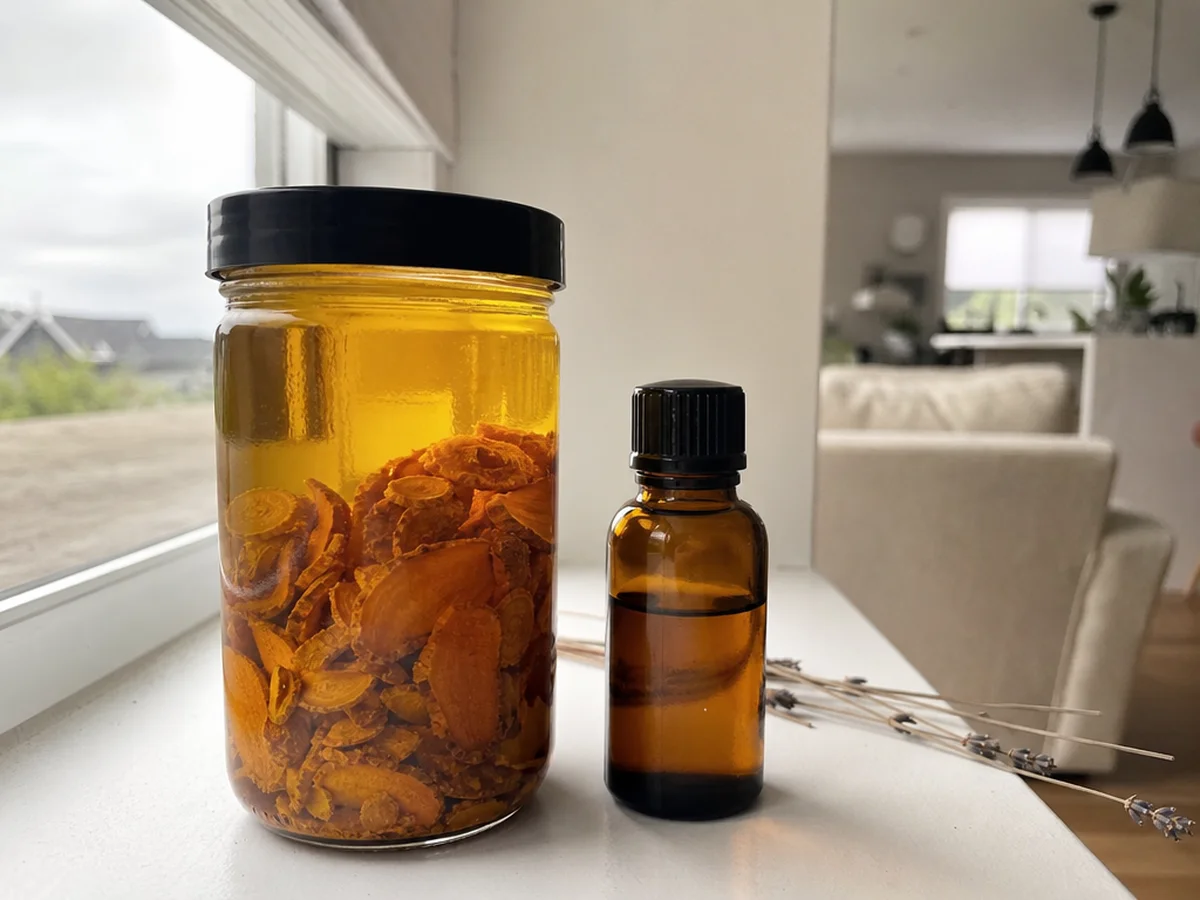
Our oil arrives in an amber bottle with a black label, and the first thing to do is simply smell it. Put a drop on a paper strip rather than sniffing from the cap, and give it a few minutes. You will notice warmth, an earthy depth and a gingery lift, with a woody-spicy edge underneath. It is a base to middle note, so it lingers rather than leaping out of the bottle.
If you are brand new to essential oils, start small. A diffuser for a short session, a paper strip on a shelf, or a diluted blend you have patch tested are all gentle ways in. There is no hurry, and a bottle you enjoy slowly will give you far more than one you rush.
Living with the oil
You can use it in a diffuser, in a diluted body oil, in cold-process soap and in perfumery as a warm base to middle note, and it blends well with ginger, sweet orange, ylang ylang, sandalwood, patchouli and cedarwood. We recommend keeping it in a cool, dark place, where it typically keeps for 3 to 4 years unopened.
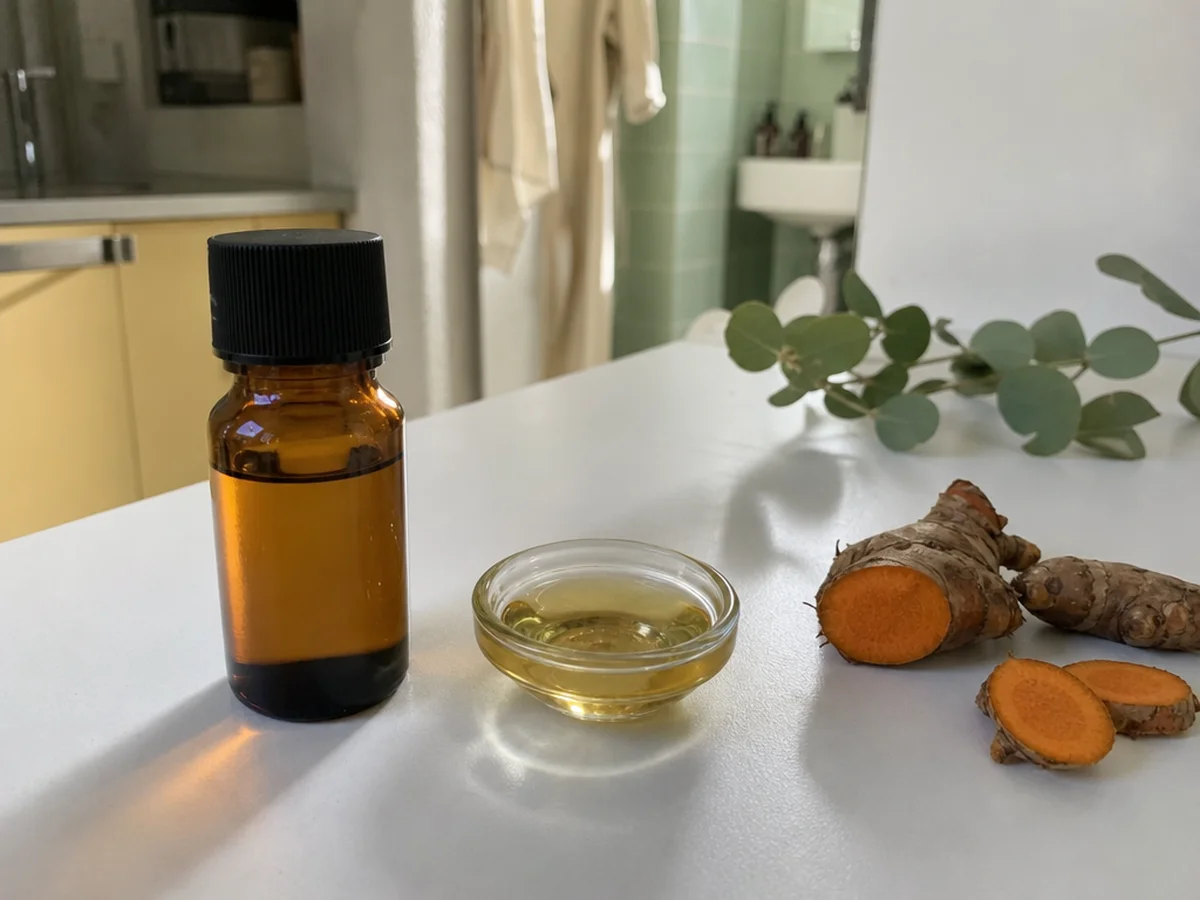
Because it is sold neat and concentrated, we recommend diluting to 0.5% to 2% in a carrier oil before it touches skin, patch testing first, and keeping it away from eyes, children and pets. Turmeric oil can be sensitising for some people, so a light hand is the sensible way in. Anyone who is pregnant, nursing or managing a medical condition should check with their physician first. The safety post and the dilution guide have the details.
We make no medical claims for turmeric oil. What we love about it is the scent, and the fact that a root as familiar as turmeric has this entirely different, quietly woody aromatic side once steam has finished with it.
Turmeric Essential Oil
Turmeric Essential Oil from our own shop, in sizes from 0.5 oz to bulk.
From $12.99
Shop Now →Sources & Further Reading
- GBIF Backbone Taxonomy. Curcuma longa L. api.gbif.org
- Dosoky NS, Setzer WN (2018). Chemical Composition and Biological Activities of Essential Oils of Curcuma Species. Nutrients. PMC6164907
- Ibanez MD, Blazquez MA (2020). Curcuma longa L. Rhizome Essential Oil from Extraction to Its Agri-Food Applications. A Review. Plants. PMC7823572
- Saavedra DI et al. (2026). Turmeric (curcuma longa) rhizome essential oil: analytical profile of authenticated and commercial samples, safety and pharmacology review. Pharmaceutical Biology. PMC12954815