Turmerones vs Curcumin: Aroma Compounds and Pigment
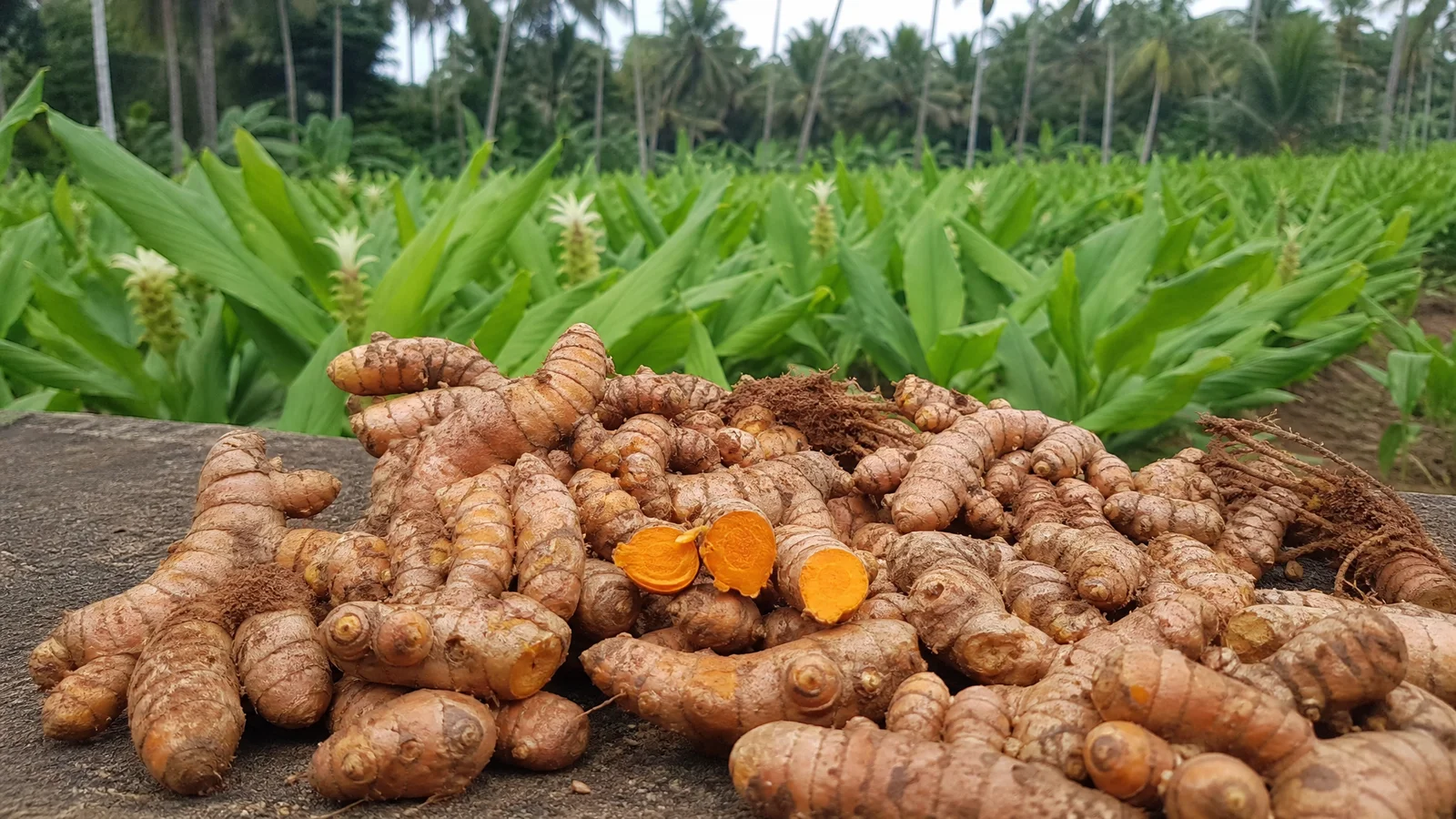
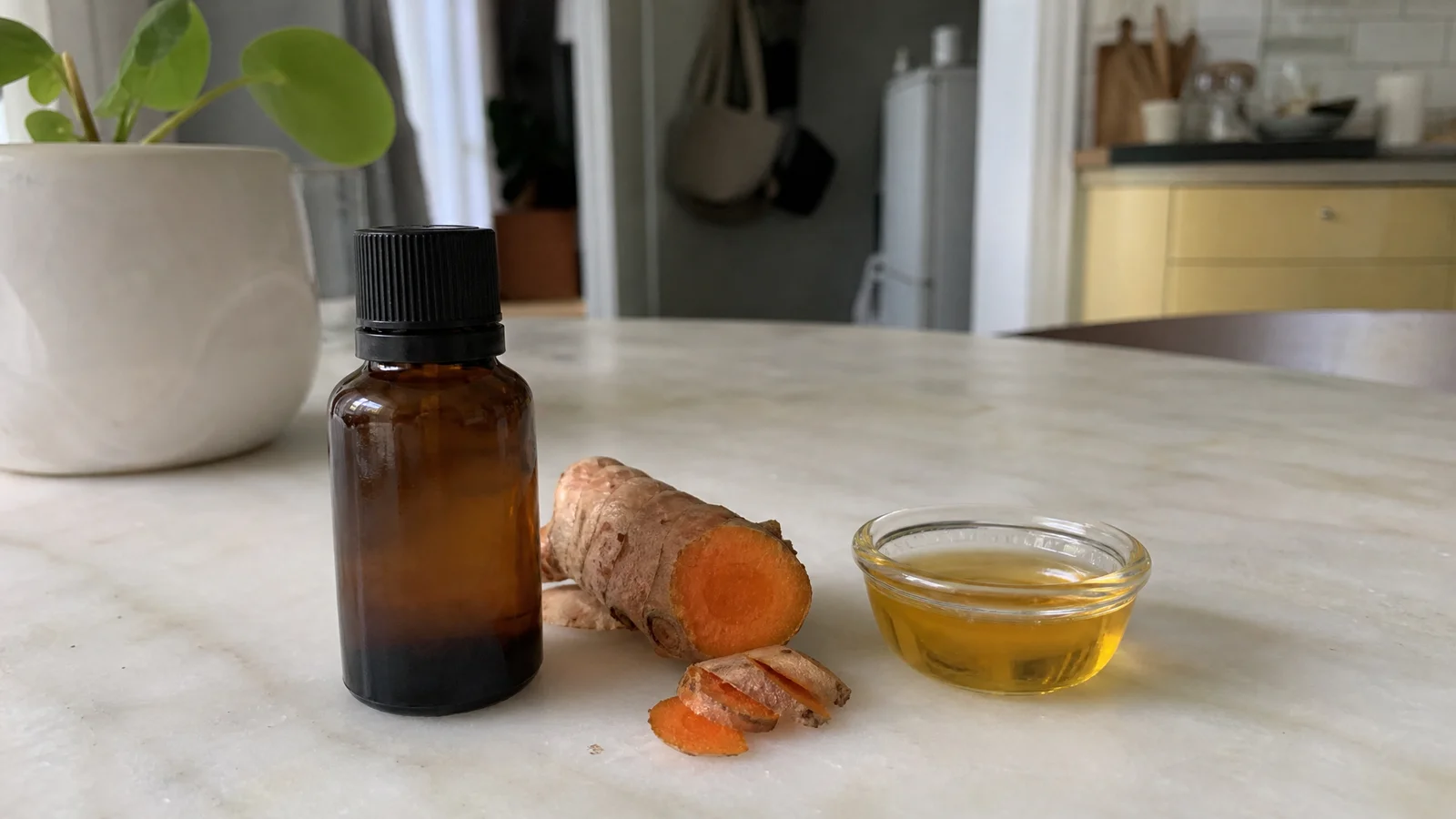
Here is a small puzzle about turmeric: the bright yellow powder in your spice drawer and the oil we sell come from the very same root, yet they have almost nothing in common. One is a vivid pigment that stains everything it touches. The other is a warm, earthy aroma. The explanation comes down to two families of molecules, curcuminoids and turmerones, and which one survives a steam still.

Turmeric Essential Oil
Our own Turmeric Essential Oil, in sizes from 0.5 oz to bulk.
From $12.99
Shop Now →Curcumin is the color
Curcuminoids, curcumin the best known among them, give turmeric its yellow. Nearly all the fame turmeric has earned online belongs to them, and plenty of research has focused on curcumin as a compound. But curcumin is not volatile, which means it does not travel with steam, and so it does not come over in steam distillation. A distilled turmeric oil is not a concentrated curcumin product, and it is worth saying so plainly, since the two get mixed up all the time.
Turmerones are the aroma
What does come over is the volatile fraction, and in turmeric that is dominated by sesquiterpenes. A 2026 review of turmeric essential oil identifies ar-turmerone, alpha-turmerone and beta-turmerone (also called curlone) as the major constituents of the oil, with ar-curcumene, beta-sesquiphellandrene, alpha-zingiberene, cineole and cymene among the other notable compounds. The review adds that curcuminoids give the root its color while turmerones contribute the characteristic aroma and flavor. Zingiberene, which ginger also makes, explains some of the familiar gingery warmth.
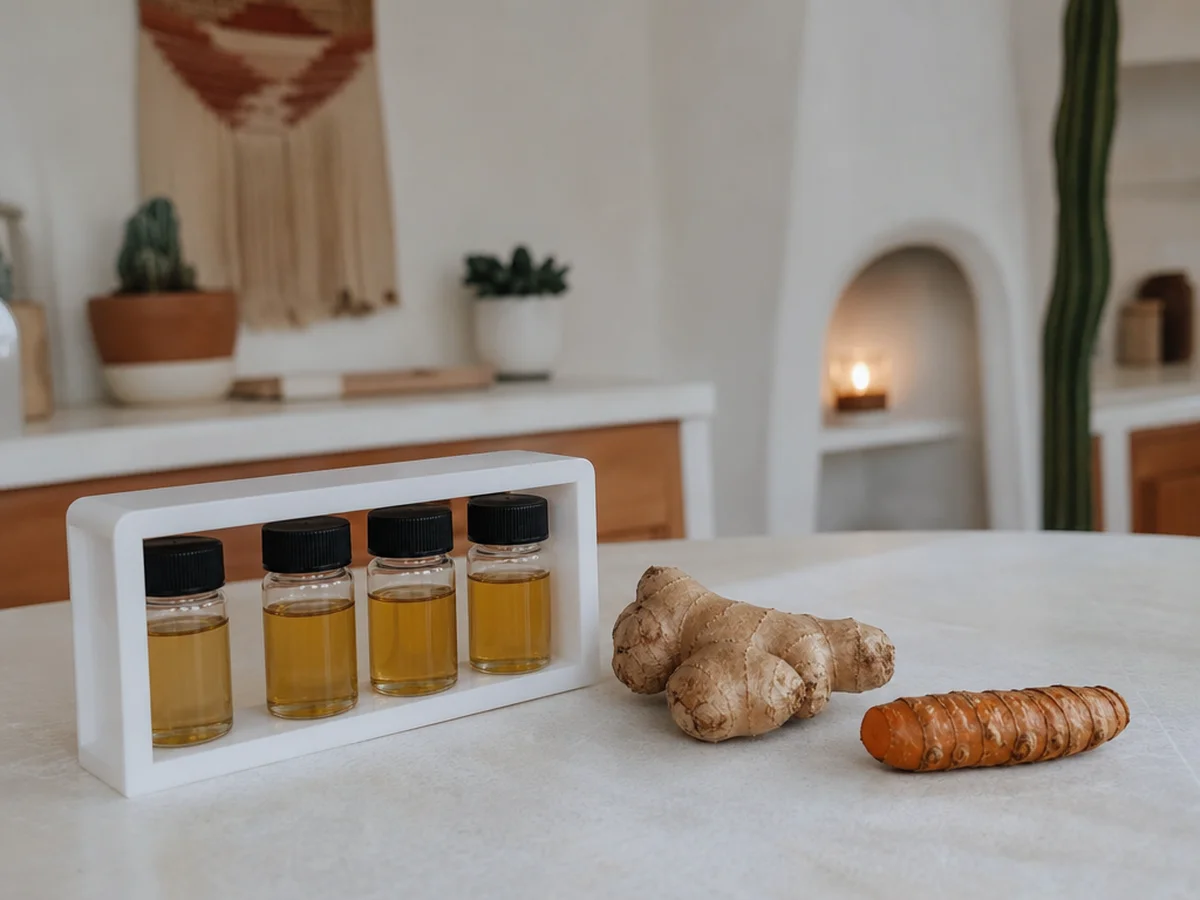
A rhizome holds only a small amount of oil, around 0.5% to 6% by weight according to the same review, which is why distillation is a concentrating step: a lot of root gives a little oil.
Why no two turmeric oils read alike
Plants vary, and so do oils. A 2019 analysis of 60 turmeric oils, some measured by the authors and some taken from the literature, found that they sorted into several chemical types. All were rich in ar-turmerone and its relatives, but the balance differed, with one group particularly high in ar-turmerone and another led by alpha-turmerone. The 2026 review adds that growing conditions, harvest timing and how the rhizome is dried all influence the result. It reports, for example, that oil from hot-air-dried rhizomes showed more ar-turmerone and less alpha-turmerone than oil from fresh ones.
That variety is part of the charm of a natural material and part of the reason that a single number never describes "turmeric oil" in general. It also means that figures from studies describe the studied oil, not every bottle.
What we can tell you about ours
We sell one turmeric oil, Curcuma longa, steam distilled from the dried rhizomes. The aromatic part of the root is what is in the bottle, which is why our oil carries turmeric's aroma without the pigment that stains raw powder. The GC-MS report we publish is a qualitative profile that names compounds such as zingiberene (4.85%) and ar-curcumene (2.65%), and it does not name its three largest peaks, so we do not quote turmerone percentages for our oil. If you need a batch-matched report with compound names and an analysis date, ask us in writing through our contact page before ordering. Our GC-MS walkthrough reads the report line by line.
Two ways to meet the same root
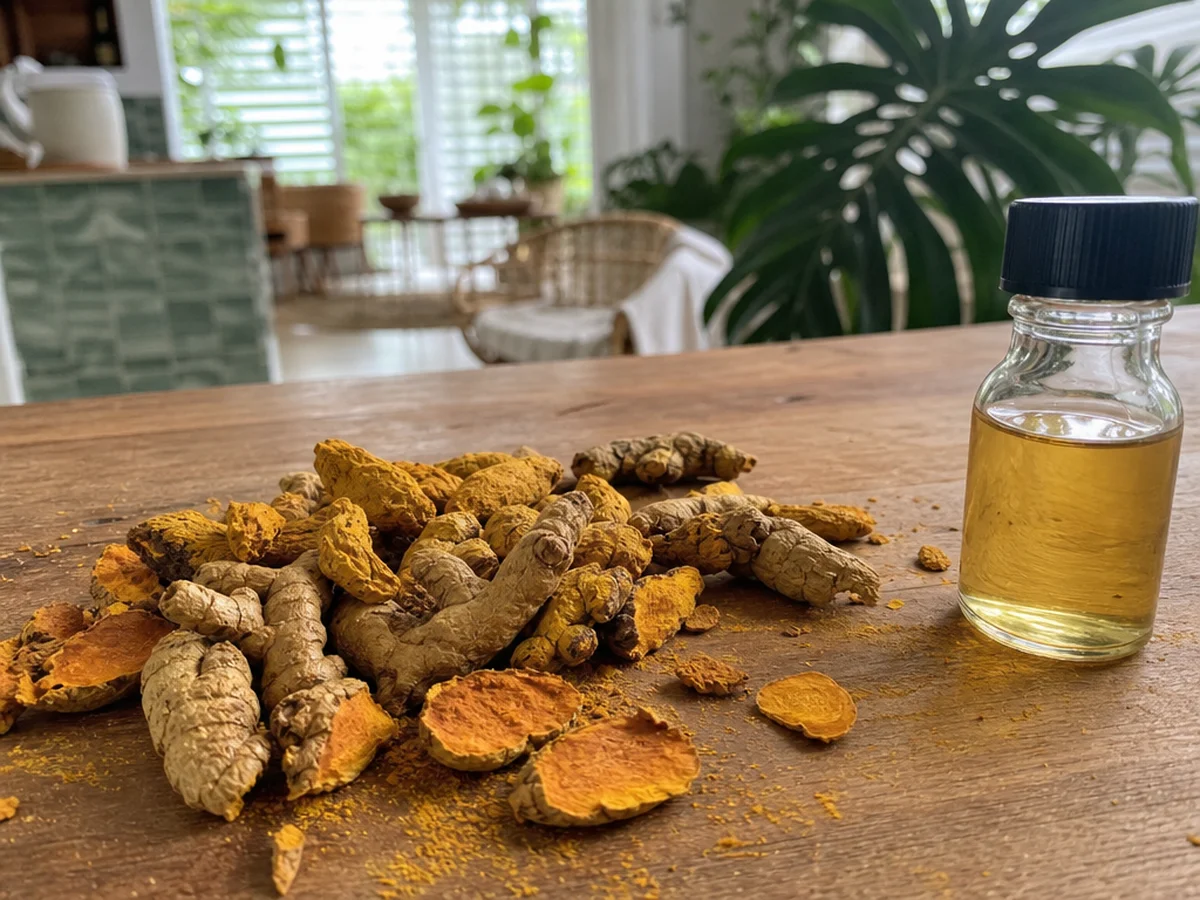
You can meet turmeric through your eyes or through your nose. In the kitchen, it arrives as colour: a bright heap in a jar, a golden stain on the spoon. In a bottle of oil, it arrives as scent, warm and earthy and gingery, with a woody-spicy edge. Both start in the same rhizome, and steam is what decides which one you get.
If you would like to feel the split for yourself, open a jar of powder and a bottle of oil side by side. Smell the powder, then a paper strip with one drop of the oil. The oil is not the spice made stronger. It is a different, quieter, woodier side of the root, and it is the side we love.
Next time you read a headline about turmeric, ask which part of the root it is about. Most of the time it is the curcumin, the pigment, which is not in our oil. That one question clears up a surprising amount of confusion, and it costs you nothing.
It also changes how you shop. If you want the colour, look for powder or a colorant from a supply shop. If you want the scent, look for a steam-distilled oil. Choosing by purpose beats choosing by name.
Reading the science without over-reading it
Most of what you read about turmerones and curcumin comes from laboratory work on isolated compounds or extracts. That is valuable for understanding the plant, but it describes materials and conditions that differ from a diffused or diluted cosmetic oil. We sell an aromatic and cosmetic oil, for external use only, and we make no health claims for it. Our research overview sorts what is known by how much weight each kind of evidence can carry, and our comparison with CO2 extract shows how a different extraction changes the picture.
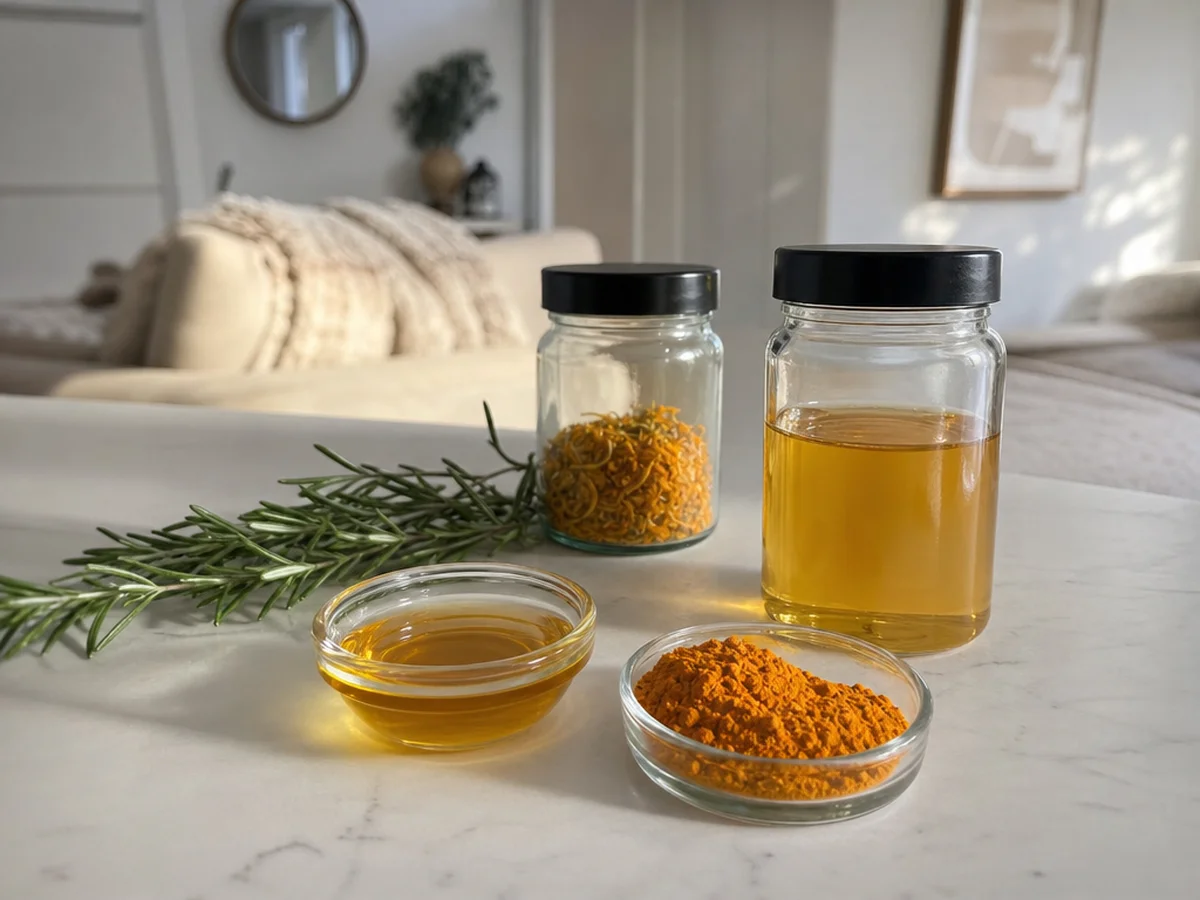
Whichever side of the root you reach for, keep the bottle or jar capped and out of strong light, and label it with the date you opened it.
One root, two molecular stories: the color you see in the jar and the aroma you smell in the bottle belong to different compounds, and that is exactly what makes turmeric oil its own thing.
Turmeric Essential Oil
Turmeric Essential Oil from our own shop, in sizes from 0.5 oz to bulk.
From $12.99
Shop Now →Sources & Further Reading
- Saavedra DI et al., 2026. Turmeric (curcuma longa) rhizome essential oil: analytical profile of authenticated and commercial samples, safety and pharmacology review. Pharmaceutical Biology.
- Dosoky NS, Satyal P, Setzer WN, 2019. Variations in the Volatile Compositions of Curcuma Species. Foods.