Turmeric Oil Around Cats, Dogs and Birds: What to Know
To us, turmeric oil smells warm, earthy and a little gingery. A cat or a bird experiences the same room very differently, and that gap is the whole reason this article exists. Our oil is made for people, and the kindest thing to do for the animals in your home is to keep the two apart.
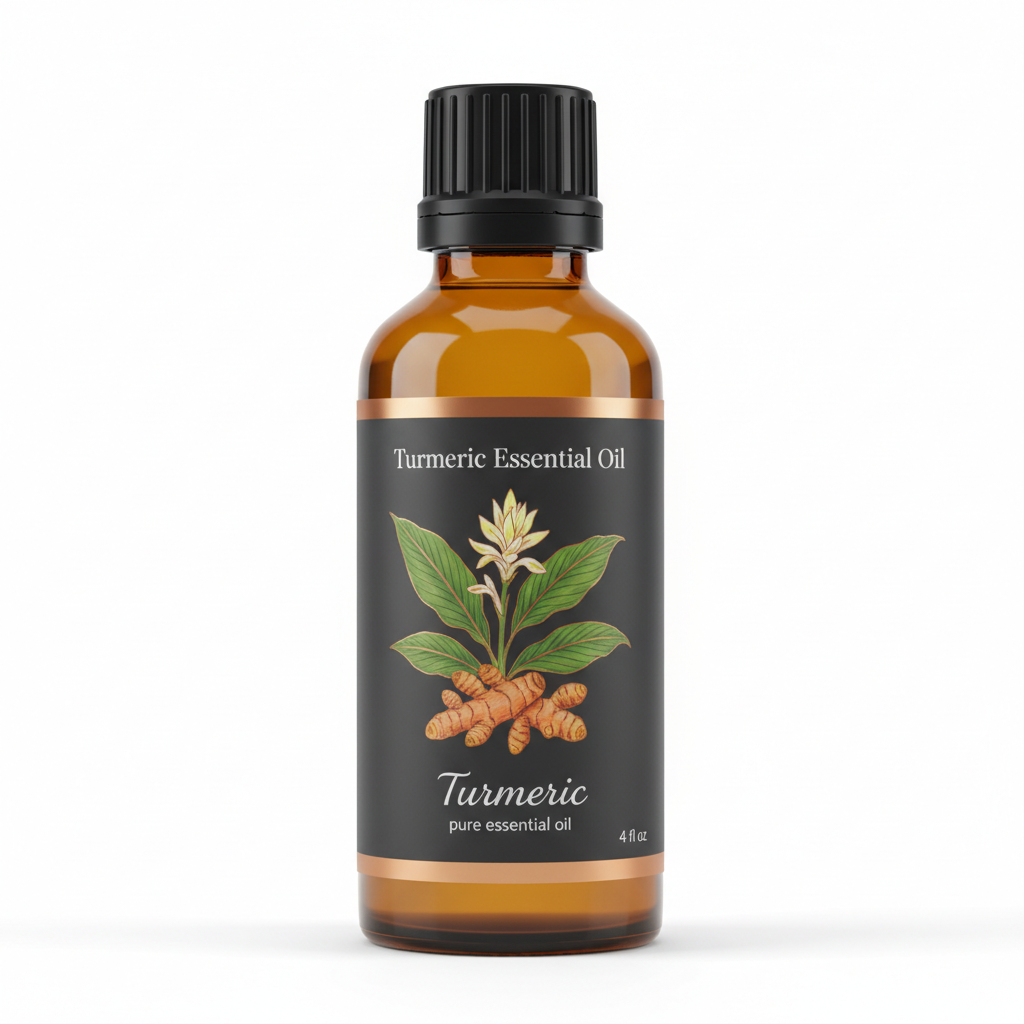
Turmeric Essential Oil
Our own Turmeric Essential Oil, in sizes from 0.5 oz to bulk.
From $12.99
Shop Now →What the veterinary sources agree on
The Merck Veterinary Manual, in a review updated in March 2025, says concentrated essential oils should never be applied directly to pets. It explains that cats are more sensitive than dogs because they are deficient in an enzyme called glucuronyl transferase, which leaves them poorly equipped for some of the compounds oils contain, and that a cat's grooming habit adds exposure from both skin and mouth. Dogs lack that particular deficiency but are still affected. Birds, it says, are at high risk because of their sensitive respiratory tracts.
The Pet Poison Helpline says essential oil toxicosis can affect all species but cats and birds are at greatest risk, and that swallowing carries the highest risk, followed by skin contact, then breathing. The ASPCA puts the same idea in friendly terms: in their concentrated form, oils can be a danger to pets, and because oils vary so much in strength and formulation, it is best to avoid applying them directly to an animal at all.
None of these pages singles out turmeric oil, either as a hazard or as a clear case. We read that sensibly: general guidance for essential oils applies to ours, and a missing name is not a clearance.
If you share your life with an animal, you already know how closely they follow you around the house. That is a lovely thing, and it is the reason a few simple habits about the bottle and the diffuser matter more than any single rule.
Diffusing around animals
Diffusers are where most households meet this question, and the sources are practical rather than alarmist. The Merck manual separates passive diffusers, such as reeds and candles, which do not release droplets of oil, from active ones, such as ultrasonic or nebulizing models, which release microdroplets that can settle on fur or feathers and then be absorbed or licked off. The ASPCA says a short session in a secured area your pet cannot reach is not likely to be an issue, and suggests avoiding diffusers altogether if a pet has a history of breathing problems. For birds, it recommends not using one in the house.
Turning that into habits, here is how we would approach it, as simple reasoning from those sources:
- Diffuse in a room with a closed door, and air it out before animals return.
- Place the diffuser where it cannot be knocked over.
- Keep the bottle capped and on a high shelf; wipe up spills right away.
- Do not put the oil, diluted or not, on a dog or a cat. Skin and coat are not where our oil belongs.
- Treat homemade soaps, balms and melts as you would the oil, and store them out of reach.
The simplest habit in a home with animals is a landing spot. Pick one high, closed cupboard for the bottle, the diffuser and any homemade blends, and return everything there every time. When there is only one place the oil lives, it is rarely left on a counter.
What a spill looks like at pet scale
A drop is about 0.05 ml, and at the density measured on the batch of our oil on our Certificate of Analysis (0.941 at 20 C) that is roughly 47 mg. To a person that is trivial. To a small cat or a bird it is a meaningful amount of concentrated oil, which is why we ask you to treat the bottle itself as the thing to keep out of reach. Drops vary in size, so take that as a rough scale, not a dose.
Pets notice what we do not
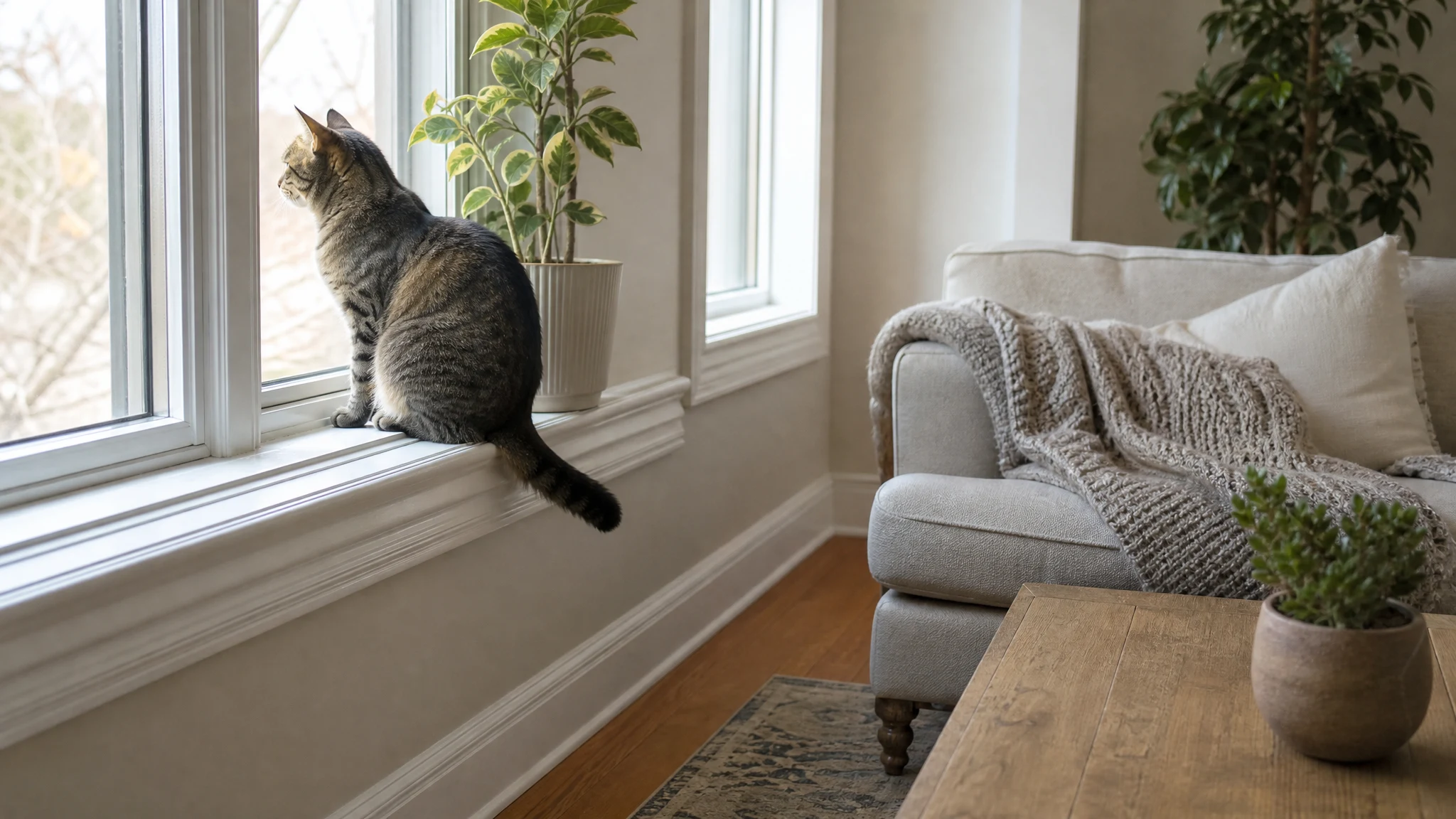
Animals spend time at floor level, on shelves and in places we forget about. A cat will find a freshly scented blanket, a dog will lick a spilled drop from the floor, and a bird in the next room shares the air. So think about where the scent ends up, not only where you use it, and give animals an exit to a room that has not been scented.
If an animal is exposed
Vets recommend acting quickly. According to the Merck manual, signs appear within minutes to hours and commonly include vomiting, lethargy, drooling, wobbly walking and loss of appetite, and vomiting should not be induced because of the risk of aspiration. The Pet Poison Helpline describes washing skin exposures with liquid dish detergent and moving a pet to fresh air after inhalation. Call your veterinarian, or the ASPCA Animal Poison Control Center at (888) 426-4435, right away, and bring the bottle with you.
Our oil is an aromatic and cosmetic oil for people, and we do not make pet claims for it. If you are curious about turmeric and dogs in a food context, our piece on turmeric and coconut oil for dogs covers that separately. You can also read how we think about children and storage in turmeric oil and kids, and our evening diffusing ritual for ideas that keep ventilation in mind.
If you are ever unsure, the easy choice is to skip the diffuser for the day. A room that smells of nothing in particular is always fine for everyone who lives there.
A warm scent is lovely in a home, and it is best enjoyed in the rooms the whole household, animals included, can happily leave.
Turmeric Essential Oil
Turmeric Essential Oil from our own shop, in sizes from 0.5 oz to bulk.
From $12.99
Shop Now →