Diffusing Turmeric Oil: A Warm Scent for the Evening
There is a particular kind of evening that calls for a warm, spiced smell in the room: the lamps are low, something is cooking or just finished, and you want the air to feel a little golden. Turmeric oil suits that mood well. Its aroma is warm, earthy and gingery with a woody-spicy edge, and it asks very little of the diffuser.

Turmeric Essential Oil
Our own Turmeric Essential Oil, in sizes from 0.5 oz to bulk.
From $12.99
Shop Now →A scent first, and honestly only a scent
We sell turmeric oil as an aromatic and cosmetic oil, and in the diffuser that means one thing: you are choosing a fragrance. Research on turmeric aroma is small. A 2021 Thai study asked volunteers to rate their mood after smelling several oils, and turmeric oil was among them; the brainwave measurements in that paper concerned two other oils, Litsea cubeba and garlic (Sattayakhom et al., "Effects of Thai Local Ingredient Odorants, Litsea cubeba and Garlic Essential Oils, on Brainwaves and Moods."). The group was small, the authors themselves asked for more volunteers, and nobody measured sleep. On sleep in general, the US National Center for Complementary and Integrative Health says it does not know whether aromatherapy helps, because little rigorous research exists (NCCIH, "Aromatherapy"). If sleep is a concern for you, a doctor is the right person to talk to. What we can offer is a pleasant smell to share a room with.

Think of the oil the way you might think of a candle in a window: a small thing that changes how a room feels. It will not fill the house, and it does not need to. A little warmth in the corner where you read or cook or tidy up after dinner is plenty.
Expect warmth, not the spice drawer
Many people open the bottle expecting the smell of the powder in their kitchen. Turmeric oil is related to that smell but not identical to it. A Japanese study found that an extract of turmeric smelled turmeric-like, while the steam distillate smelled quite different, because the aroma depends on a combination of several groups of odour compounds (Hasegawa et al., "Aroma of Turmeric: Dependence on the Combination of Groups of Several Odor Constituents."). Our oil is steam-distilled from dried rhizomes, so think of it as turmeric's warm, woody, gingery side. Give it ten seconds from the cap and decide for yourself; our scent profile goes further into what you are likely to notice.
If you have never run it before, try a first evening on your own. Notice how the scent changes after ten minutes, then again after thirty, and decide whether it still pleases you or has become too much. Your nose adapts quickly to a warm scent, so a friend walking in from another room is often a better judge than you are.
Diffusing gently
The Tisserand Institute offers the most practical diffusion advice we know of. It says low-level diffusion, meaning barely perceptible, is fine for several hours, that stronger diffusion works best when it is intermittent, and that you should always be able to air the room quickly. It also points out that the benefits of inhalation tail off after thirty to sixty minutes (Tisserand Institute, "The Ultimate Guide to Essential Oil Inhalation").
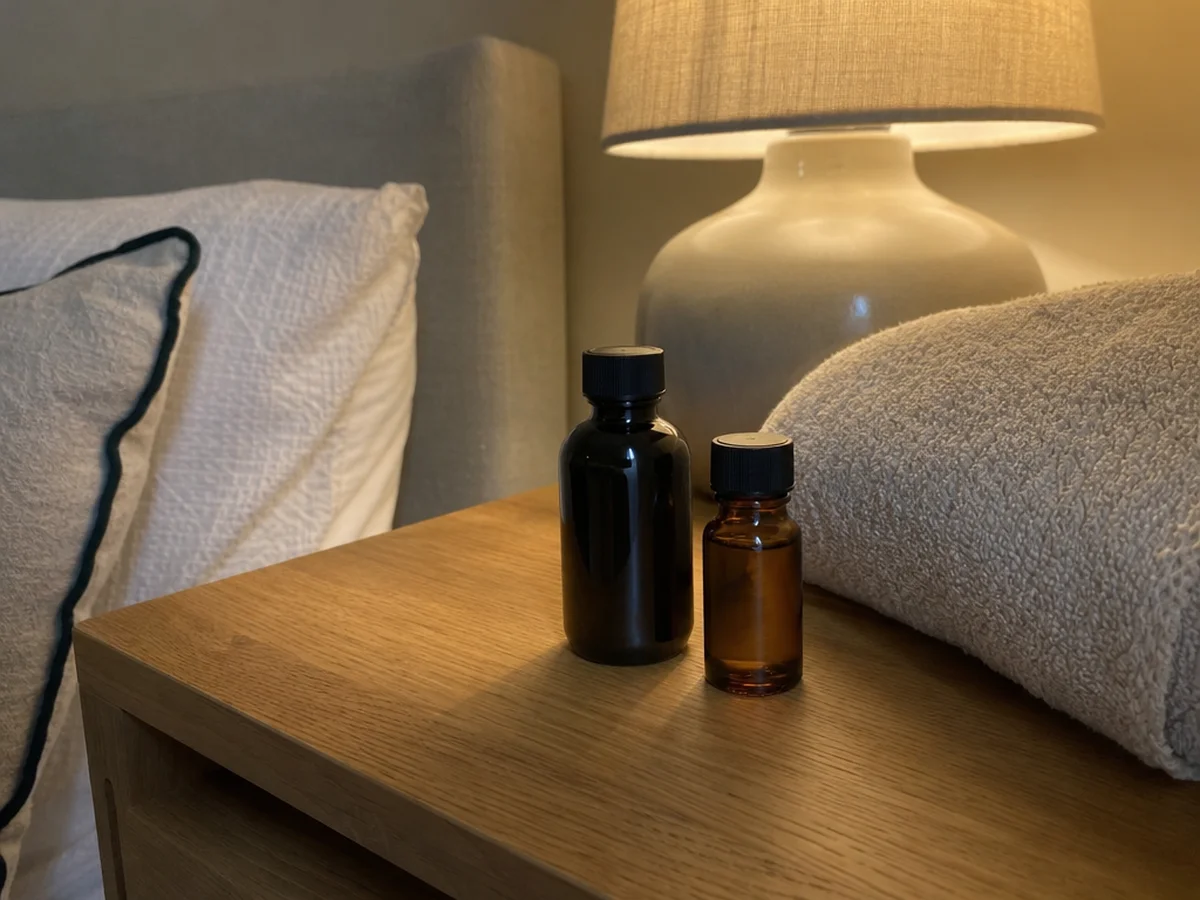
Turning that into an evening, here is how we would approach it, as a suggestion rather than a published schedule for turmeric:
- Start with the smallest amount your diffuser's manual allows. Diffusers vary a great deal in water volume and output, so count on your own device rather than a fixed drop number.
- Run it in short sessions with breaks, and open a window if the room starts to feel heavy.
- Keep it somewhere other people and pets can step away from. Our disclaimer asks you to keep the oil away from children and pets, and that includes the bottle itself.
- If you are pregnant, nursing or have a medical condition, check with your physician before diffusing any essential oil.
Setting the scene
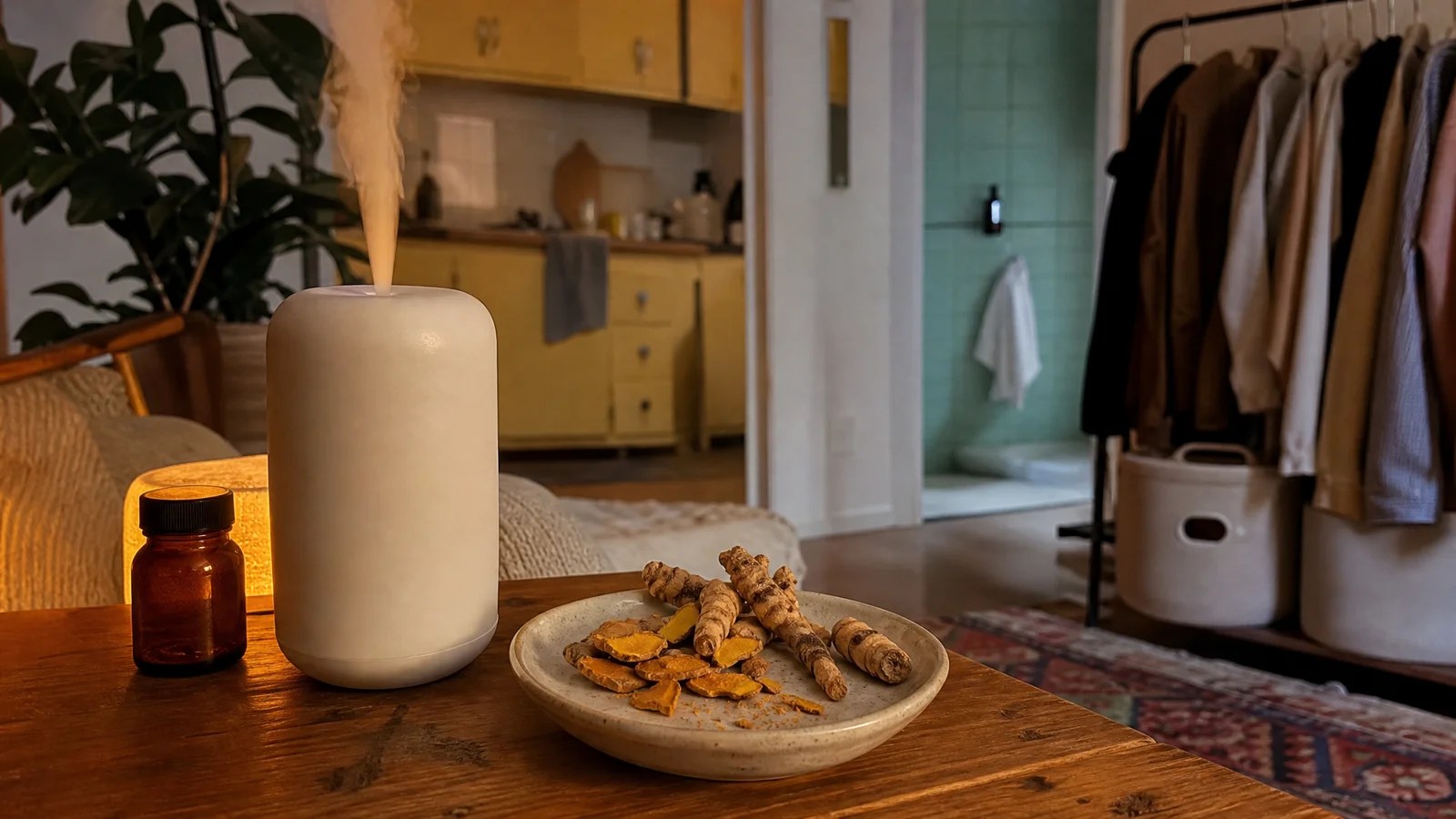
The diffuser is only half of it. Dim the overhead light, switch on a lamp, and open the bottle once before you start so you remember what the oil smells like on its own. Place the diffuser a little away from where you sit, so the scent drifts to you rather than hitting you head on. Clean the water tank when you finish, so the next oil you use does not inherit leftovers.
Blends that suit a quiet room
Turmeric oil blends well with ginger, sweet orange, ylang ylang, sandalwood, patchouli and cedarwood. Those come from a craft or aromatherapy supplier, since we sell only turmeric. Sweet orange is the friendliest start: its brightness lifts the top of the room while turmeric holds the warmth underneath, and our turmeric and sweet orange diffuser blend works that out in parts. Cedarwood and patchouli lean darker and suit a late evening. For how turmeric behaves as a long-lasting note, see our piece on turmeric as a perfume base.
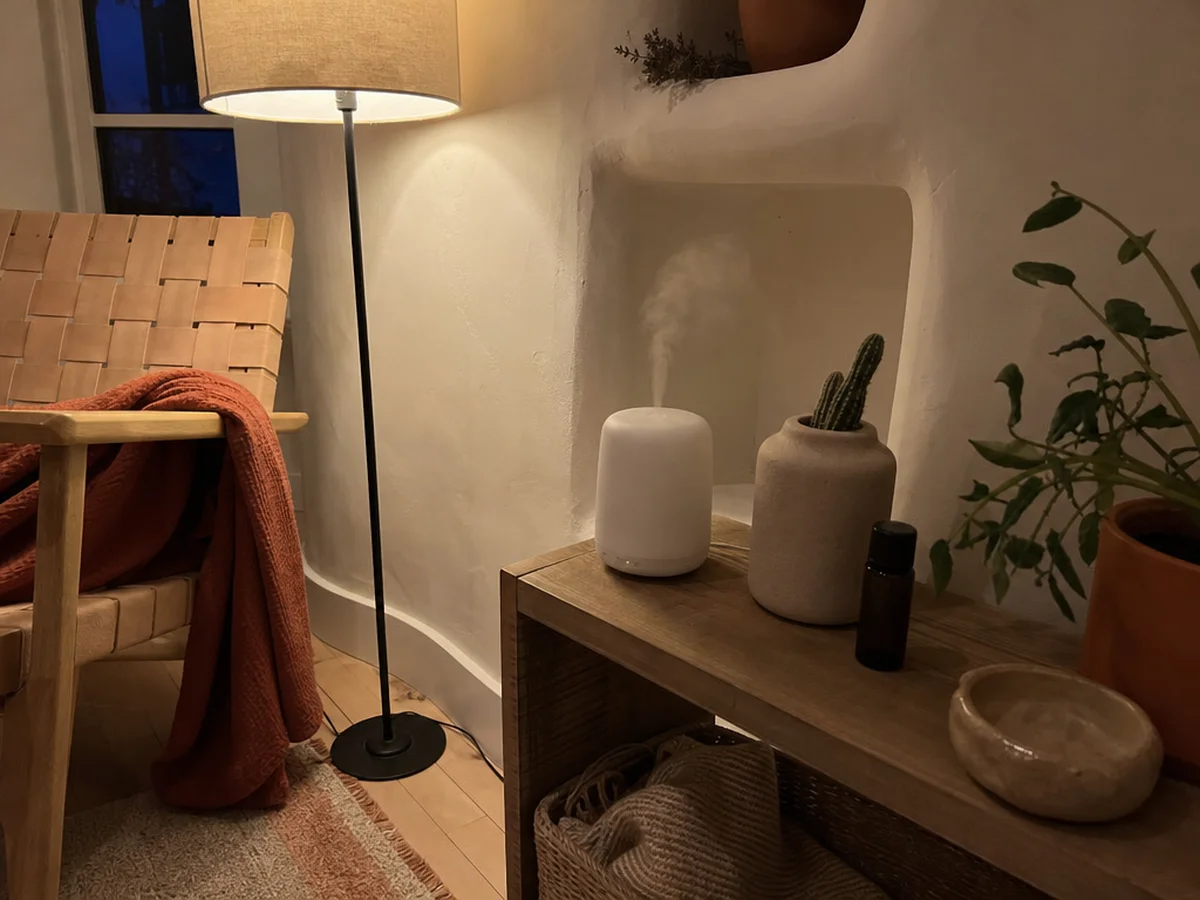
Our recommendation is to treat turmeric as an accent. Pair it with a bright partner for an hour or two, notice how the room smells when you return to it from another part of the house, and adjust next time. Small changes, one at a time, teach you more than a big batch of experiments.
Turn the lamp down, let the room fill with a little warmth, and enjoy it as exactly what it is: a good smell.
Turmeric Essential Oil
Turmeric Essential Oil from our own shop, in sizes from 0.5 oz to bulk.
From $12.99
Shop Now →Sources & Further Reading
- Sattayakhom A et al. Effects of Thai Local Ingredient Odorants, Litsea cubeba and Garlic Essential Oils, on Brainwaves and Moods. Molecules, 2021
- Aromatherapy | NCCIH
- Hasegawa T et al. Aroma of Turmeric: Dependence on the Combination of Groups of Several Odor Constituents. Nat Prod Commun, 2015
- The Ultimate Guide to Essential Oil Inhalation, Tisserand Institute