Turmeric Oil as a Perfume Base Note: Blending Tips
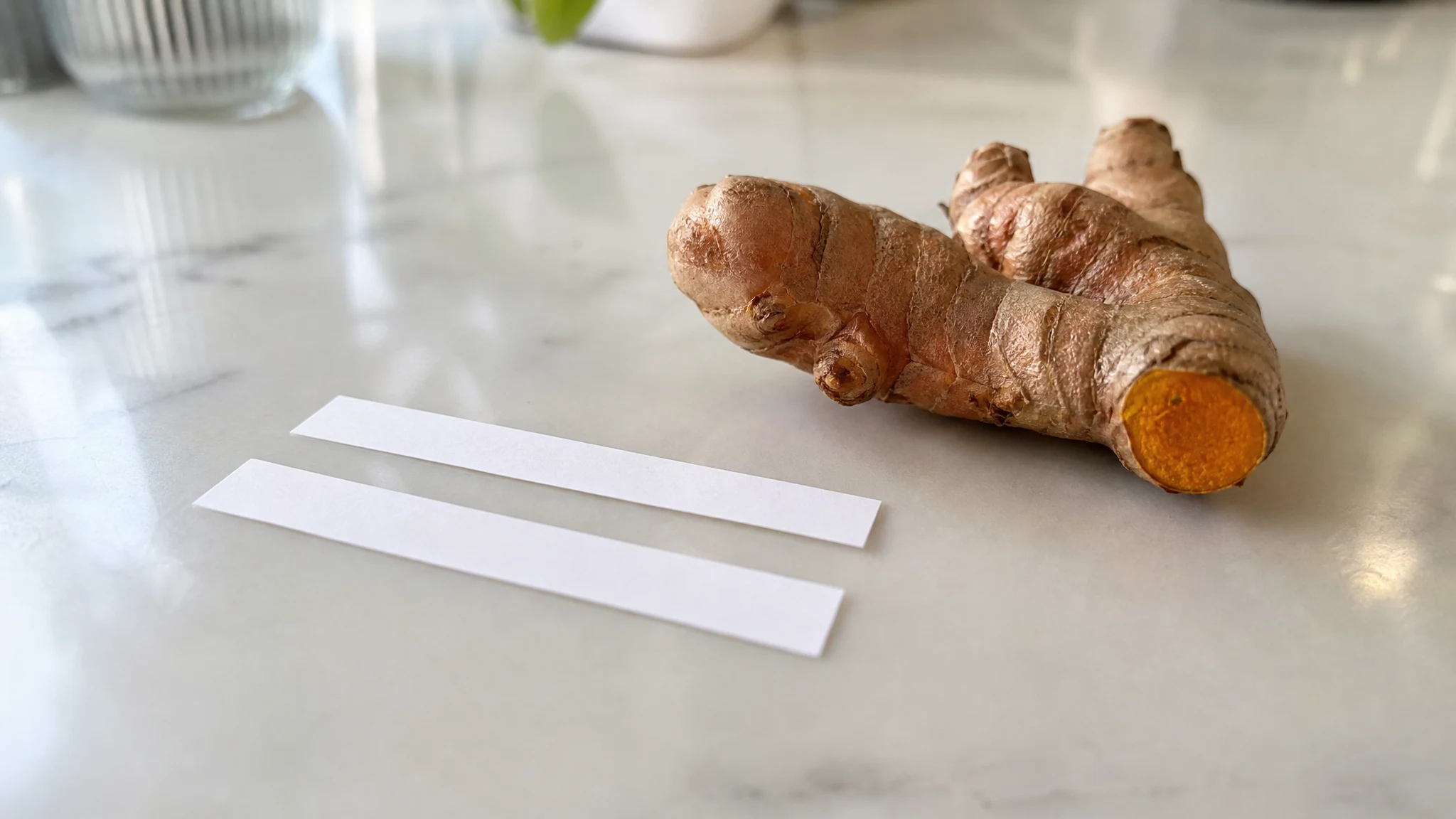
Hold a paper strip dipped in turmeric oil next to one dipped in sweet orange, and come back an hour later. The orange has usually packed up and left; the turmeric is still there, warm and a little spicy, like a coat left on a chair. That staying power is what perfumers mean when they call a material a base note, and it is the best reason to keep a bottle of turmeric oil near your blending table.

Turmeric Essential Oil
Our own Turmeric Essential Oil, in sizes from 0.5 oz to bulk.
From $12.99
Shop Now →What "base note" really means
A base note is not a flavour of scent, it is a measure of time. Perfumers layer materials that leave the skin at different speeds: bright citrus first, florals and herbs in the middle, heavy woods, resins and spices underneath. A 2012 paper in Sensors found that the fresher a scent is rated, the less it tends to last, with a correlation of about -0.85 between perceived freshness and staying power (Zarzo, "What is a fresh scent in perfumery? Perceptual freshness is correlated with substantivity."). Turmeric sits at the opposite end of that scale. Its aroma is warm, earthy and gingery with a woody-spicy edge, and we place it as a base to middle note. A 2026 review of the oil notes that it has long been used in perfumes of a heavy, oriental character, which fits that picture (Saavedra et al., "Turmeric (curcuma longa) rhizome essential oil: analytical profile of authenticated and commercial samples, safety and pharmacology review.").
Notice the word "base to middle." Where it lands depends on your bottle, your partners and your skin, so we suggest you let a strip tell you rather than a label.
A quick blotter test
Dip three strips about a centimetre deep: one in turmeric oil, one in the partner you have in mind, one in the two together. Smell them straight away, then at half an hour, two hours and six hours, and jot down what you notice. If the turmeric strip still smells clearly of turmeric when the partner has faded, you have found your base. If it fades alongside the others, treat it as a middle note and build around it that way. It is a classic bench habit, and it costs a few strips of paper.
If you have never worked with a base note before, the best habit is to smell slowly. Hold a strip a few centimetres from your nose, take one gentle sniff, and then rest. Smelling too often, or too close, numbs your nose quickly. Step away to a window or sniff your sleeve to reset between strips.
Partners worth trying
We recommend starting with the oils that blend naturally with turmeric: ginger, sweet orange, ylang ylang, sandalwood, patchouli and cedarwood. We sell only turmeric, so you will find those at a craft or aromatherapy supply shop. A few ways to think about them:
- Sweet orange gives a bright top over a warm foundation, exactly the layering that the freshness finding describes. Our turmeric and sweet orange blend works that pairing out in parts.
- Cedarwood is a dry, quiet wood. Turmeric can add a spiced warmth to it, and the strip will tell you quickly whether you like the result.
- Patchouli or sandalwood are both heavy, so turmeric adds a different kind of weight here, more gingery than resinous. Smell again after an hour to see which note is leading.
- Ginger is the obvious cousin. If you are choosing between two warm rhizomes, turmeric versus ginger sets them side by side.
Keep a notebook for the bench. Write down each blend as drops, because drops are easy to repeat, and put the date at the top. When you find a combination you like, you will be able to recreate it, and when you find one you do not, you will know what to change.
Try different carriers for a skin blend if you like. A light carrier lets the scent sit close to the skin, while a heavier one tends to hold it a little longer. Both are choices of texture and feel, and your own nose and skin are the best guide.
Keep the dose low on skin
Perfume sits on skin for hours, so we treat dilution as part of the formula, not an afterthought. Our guidance for turmeric oil is 0.5% to 2% in a carrier, with a patch test first and the oil kept away from the eyes. For something worn all day, we would start at the lower end and move up only if your skin is comfortable. Turmeric oil can be sensitising for some people, and a light hand serves a base note well anyway, since it is the quiet foundation under everything else. If you plan to sell a finished fragrance, check the current IFRA standards for your own formulation and category.
For a fuller portrait of the scent itself, have a look at what turmeric oil smells like, and if you are curious how the same warmth plays in a room, our evening diffuser piece covers it.
A strip of paper, a clock and a little patience will teach you more about turmeric as a base than any description can.
Turmeric Essential Oil
Turmeric Essential Oil from our own shop, in sizes from 0.5 oz to bulk.
From $12.99
Shop Now →