Turmeric Oil Safety: Dilution, Patch Tests, Who Asks First
Is turmeric essential oil safe? For aromatic and cosmetic use, diluted, patch tested and kept out of the wrong hands, it is a reasonable thing to enjoy. For anything else, no. We would sooner give you that answer plainly than hide it behind caveats, and the rest of this post shows where each part comes from.
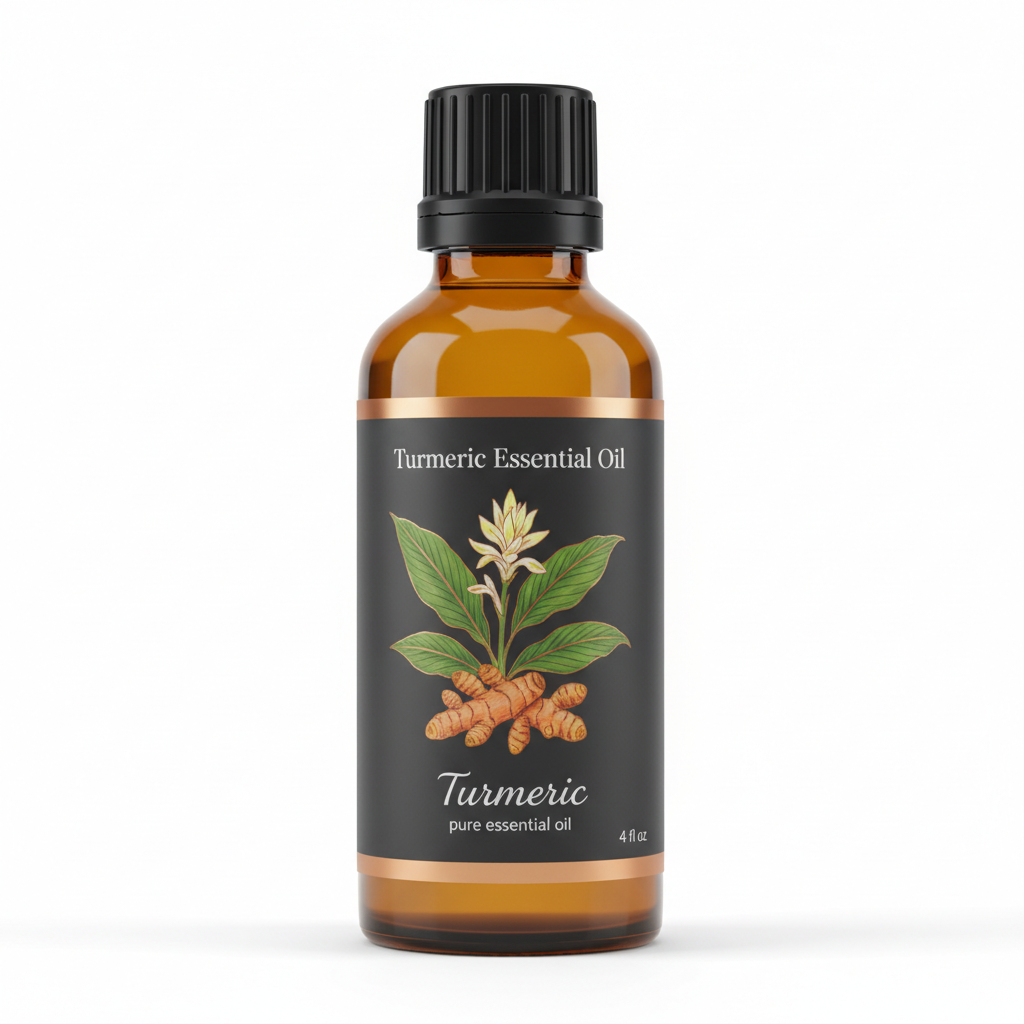
Turmeric Essential Oil
Our own Turmeric Essential Oil, in sizes from 0.5 oz to bulk.
From $12.99
Shop Now →What we say about our own oil
We describe Turmeric Essential Oil as a concentrated botanical extract for aromatic and cosmetic use only, never internal consumption. Our dilution guidance is 0.5% to 2% in a carrier oil, roughly 3 to 12 drops per ounce, with a patch test first and a light hand: turmeric oil can be sensitizing for some people. Keep it away from eyes, children and pets. Our disclaimer asks anyone pregnant, nursing or with a medical condition to consult a physician first. We would begin at the low end of the range, since we have found no published ceiling for turmeric oil that we could verify.
We like to keep safety simple. Almost every sensible habit with an essential oil comes down to a short list: dilute it, test it, keep it away from places it should not go, and ask a professional if you are unsure. Once those are second nature, the rest is enjoying the scent.
What research actually covers
The data on skin use of the oil itself is small. A 2026 review reports that turmeric oil applied at 4% to the forearms of 25 volunteers produced no irritating or sensitizing effects, and that undiluted oil was slightly irritating to the abraded skin of rabbits. It traces both to a 1983 monograph, and the review was funded by an essential-oil company. Taken together, the findings suggest the oil was tolerated at modest dilution, but 25 people at one concentration cannot rule out a reaction in someone else.
The wider turmeric literature is mostly about curcumin and oral extracts, which are not what we sell. A steam-distilled oil does not contain curcumin. So the large body of research on the spice does not describe the bottle, and we do not use it that way.
The FDA adds a useful reminder: plant-derived does not mean safe on skin. Its aromatherapy guidance notes that many plant materials can irritate or trigger allergies, and that cosmetic or drug status depends on how a product is intended to be used. That is another reason we keep our oil to aromatic and cosmetic use.
We want you to enjoy the oil, and enjoying it starts with feeling comfortable using it. A calm, measured routine is better than a rushed one, and it takes only a few minutes of preparation to set up.
Patch test properly
Dab the diluted blend, not the neat oil, on the inside of your forearm. The NHS notes that irritant contact dermatitis can show up straight away or within 48 hours, and allergic reactions can be immediate or delayed. So a ten-minute check says very little; give it a couple of days. Stop and wash if skin itches, reddens or stings. The National Center for Complementary and Integrative Health notes topical curcumin can cause hives or itching, and while that page is about turmeric and curcumin products, it is a sound prompt to stop at the first sign. Our side effects post covers the reactions people report.
Who should ask a professional first
- Pregnant or nursing. Ask your physician or midwife, as we say in our disclaimer. We give no pregnancy dilution. Our pregnancy post lays out what sources say.
- Babies and children. America's Poison Centers note that children have thin skin and immature livers, which may make them more susceptible to toxic effects. Ask a pediatrician. See our children post.
- Dogs, cats and birds. The Merck Veterinary Manual says concentrated essential oils should never be applied directly to pets, and that dogs, though they lack the cat-specific enzyme deficiency, are still at risk. A veterinarian is the person to call. Our pets post has more.
- Anyone taking regular medication. Poison centers note essential oils may interact with medications. A pharmacist can say what matters for you.
- Broken, inflamed or eczema-prone skin. Poison centers advise against using essential oils on damaged skin.
Nobody should swallow the oil. Poison control is direct that misuse of essential oils can cause serious poisoning, and our swallowing post explains why the spice and the bottle are not interchangeable.
Habits worth building
- Label every blend with the oil, the percentage and the date.
- Keep the bottle capped and stored somewhere cool, dark and out of reach.
- Wash your hands after handling the oil before touching your face.
- Start with the low end of the range and change one thing at a time.
Paperwork for the careful buyer
Some buyers need more than a label: an allergen declaration, an IFRA certificate, a safety data sheet. If that is you, ask us in writing through the contact page before you order, and get any answer in writing. Our dilution guide has the arithmetic for your own blends.
The short version is easy to remember: dilute it, test it, start low, keep it for aroma and cosmetic use, and ask a professional about anything personal.
Turmeric Essential Oil
Turmeric Essential Oil from our own shop, in sizes from 0.5 oz to bulk.
From $12.99
Shop Now →Sources & Further Reading
- Saavedra DI et al., 2026. Turmeric (curcuma longa) rhizome essential oil: analytical profile of authenticated and commercial samples, safety and pharmacology review. Pharmaceutical Biology. pmc.ncbi.nlm.nih.gov/articles/PMC12954815
- US Food and Drug Administration. Aromatherapy. fda.gov/cosmetics/cosmetic-products/aromatherapy
- NHS. Contact dermatitis - Symptoms. nhs.uk/conditions/contact-dermatitis/symptoms
- Poison Control. Essential oils: Poisonous when misused. poison.org/articles/essential-oils
- National Center for Complementary and Integrative Health. Turmeric (page last updated April 2025). nccih.nih.gov/health/turmeric
- Merck Veterinary Manual (last updated March 2025). Toxicoses From Essential Oils in Animals. merckvetmanual.com