Turmeric Oil Uses: Scent, Dilution and Craft Projects
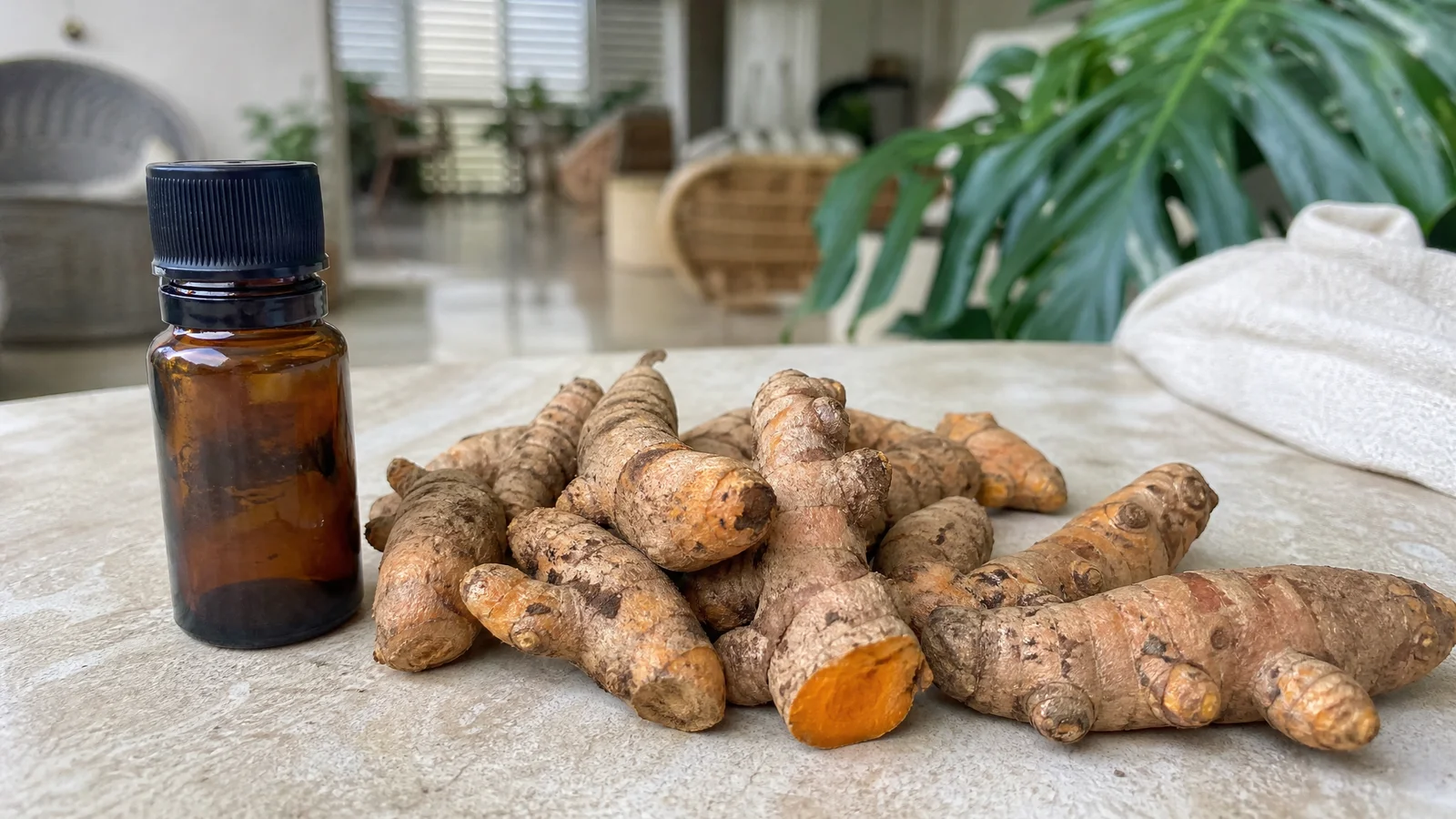
Turmeric oil has a personality you notice the moment the cap comes off: warm, earthy and gingery, with a woody-spicy edge, the kind of aroma that sits comfortably in the base of a blend. That character is the reason to buy it, and it also tells you the most sensible ways to use it. Here is how we think about the possibilities, from the easy wins to the places we would not go.

Turmeric Essential Oil
Our own Turmeric Essential Oil, in sizes from 0.5 oz to bulk.
From $12.99
Shop Now →Start with scent, because that is where it shines
A diffuser is the simplest way to enjoy turmeric oil, and short sessions in a ventilated room are a good habit with any essential oil. It is a base-to-middle note, so it pairs well with ginger, sweet orange, ylang ylang, sandalwood, patchouli and cedarwood. Our scent profile goes deeper on how it behaves next to its friends. Keep it out of rooms where pets or babies spend their time; our pet safety article explains what veterinary sources say.
Get to know the bottle first
Before you plan anything, spend a few minutes with the oil by itself. Put a drop on a paper strip, let it sit for a minute, and smell it. Come back after ten minutes and again after an hour. You will notice the early sharpness settle into something warmer and woodier, and that slow change is exactly why it works so well as a base note. Knowing what the oil does on a strip makes every later decision easier, from how many drops to use to what to pair it with.
Diluted, in things you rub on
For body oils, rollers and similar craft projects, we recommend 0.5% to 2% in a carrier oil. Because we sell the oil neat, the arithmetic is yours to do, and a rough guide is about 3 to 12 drops per ounce of carrier across that range. Beginners do well at the bottom of it. Patch test first, using the American Academy of Dermatology method: a quarter-sized spot on the inner arm, twice a day for 7 to 10 days, and stop at any redness, itching or swelling. Carriers such as jojoba or sweet almond come from a craft shop or grocery, not from us. Our dilution guide and roller blend arithmetic do the sums for you.
Soap and other handmade projects
Soap makers and candle makers enjoy turmeric oil as a scent, and our bulk sizes exist for them. One honest note for anyone hoping for golden soap: the oil carries the aromatic part of turmeric rather than the pigment, so it will not reliably color a batch on its own, and makers who want that hue add powder or a colorant from a supply shop. Our soap formulation worked out shows the math.
Keep it in good shape
A bottle you look after serves you for years. Keep it capped, upright and in a cool, dark place away from heat and direct light, and it typically keeps for three to four years unopened. If you decant a working amount for a project, use a clean, dry, airtight bottle and label it with the name and the date.
It also pays to write down what you make. A line in a notebook with the date, the percentage and what you blended with turns a nice batch into one you can repeat.
The same goes for craft projects. Decide the purpose of the batch before you pick up the bottle, whether that is a room scent, a body oil or a soap, because the purpose sets the amount. A body oil lives at the low end of our range, and a diffuser blend is measured in drops for a room, not for skin.
Where the line sits
Turmeric oil is an aromatic and cosmetic oil, and that frames everything else. The FDA draws the line by intended use: a massage oil meant only to lubricate skin and add scent is a cosmetic, while the same oil promoted to relieve muscle pain is a drug. We stay on the cosmetic side, which is why you will not find us promising anything for pain, sleep, mood or skin conditions.
It also helps to know where the big health headlines come from. Nearly all of turmeric's research reputation belongs to the spice and to curcumin, and curcumin does not come over in steam distillation because it is not volatile. The National Center for Complementary and Integrative Health puts it plainly: we do not know enough to definitively conclude that turmeric or curcumin is beneficial for any health purpose. A 2016 systematic review of human studies of turmeric on skin found 18 studies and called the evidence early, and none of them concerned an essential oil. If you have a skin concern, a dermatologist is the right person to ask. Our research overview sorts the literature by how much weight it can bear.
A few things we simply keep out of the picture
Our oil is for aromatic and cosmetic use only, never for internal use, and that includes cooking or adding it to drinks. Keep it away from eyes, children and pets. If you are pregnant, nursing, taking medication or have a medical condition, our disclaimer advises checking with your physician before using essential oils, and that is the sensible route here too.
So the shortlist is happily short: scent, gentle dilution, handmade craft. Do those well and turmeric oil has plenty to offer.
Turmeric Essential Oil
Turmeric Essential Oil from our own shop, in sizes from 0.5 oz to bulk.
From $12.99
Shop Now →Sources & Further Reading
- NCCIH. Turmeric: Usefulness and Safety.
- US FDA. Is It a Cosmetic, a Drug, or Both? (Or Is It Soap?)
- American Academy of Dermatology. How to test skin care products.
- Vaughn AR, Branum A, Sivamani RK, 2016. Effects of Turmeric (Curcuma longa) on Skin Health: A Systematic Review of the Clinical Evidence. Phytotherapy Research.