Turmeric and Coconut Oil for Teeth: What Trials Measured
Scroll through enough wellness posts and you will meet the turmeric and coconut oil paste for teeth, promoted as a whitening shortcut. It is a charming kitchen idea, and it is worth sorting out what is actually in the jar, because the bottle we sell is not part of it. Our turmeric oil is for aromatic and cosmetic use only, never internal consumption, so this post is about the trend, not a use for our oil.

Turmeric Essential Oil
Our own Turmeric Essential Oil, in sizes from 0.5 oz to bulk.
From $12.99
Shop Now →Three things called turmeric
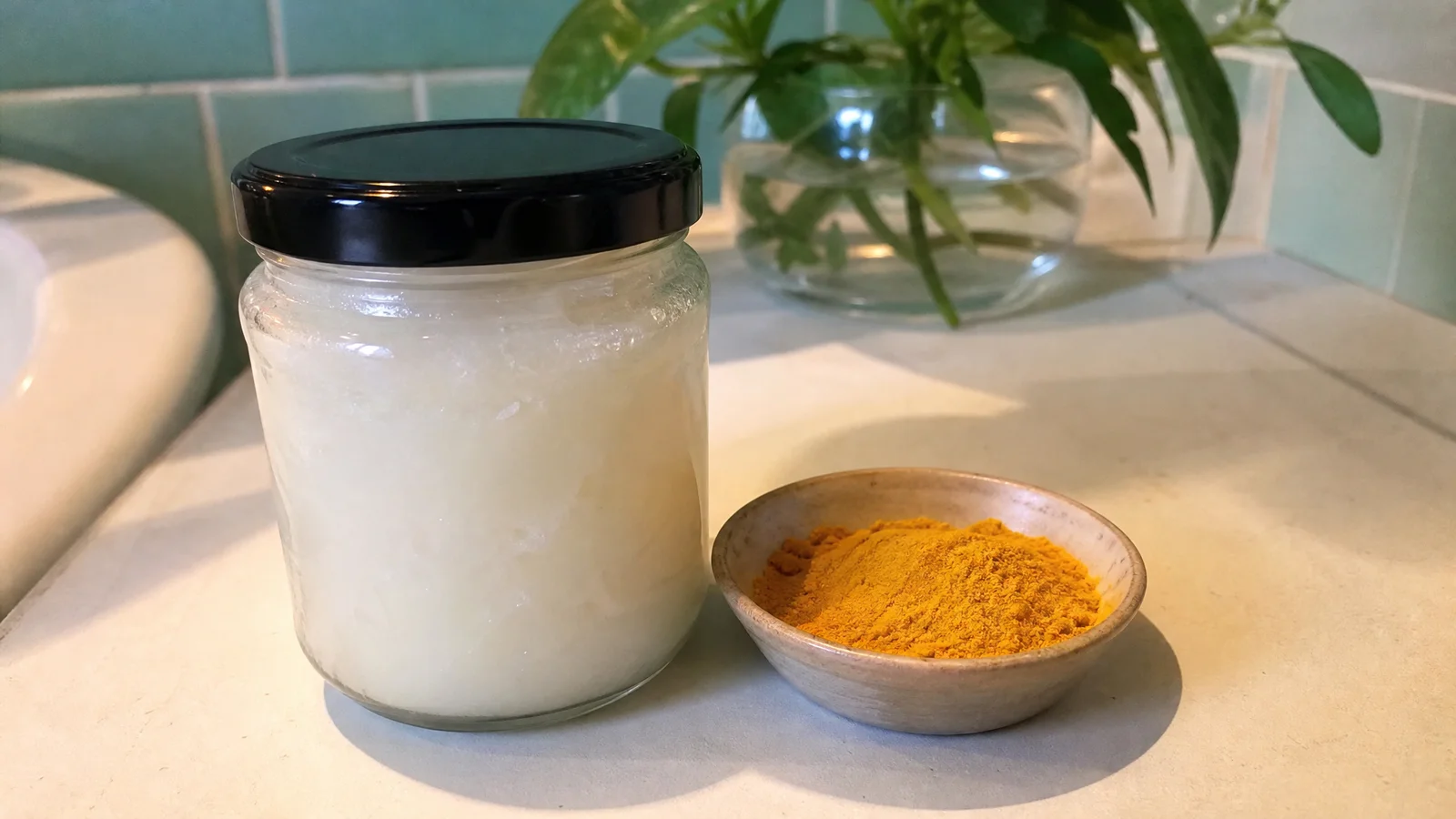
The trend blends several different products under one name. Turmeric powder is the dried, ground rhizome and carries the yellow pigment curcumin. Coconut oil is a kitchen fat. Turmeric essential oil is something else again: a review of Curcuma chemistry describes the rhizome as holding nonvolatile curcuminoids on one side and a volatile oil on the other. Curcumin is not volatile, so it does not come through steam distillation, and our oil carries the aromatic part rather than the pigment. A paste of powder and coconut oil therefore tells you nothing about the oil, and the oil does not belong in a paste.
What the oil pulling trials measured
The coconut oil part of the claim usually borrows from oil pulling, which is swishing an edible oil in the mouth. A 2020 systematic review of coconut oil pulling searched six databases, found 42 candidate studies and included four randomised trials with 182 participants in all. The trials lasted 7 to 14 days and measured things like bacteria counts in saliva and plaque scores, where the reviewers saw significant differences. One trial compared staining against a chlorhexidine mouthwash group. The reviewers then added that data were insufficient for conclusive findings, study quality was mixed and the risk of bias was high.
That is a useful result, but it is not a whitening result. The abstract describes plaque and bacteria, not tooth shade, and swishing is not the same as rubbing a paste on your teeth. In short, the trials were short, small and loosely controlled, and none of them measured whether anyone's teeth got lighter.
Why the before and after photos persuade
A photo of teeth changes with lighting, how dry the surface is and the angle of the camera, all within minutes. That makes before and after pictures persuasive and poor evidence at once. If a post promises a shade change from a kitchen ingredient, the question to ask is which instrument measured the shade. In the sources we looked at, nothing did. A dentist can tell you whether a colour is sitting on the surface of a tooth or inside it, which is the real starting point for any whitening conversation.
If you are tempted to try a paste
A kitchen paste is outside what we sell, so we will keep this practical. The National Center for Complementary and Integrative Health says we do not know enough to conclude that turmeric or curcumin is beneficial for any health purpose, and notes that topical curcumin can cause hives or itching. If your lips or gums itch or swell after a turmeric paste, stop and talk to a dentist or physician. Gum bleeding, sensitivity or a sore spot are reasons to book a dentist, not to reach for a paste.
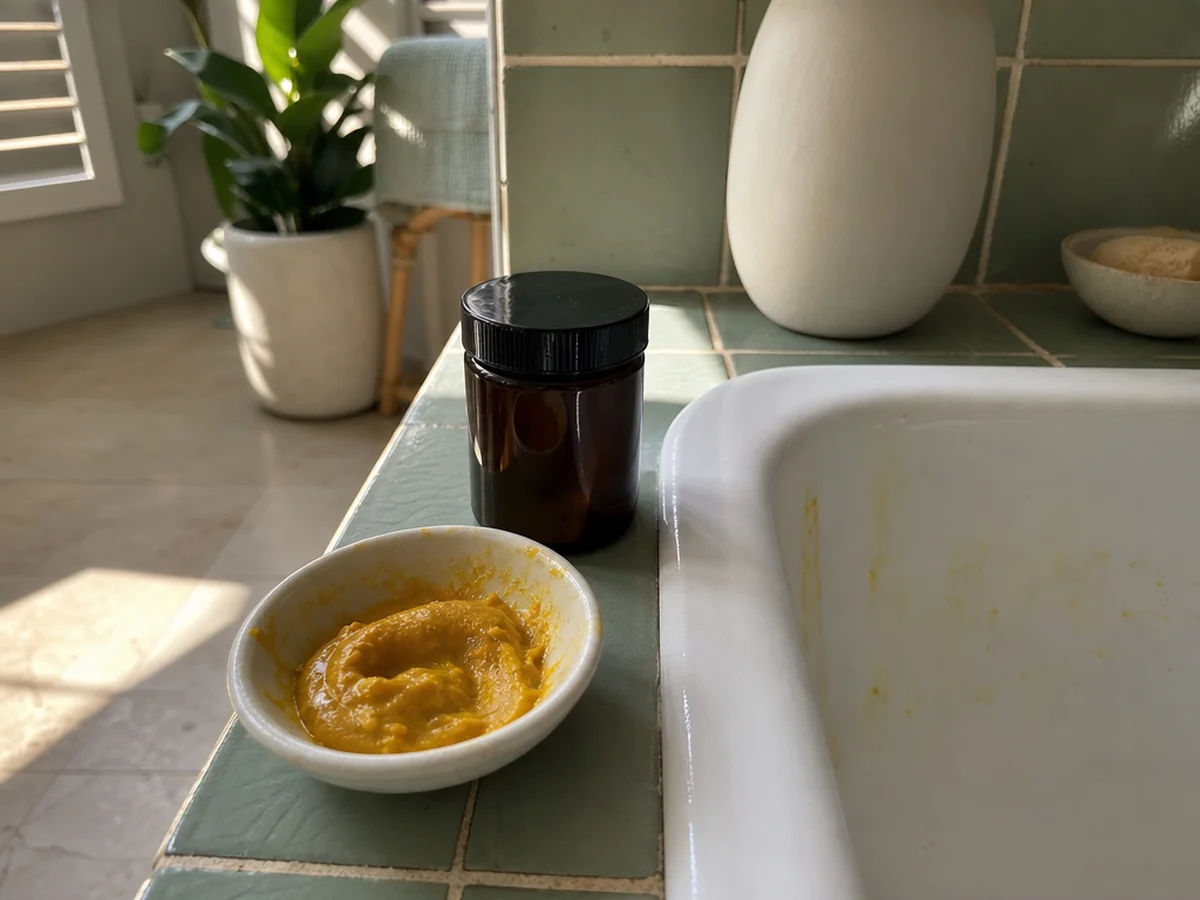
And please do not add essential oil to a paste or put it in your mouth. Poison Control advises that if someone swallows an essential oil, they should contact Poison Help at 1-800-222-1222, which is free and open around the clock. Our post on swallowing turmeric oil explains why the spice and the bottle are different substances.
A better question to ask before you try anything
Social media makes every kitchen trick look effortless, but a good habit is to ask three quick questions before you copy one. What exactly is in it? Who measured the result, and with what instrument? And is there a professional who looks after that part of the body? For teeth, the last question has an easy answer. A dentist can look inside your mouth, tell you what is causing a colour you do not like, and suggest options that fit you. We would rather point you there than guess from a recipe card.
Where our oil does fit
Our turmeric oil is for aroma, for diluted massage and body oils, and for handmade soap, always diluted and always with a patch test first. If you want to see how coconut oil works as a skin carrier, our post on turmeric oil in coconut oil covers it, and oil versus powder explains how the two differ, with what turmeric oil is as a good starting point.
Enjoying turmeric the safe way
If it is the smell and feel of turmeric you love, there are plenty of kitchen-table ways to enjoy it that do not involve the mouth. A drop of the oil in a diffuser gives you the warm, earthy, gingery aroma with a woody-spicy edge. Cooking with the spice jar covers the flavour. Keeping the two separate is the whole trick, and it keeps everything easy to explain to anyone else in the house.
The kitchen paste may be a fun experiment for some, but a dentist is the person who can actually talk about teeth.
Turmeric Essential Oil
Turmeric Essential Oil from our own shop, in sizes from 0.5 oz to bulk.
From $12.99
Shop Now →Sources & Further Reading
- The effect of oil pulling with coconut oil to improve dental hygiene and oral health: A systematic review, Woolley J, Gibbons T, Patel K, Sacco R, Heliyon, 2020.
- Chemical Composition and Biological Activities of Essential Oils of Curcuma Species, Dosoky NS and Setzer WN, Nutrients, 2018.
- Turmeric, National Center for Complementary and Integrative Health, updated April 2025.
- Essential oils: Poisonous when misused, Poison Control.