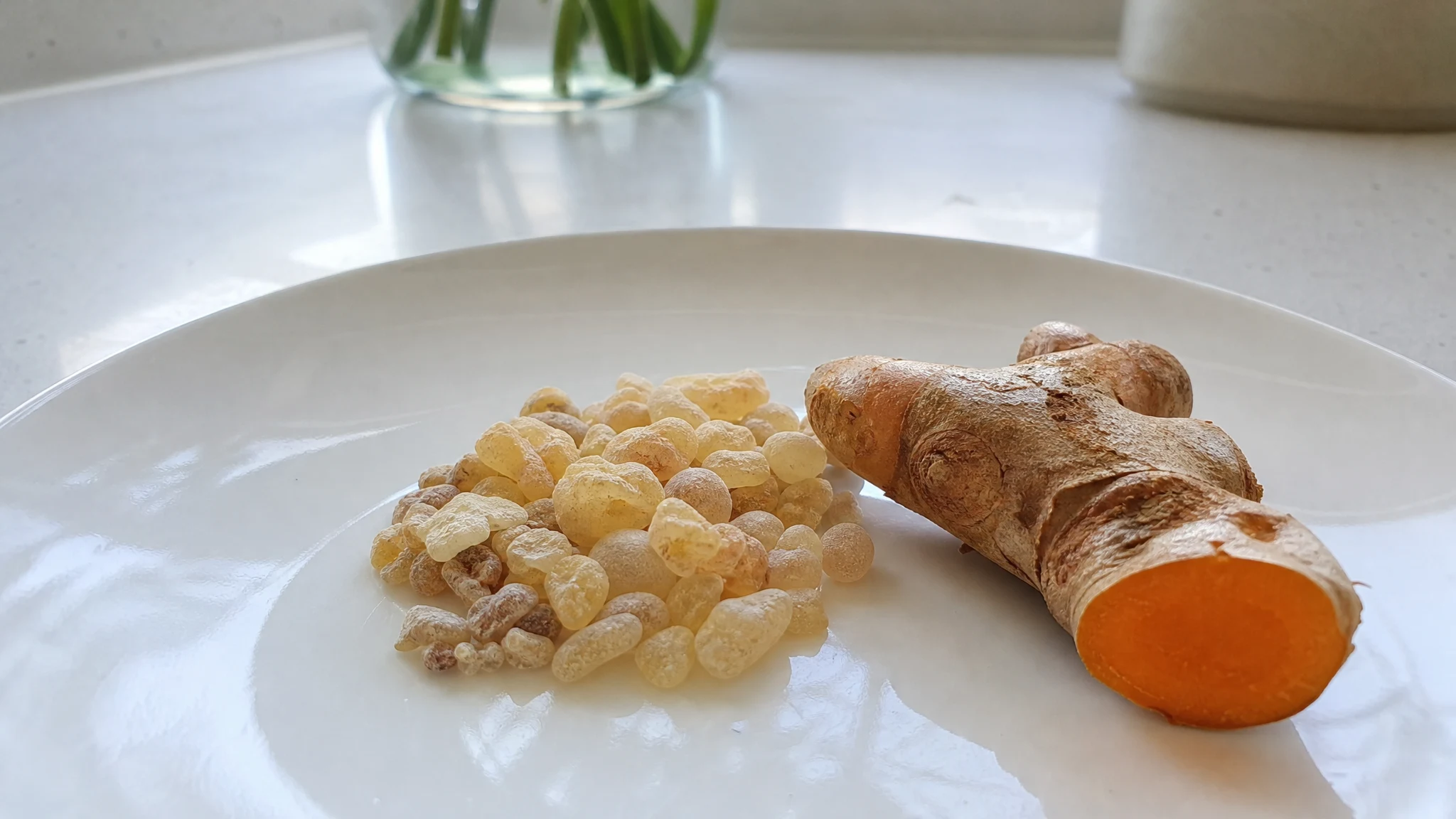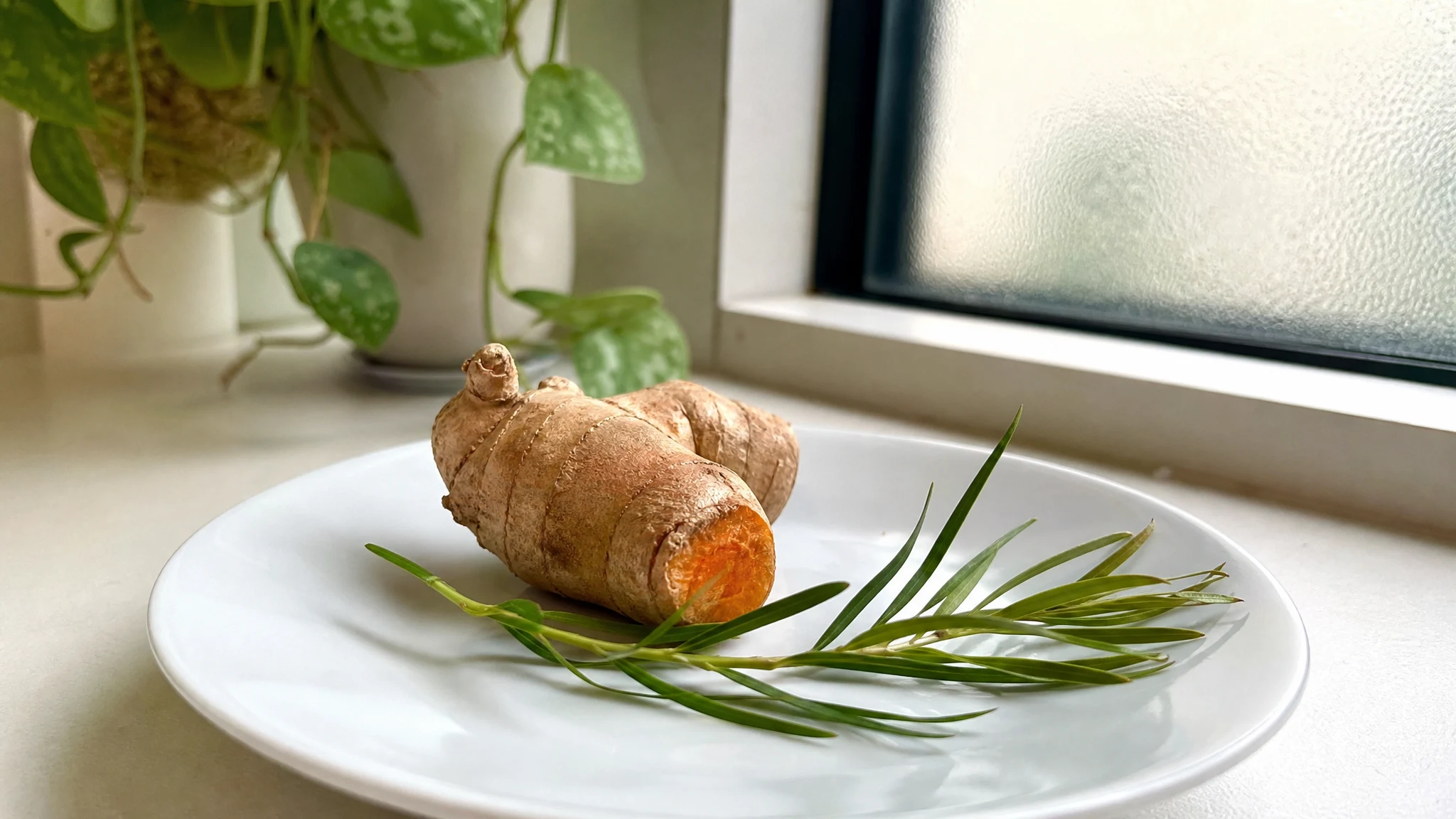
Turmeric Oil or Tea Tree Oil? What the Research Covers
Tea tree oil has a long-running reputation for blemish-prone skin, and turmeric oil gets pulled into the same conversation because turmeric sounds soothing and golden. The two are not in the same position at all. One has a modest body of human trials behind it, and the other has none for this question. It is worth laying that out clearly, because the gap is the most useful thing to know before you buy either.
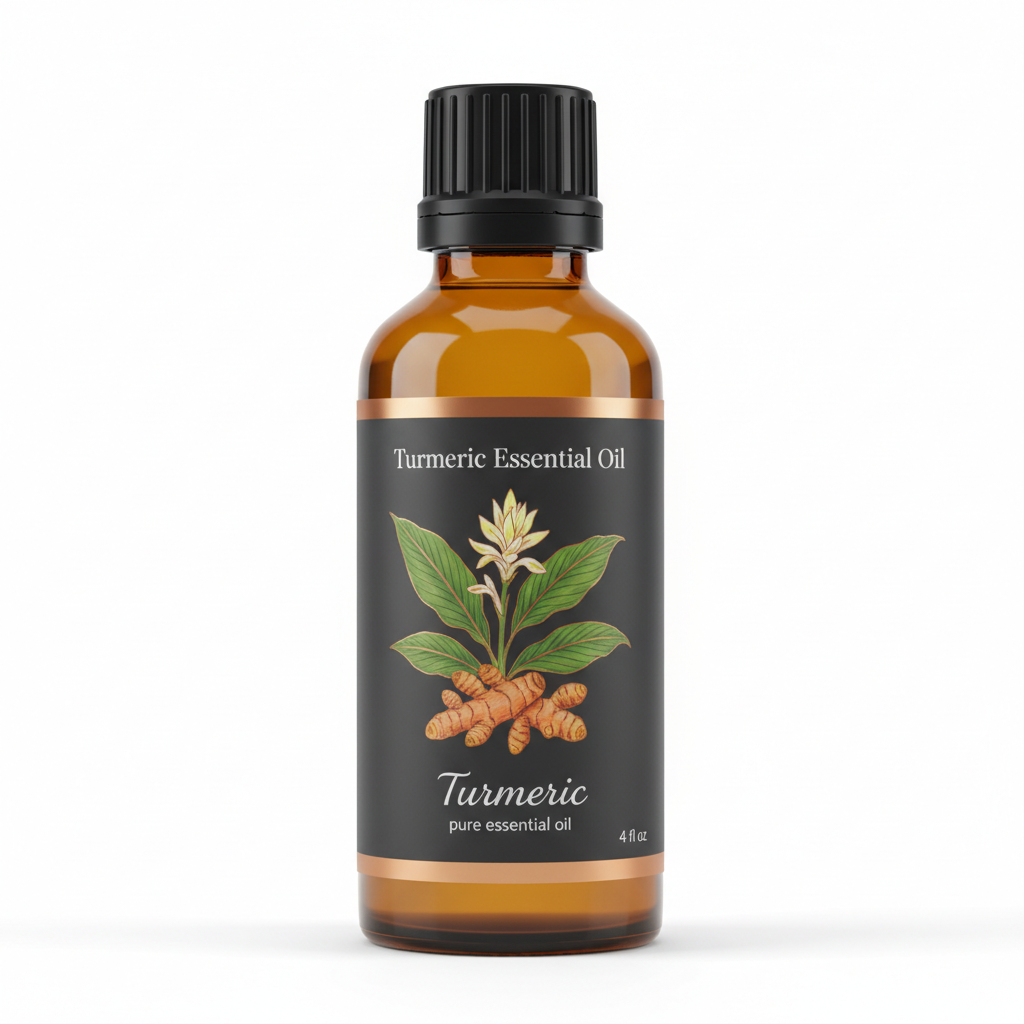
Turmeric Essential Oil
Our own Turmeric Essential Oil, in sizes from 0.5 oz to bulk.
From $12.99
Shop Now →What the tea tree trials actually looked at
Tea tree oil is the one with a research file. A 1990 trial in Australia compared 5% tea tree oil gel with 5% benzoyl peroxide lotion in 124 people with mild to moderate acne. Both reduced lesions, with tea tree acting more slowly, and fewer side effects were reported with tea tree. A 2007 trial in Iran gave 60 patients either 5% tea tree oil gel or placebo for 45 days and found a significant difference in favor of the gel. A 2026 systematic review pooled seven studies of 445 patients and found a modest reduction in acne severity with tea tree oil, mostly mild local side effects, and a call for larger, standardized trials.
Notice what those are: gels at 5%, in clinical settings, for a medical condition. The National Center for Complementary and Integrative Health sums up the field gently, saying tea tree oil might be helpful for acne but more evidence is needed, and noting that most people can use topical tea tree products without problems although some get redness or irritation. It also says tea tree oil should not be swallowed. Those trials tell you about tea tree oil in those products. They are not a recommendation for either of our bottles, and we do not sell tea tree oil.
It is worth saying that a lack of trials is not a verdict. It simply means the question has not been asked, so there is nothing for us to report and nothing for us to promise.
Where turmeric oil stands
For turmeric oil there is no comparable trial to point to. The turmeric and skin literature is mostly about the spice and curcumin, which is not in a distilled oil. A 2016 systematic review found 18 human studies of turmeric or curcumin on skin, with ten reporting statistically significant improvement over control, and it called the evidence early and limited, mixing oral and topical forms. None of them concerned our kind of product. So the fair summary is this: tea tree has human trials of a specific gel, and turmeric essential oil is a wonderful aroma with no skin claims attached.
A better question than which one is stronger
When two oils are compared, the instinct is to ask which one is better. A more useful question is what each one has actually been studied for, in what form and at what strength. Tea tree has been studied as a gel for acne. Turmeric oil has not been studied for that, and we would not want a golden reputation to answer a question the research has not asked.
You can use the same lens on any bottle, from any seller:
- What exactly is being claimed, and is it a cosmetic claim or a medical one?
- What form was studied, a gel, a cream, a spice or an oil in a diffuser?
- At what strength, and for how long?
- Who ran the study, and was it compared with something else?
Those four questions take a minute, and they protect you from any product that borrows another one's reputation.
The same care applies in the other direction. If a seller of any oil tells you it will fix a skin problem, ask what that claim is based on. A pleasant aroma and a medical promise are very different things, and honest sellers keep them apart.
What we sell, and what we say
We sell turmeric essential oil as an aromatic and cosmetic oil, with no medical or skin-condition claims, so we will not tell you it helps a breakout. The FDA decides what counts as a drug by what a product is promoted to do, and treating acne is a drug claim. For a skin concern, a dermatologist or your pharmacist is the right person, and the American Academy of Dermatology publishes treatment guidance worth reading.
If you simply enjoy turmeric's warm, earthy, gingery aroma and want it near your skin in a product you make, the careful route is the usual one: our guidance is 0.5% to 2% in a carrier oil, patch test first, keep it away from eyes, and stop if skin objects. Turmeric oil is worth a careful hand in particular, and starting at the low end is wise. Our dilution guide and safety overview cover the details, and our article on acne-prone skin goes further into the evidence.
If you are curious about our oil, start with a paper strip, spend an hour with it, and see whether the warm, earthy, gingery character appeals to you. That is the best test any oil can have.
When two oils get compared, the useful question is what each one is actually known for. Tea tree has trials. Turmeric oil has a scent we love, and we are happy to leave it at that.
Turmeric Essential Oil
Turmeric Essential Oil from our own shop, in sizes from 0.5 oz to bulk.
From $12.99
Shop Now →Sources & Further Reading
- Bassett IB, Pannowitz DL, Barnetson RS, 1990. A comparative study of tea-tree oil versus benzoylperoxide in the treatment of acne. Medical Journal of Australia.
- Enshaieh S et al., 2007. The efficacy of 5% topical tea tree oil gel in mild to moderate acne vulgaris: a randomized, double-blind placebo-controlled study. Indian Journal of Dermatology, Venereology and Leprology.
- Ye Y et al., 2026. Efficacy and Safety of Melaleuca alternifolia (Tea Tree) Oil for Acne-A Systematic Review and Meta-Analysis. Phytotherapy Research.
- NCCIH. Tea Tree Oil: Usefulness and Safety.
- Vaughn AR, Branum A, Sivamani RK, 2016. Effects of Turmeric (Curcuma longa) on Skin Health: A Systematic Review of the Clinical Evidence. Phytotherapy Research.
- US FDA. Is It a Cosmetic, a Drug, or Both? (Or Is It Soap?)