Turmeric Face Oil Labels: How to Read the Ingredients
A face oil with turmeric on the front can hold turmeric essential oil, a turmeric extract, a carrier infused with the root, a fragrance, or a trace of any of these. The front of the bottle will not say which. The back will, if you know how to read it, and a few minutes with the ingredient list tells you more than any claim on the front.

Turmeric Essential Oil
Our own Turmeric Essential Oil, in sizes from 0.5 oz to bulk.
From $12.99
Shop Now →Read the list as a ranking
For cosmetics sold in the United States, the FDA's cosmetics labeling guide explains that ingredients are declared in descending order of predominance, with those at one percent or less allowed in any order after the rest. Fragrance can be declared as a single word. We read that as three practical rules:
- If turmeric sits near the top of the list, there is a lot of it, in whatever form. That is unusual in a face oil, where the carrier oils make up most of the bottle.
- If turmeric appears after several other ingredients with no clear break at one percent, you cannot rank it against its neighbours.
- If the list says fragrance and names no turmeric, a turmeric scent may come from anything. Our post on turmeric oil versus fragrance oil covers that case.
The botanical name and plant part tell you the form. A label naming Curcuma longa root oil with the process stated gives you more to go on than "turmeric" alone. A missing process word is a question for the maker, not a conclusion.
The material decides the meaning
When a brand quotes a turmeric study, the first thing to ask is what was actually tested. A study on a solvent extract of the rhizome is a study on a different substance from a steam-distilled oil. One laboratory comparison makes the point well: from the same powdered rhizome, methanol recovered about 1.5% curcumin while supercritical CO2 recovered a small fraction of that, and the aroma compounds came out at similar levels by every method. So turmeric extract can mean a pigment-rich material or a pigment-poor one, and any finding belongs to whichever was tested.
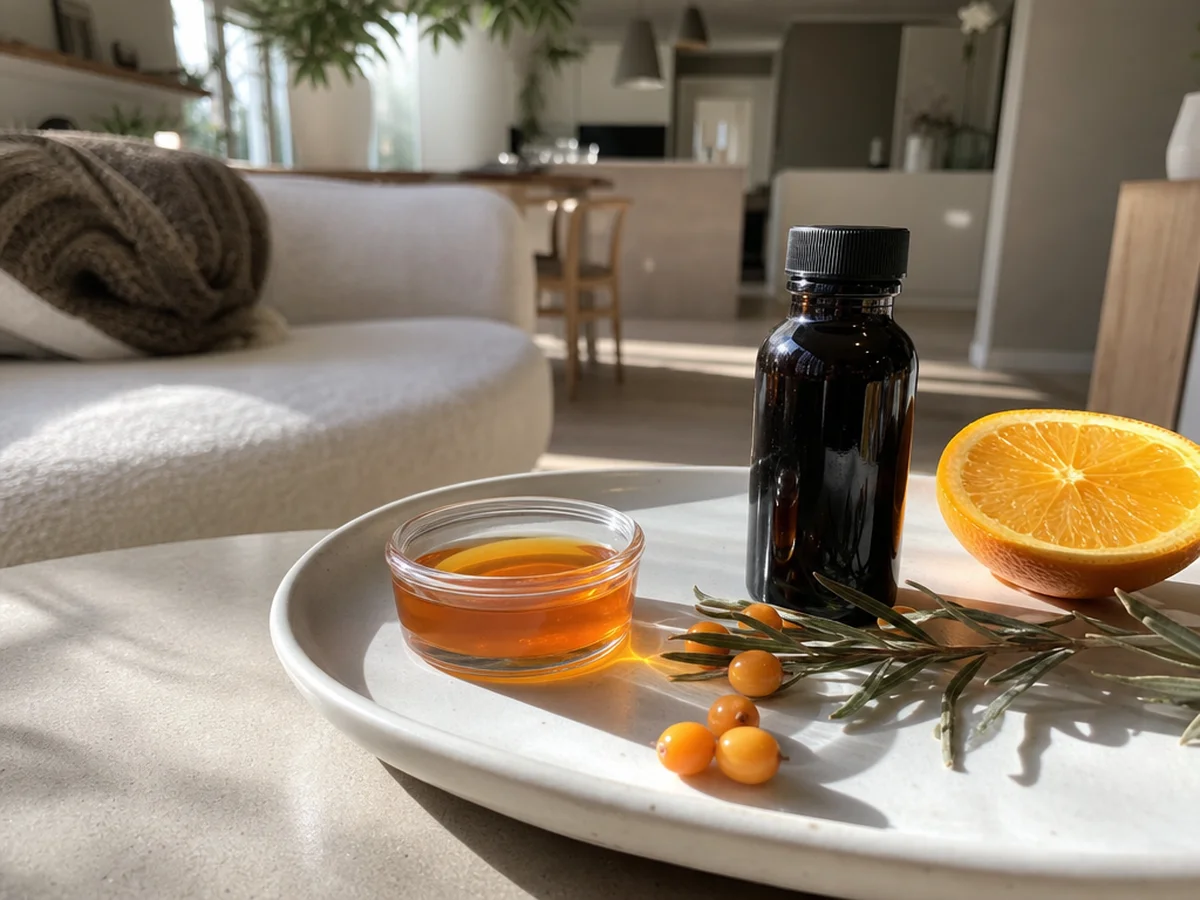
The steam-distilled oil is different again. Curcumin is not volatile, so it does not come through distillation, and a 2026 review of turmeric oil says clinical studies on the oil are scarce. For that reason we make no claims about brightening or evening skin tone for our oil, and a brand that does is leaning on research done with other materials. Our posts on dark spots and aging skin follow the studies in more detail.
If you want to make your own
We sell our turmeric oil neat, in a range of sizes, so a maker who wants it in a face oil does the dilution. Our guidance is 0.5% to 2% in a carrier with a patch test first. For anything that stays on the face, our suggestion is the very bottom of that range, about 0.5%, which comes to roughly 0.15 ml, or about 3 drops, in 30 ml of carrier oil at the usual 20 drops to a millilitre. That is arithmetic and a starting point, not a tested recipe.
A few cases call for extra care before any scented oil goes on a face. Skin that reacts to fragrance, or conditions such as eczema, are worth a conversation with a dermatologist first; our post on dry or eczema-prone skin explains why. Keep the oil away from the eye area, and read why the label says so. Turmeric oil can be sensitising for some people, so a light hand serves better than a generous one. If you are pregnant or nursing, consult your physician.
A minute at the shelf
You can do the whole check while standing in a shop or scrolling a product page. Turn the bottle over, find the ingredient list, and look for three things: where turmeric sits in the order, whether a botanical name and plant part are given, and whether the word fragrance appears. If you can answer those three, you already know more than most shoppers. A short pause with a label also gives you a reason to put the bottle down and think, which is usually good for the wallet.
What to look for in a finished product
Apply the same questions to any finished product. A brand has earned a closer look if it names the form of turmeric and the process, lists the botanical name and part, tells you how much to use and to avoid the eye area, and will say in writing which batch its figures belong to. We hold ourselves to the same standard: the Certificate of Analysis we publish covers one batch, and our GC-MS report carries no batch number or analysis date, so if you need batch-matched documents for a formulation, ask us in writing through our contact page before you order. The roller blend arithmetic and dilution guide are the practical next reads.
Scent is a separate question from claims
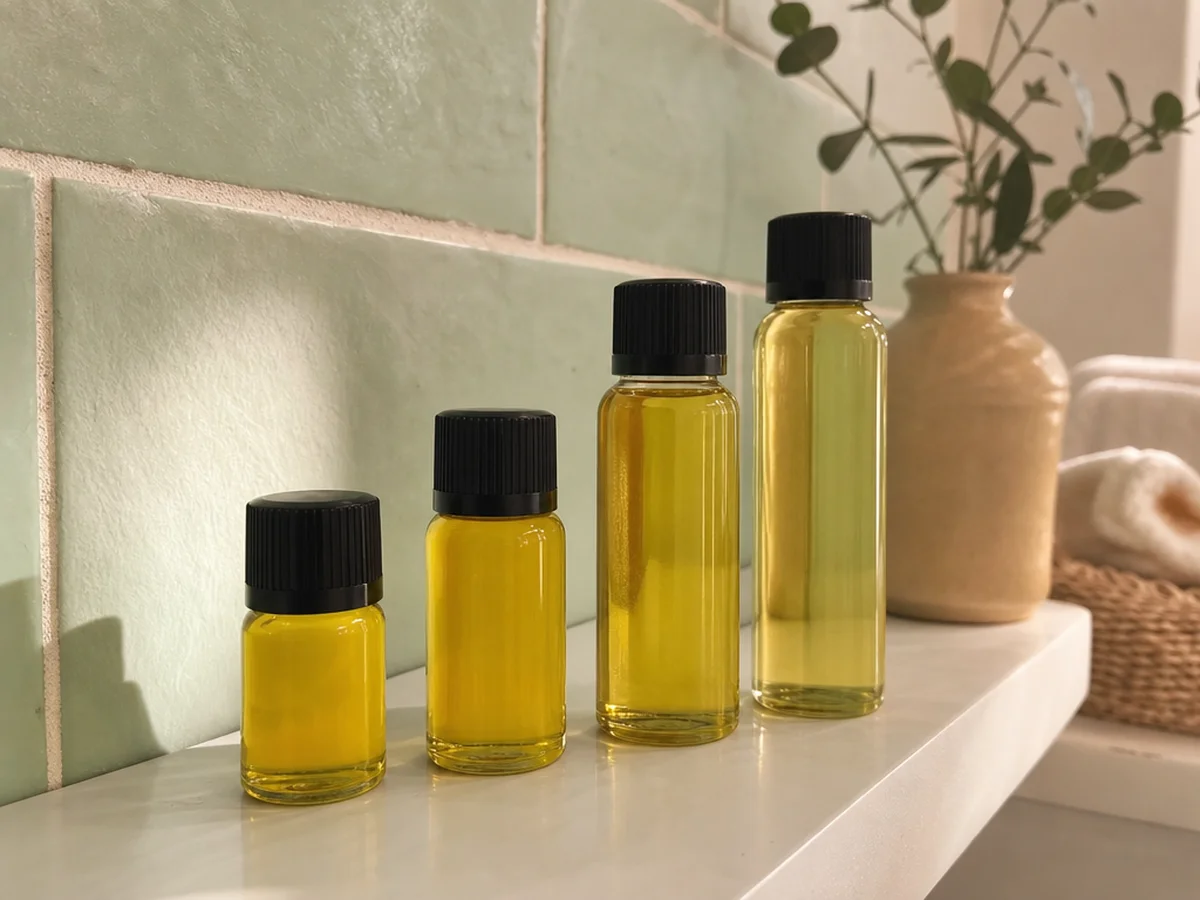
Many people choose a face oil partly for how it smells. Turmeric oil's aroma is warm, earthy and gingery with a woody-spicy edge, and it blends with sweet orange, ylang ylang, sandalwood, patchouli and cedarwood, which you will find at a craft or aromatherapy supplier. If a finished product smells like turmeric, remember that scent alone does not tell you the form or amount of turmeric in the bottle; only the list does.
Turmeric on a face oil is a labelling question first and a skin question second, so read the list, find the form, and match it to the study.
Turmeric Essential Oil
Turmeric Essential Oil from our own shop, in sizes from 0.5 oz to bulk.
From $12.99
Shop Now →Sources & Further Reading
- Cosmetics Labeling Guide, U.S. Food and Drug Administration, content current as of 02/25/2022.
- Supercritical Fluid Extraction with CO2 of Curcuma longa L. in Comparison to Conventional Solvent Extraction, Widmann AK et al., Pharmaceutics, 2022.
- Turmeric (Curcuma longa) rhizome essential oil: analytical profile of authenticated and commercial samples, safety and pharmacology review, Saavedra DI et al., Pharmaceutical Biology, 2026.