Turmeric vs Frankincense Oil: Root Versus Resin
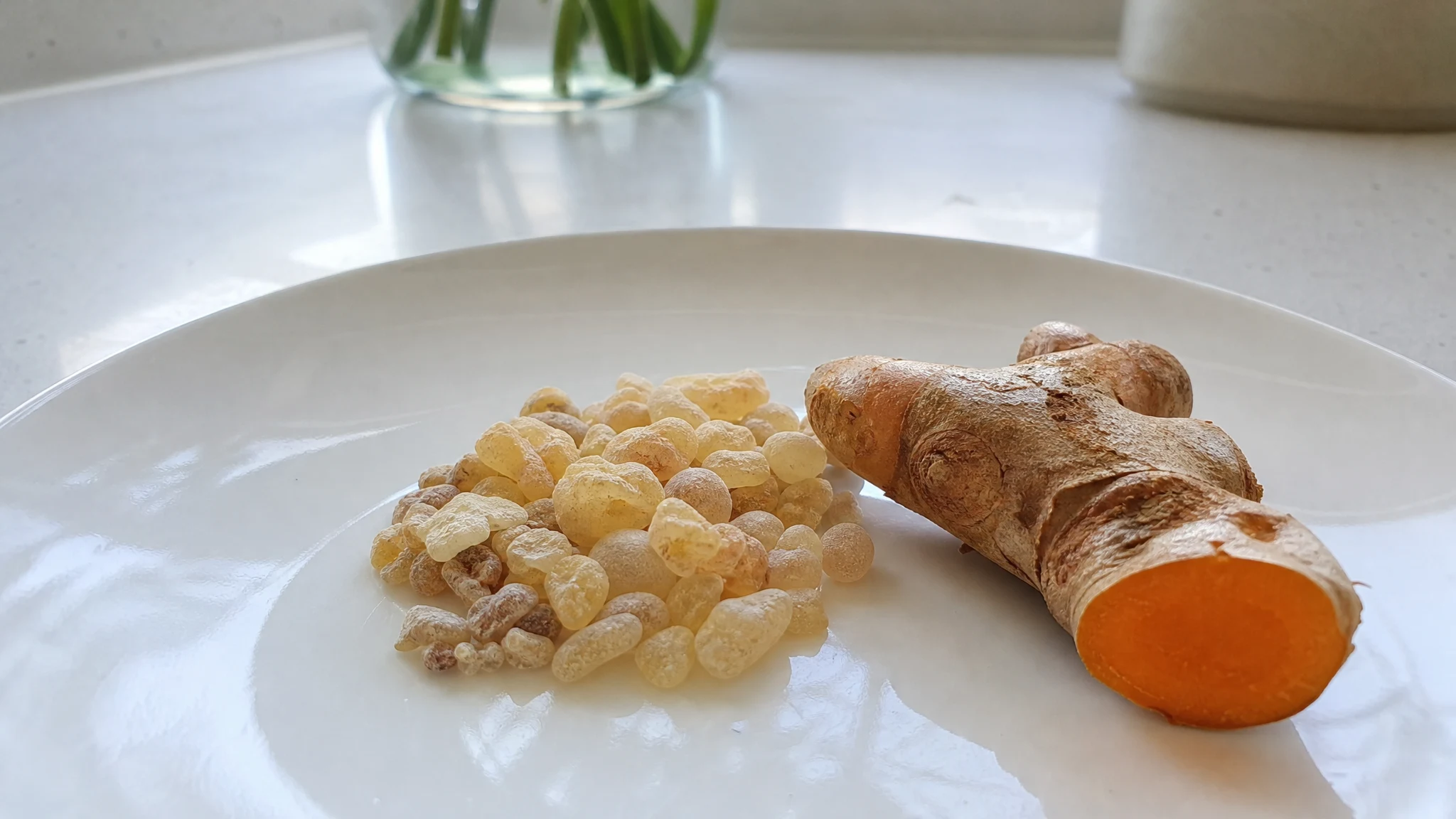
Turmeric oil and frankincense oil often show up in the same conversations, usually because both carry an old, almost ceremonial reputation. Put the two bottles next to each other and they could hardly be less alike. One comes from a rhizome and the other from a tree resin, and their chemistry points in opposite directions. Knowing that makes it easier to choose, and to resist the idea that they are interchangeable.

Turmeric Essential Oil
Our own Turmeric Essential Oil, in sizes from 0.5 oz to bulk.
From $12.99
Shop Now →A root and a resin
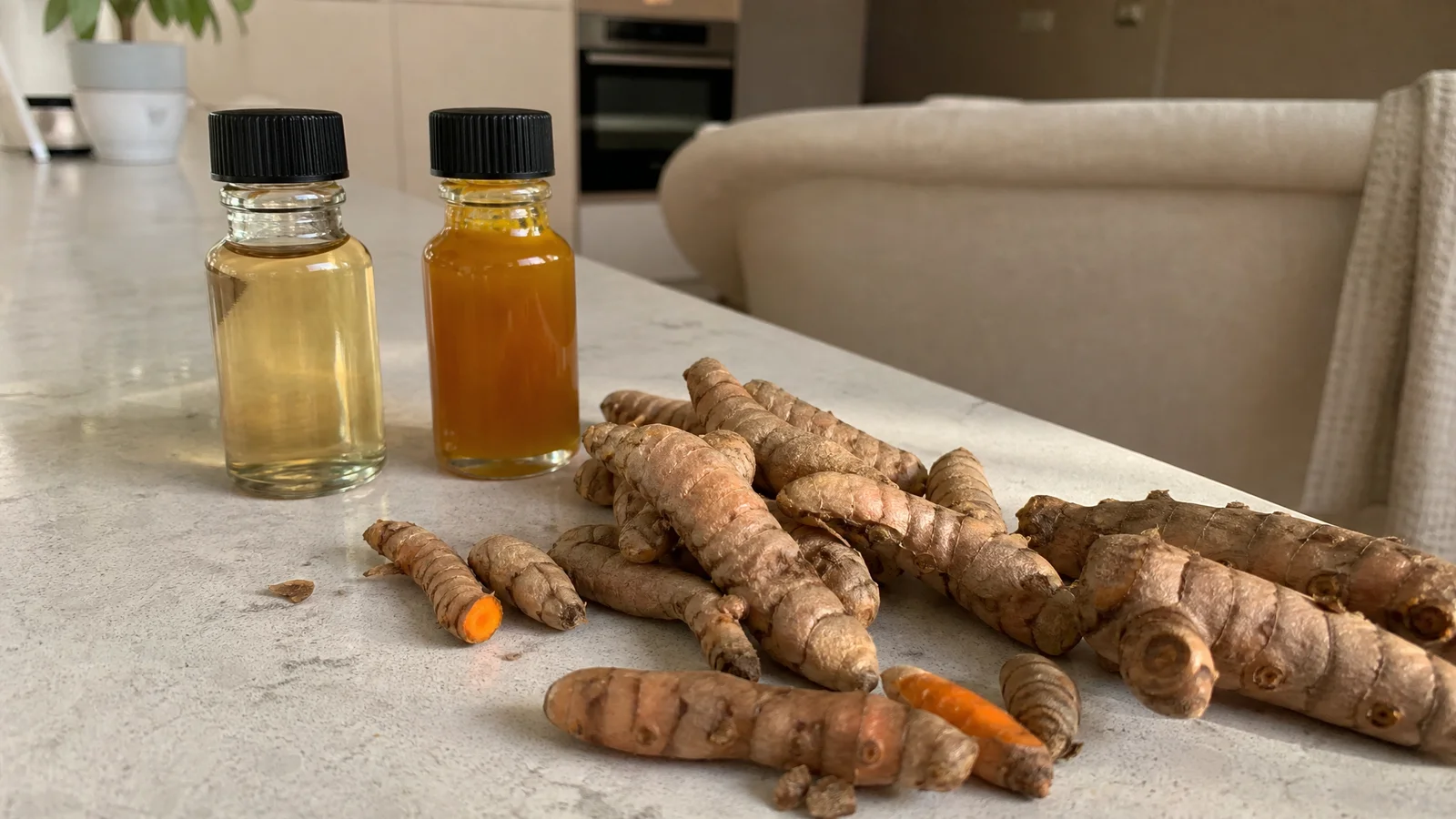
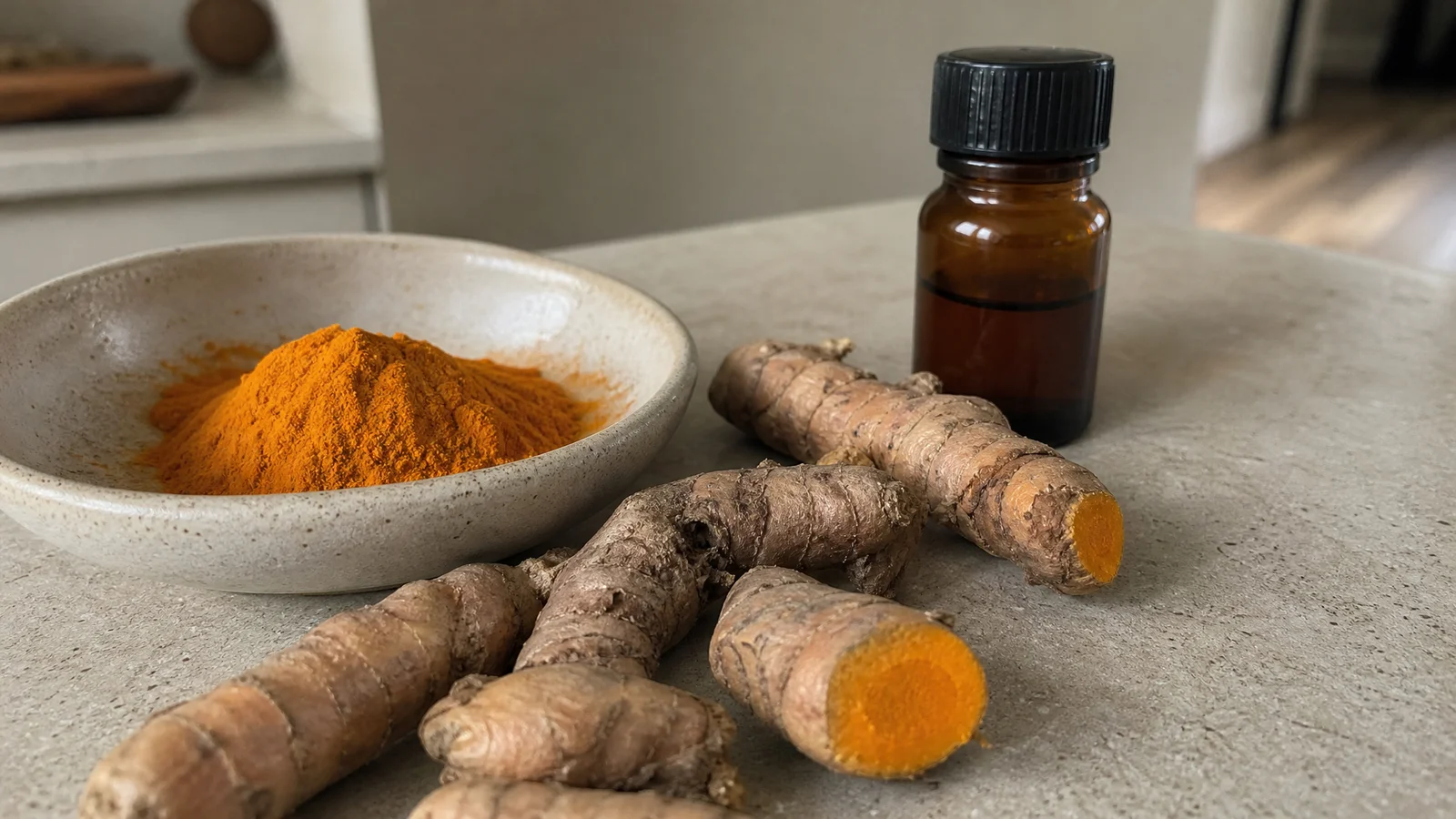
Turmeric oil is steam distilled from the rhizome of Curcuma longa. We describe its aroma as warm, earthy and gingery with a woody-spicy edge, a base-to-middle note. Its chemistry is dominated by sesquiterpenes, big, heavy aromatic molecules, with the turmerones leading in studied oils, according to a 2026 review of turmeric essential oil.
Frankincense oil comes from the oleogum resin of Boswellia trees. In one analysis of an oil from botanically certified Boswellia sacra resin, monoterpenes made up 97.3% of the oil, with E-beta-ocimene and limonene as the main constituents and only 2.7% sesquiterpenes. Monoterpenes are the lighter, more volatile family, while sesquiterpenes are heavier. Same word, "essential oil," quite different molecular neighborhoods. That is the heart of the contrast: a resin oil rich in light molecules against a rhizome oil rich in heavy ones.
Why chemistry matters when you choose
Two practical things follow. First, they behave differently in a blend. A heavy sesquiterpene oil like turmeric tends to sit low and linger, which fits its role as a base to middle note. Lighter-molecule oils generally rise sooner. We are reasoning from the chemistry here, not reporting a test, and perfumers will tell you the best way to learn is to smell both side by side. Second, you cannot assume what one oil has done in research applies to the other. Studies on one plant material are about that material.
Skin, and the limits of what we can say
We sell turmeric oil as an aromatic and cosmetic oil, and we make no skin-benefit claims for it or for frankincense. The research on turmeric and skin is mostly about the spice and curcumin, which is not in a distilled oil. A 2016 systematic review found 18 human studies of turmeric or curcumin on skin and called the evidence early and limited. None of this tells you which oil to pick for any skin outcome, and a dermatologist is the person to ask about a skin concern.
What can be said is practical. Any essential oil can provoke a reaction in some people. A large patch-testing study of more than 62,000 people in North America and Europe found that 1.4% reacted to at least one of the essential oils tested (sandalwood, ylang ylang, jasmine, peppermint, tea tree and lavender, so neither turmeric nor frankincense) without reacting to the standard fragrance markers, and the authors noted that labeling of essential oils in fragrance is not mandatory. That is an argument for the same habits with either bottle: dilute, patch test, and stop if skin objects. Our own guidance for turmeric oil is 0.5% to 2% in a carrier oil, beginning at the low end. Our dilution guide explains the method.
Smell them side by side
Chemistry explains a lot, but your nose settles the question. If you have both bottles, put a drop of each on its own paper strip, label the strips and set them down a few inches apart. Smell them right away, then after ten minutes, then after an hour. Turmeric tends to hold its warm, earthy, gingery base, while a resin oil may feel airier. Write down what you notice at each stage, because first impressions fade and the later ones are often the ones you live with.
Keep each bottle capped between sniffs and store both in a cool, dark place, away from heat and direct light. It is a small courtesy to the oil, and it keeps both bottles smelling the way they should.
Think about the job
It helps to decide what you want the scent to do before you choose. A deep, spiced base note for a warm diffuser blend points toward turmeric. A lighter, resinous opening points toward something else, which you will find at another seller. Neither is the better oil. They are different tools, and a shelf with a few different tools is a pleasure to work from.
If you are blending, remember that a base note carries a blend, so start with less of it than you think you need. You can always add another drop, but you cannot take one out.
Choosing between them
If you love a warm, spiced, earthy aroma for a diffuser or a base-note blend, turmeric is the one we sell, and it pairs with ginger, sweet orange, sandalwood, patchouli and cedarwood. If you want a resinous, airy note, frankincense is a different pleasure that you will find at another seller. We do not sell frankincense, and we would rather you buy the right oil than a substitute.
For more on how turmeric oil is documented, our GC-MS walkthrough is a good next read, and our research overview covers the wider evidence.
One more practical point: label every bottle on your shelf with its name and the date you opened it. Oils look alike in amber glass, and a quick glance at the label saves you from a muddled blend.
Two old reputations, two different bottles. Enjoy each for what it is.
Turmeric Essential Oil
Turmeric Essential Oil from our own shop, in sizes from 0.5 oz to bulk.
From $12.99
Shop Now →Sources & Further Reading
- Saavedra DI et al., 2026. Turmeric (curcuma longa) rhizome essential oil: analytical profile of authenticated and commercial samples, safety and pharmacology review. Pharmaceutical Biology.
- Al-Harrasi A, Al-Saidi S, 2008. Phytochemical analysis of the essential oil from botanically certified oleogum resin of Boswellia sacra (Omani Luban). Molecules.
- Vaughn AR, Branum A, Sivamani RK, 2016. Effects of Turmeric (Curcuma longa) on Skin Health: A Systematic Review of the Clinical Evidence. Phytotherapy Research.
- Warshaw EM et al., 2017. Positive Patch-Test Reactions to Essential Oils in Consecutive Patients From North America and Central Europe. Dermatitis.