Does Turmeric Oil Stain? Skin, Sheets and Surfaces
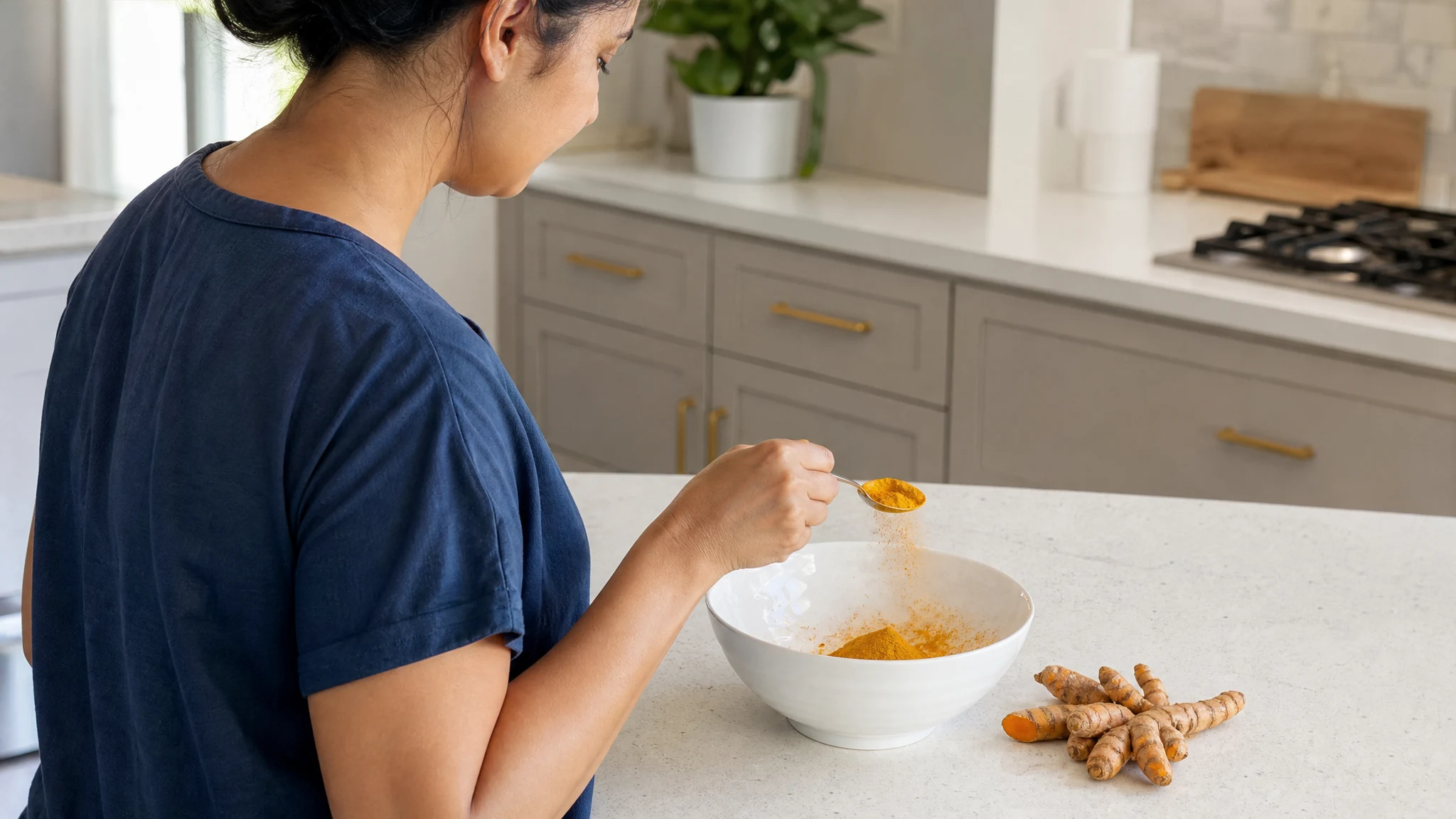
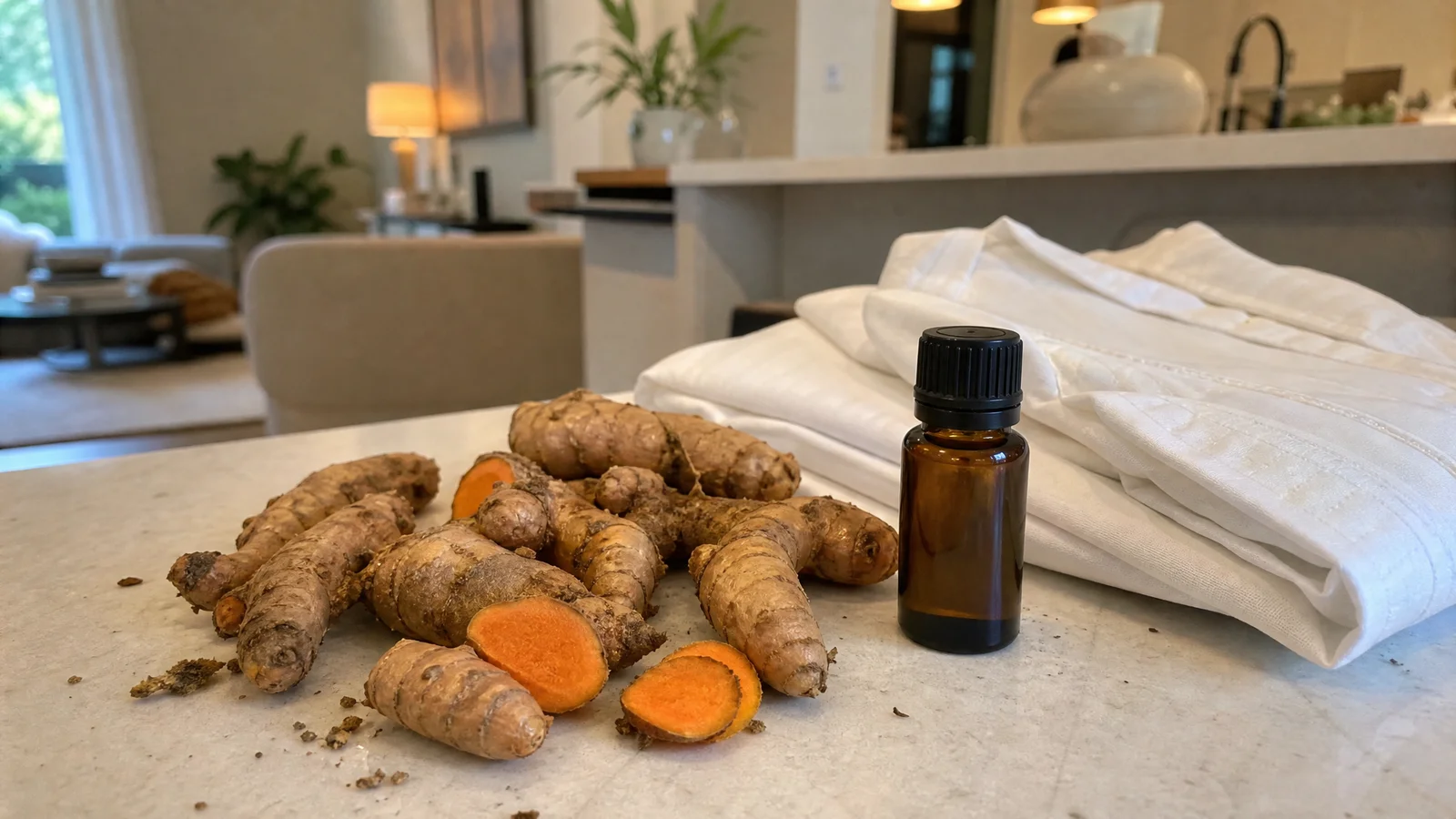
Everyone knows turmeric stains. A single dropped spoonful of powder can leave a golden mark that outlasts the dish towel. So it is fair to wonder about the oil. The short answer comes in two parts: steam does not carry the spice's pigment into the oil, and the oil is still an oil, so it deserves a little care around fabric.

Turmeric Essential Oil
Our own Turmeric Essential Oil, in sizes from 0.5 oz to bulk.
From $12.99
Shop Now →Where the yellow comes from
The orange-yellow colour of turmeric belongs to a group of compounds called curcuminoids, curcumin being the best known (Ibanez and Blazquez, 2020). Those molecules are nonvolatile. The essential oil is a separate fraction of the rhizome, made of the volatile aromatic compounds (Dosoky and Setzer, 2018).
Steam distillation only lifts what travels with steam, so the pigment stays behind with the plant material. That is the reason we describe our turmeric oil as carrying turmeric's aroma without the pigment that stains raw powder: curcumin does not survive steam distillation, because curcumin is not volatile. The chemistry points to the warm, woody scent of turmeric without the powder's famous colour.
One nuance is worth knowing. The review lists an oil made by a different method, subcritical water extraction of fresh rhizome, in which curcumin appeared at 10.49%. That tells us the method matters, and that the word turmeric on a label does not always mean a steam-distilled oil. It is another reason to buy from a seller who says plainly how the oil is made.
It is still an oil
Colour is only half the story. Any essential oil is a liquid that does not mix with water, so a spill on cotton wicks into the fibres and behaves like a drop of other oils. Fresh is easier than old, and a carrier oil such as jojoba or sweet almond will make a bigger, greasier mark than the essential oil would alone. Because turmeric oil is sold neat and diluted at home, the mark you are most likely to see is a carrier-oil spot, not a dye spot. You will find carrier oils at a craft or grocery shop, since we sell only the turmeric oil itself.
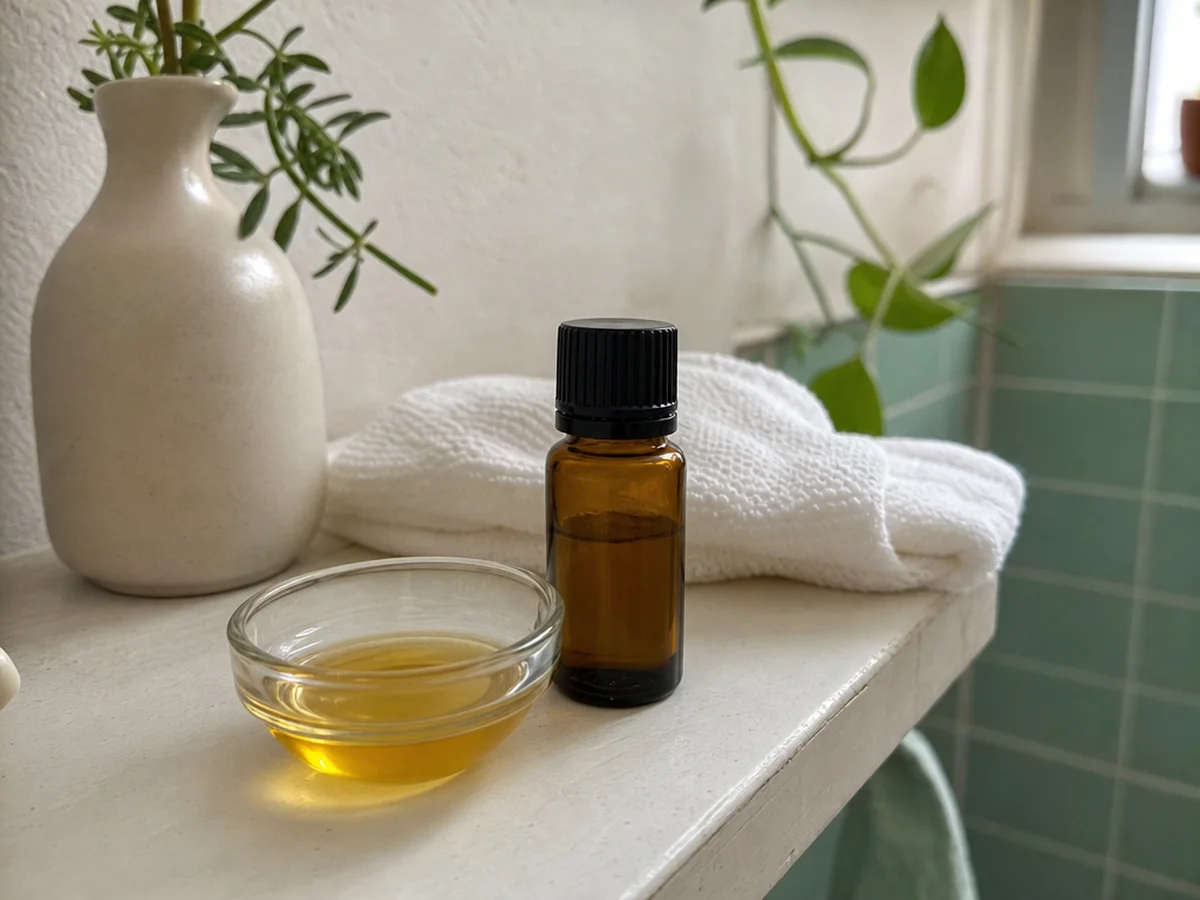
A tinted result in a finished product is a separate matter. Our bulk guidance is that the oil will not reliably colour a soap batch on its own, so soap makers who want the golden hue add turmeric powder or a colorant. If you make white products such as lotions, candles or soap and colour matters, run your own small bench test with your exact base before committing to a large batch.
Practical care, surface by surface
Skin
We recommend diluting to 0.5% to 2% in a carrier oil and patch testing first, with the inner forearm being a good spot. Apply it in decent light and see how the blend looks as it dries. If skin looks darker in a way that does not wipe off, or you notice itching or redness, stop using it and speak with a physician or dermatologist. A case series of 46 patients with dermatitis from kumkum, a traditional cosmetic powder based on turmeric, found pigmented contact dermatitis in 35 of them, and the allergic patch-test reactions were mostly to thimerosal and gallates rather than to turmeric (Nath and Thappa, 2007). That was a powder product, not an essential oil, but it shows why a lasting colour change on skin deserves attention rather than scrubbing. Our side effects post covers what a reaction can look like.
Linens and clothes
University of Georgia Extension has a stain removal chart for greasy foods such as butter and mayonnaise. The pattern is consistent: pre-treat with a pre-wash stain remover, launder, and if the mark lingers, sponge with a cleaner, rinse, air-dry and launder again (Remove Stains From Oil-Based Foods). Our suggestion, reasoning from that routine, is to check a treated spot after air-drying before putting it in a dryer, since heat can fix a mark that is not fully gone. It also helps to put an old towel under a massage and to keep a good pillowcase away from freshly applied blends.
Counters, bottles and diffusers
Wipe up a spill straight away with a paper towel and a little dish detergent. Keep the bottle upright and capped, and store it in a cool, dark place away from heat and direct light. We recommend keeping it out of reach of children and pets.
A fair way to think about colour
Most of the time the question behind staining is really about colour: can I use this without turning something yellow? The chemistry says the spice's pigment is left behind, and we still suggest a small spot test on anything precious. Our post on turmeric oil in the bath shows how the oil floats and clings to a tub, which is a cleaning topic, not a dye one. Our turmeric oil versus powder post explains why the two products behave so differently, and the dilution guide will help you measure properly. If you need a certificate or a batch-matched GC-MS before a large order for a product where appearance matters, ask us in writing through the contact page.
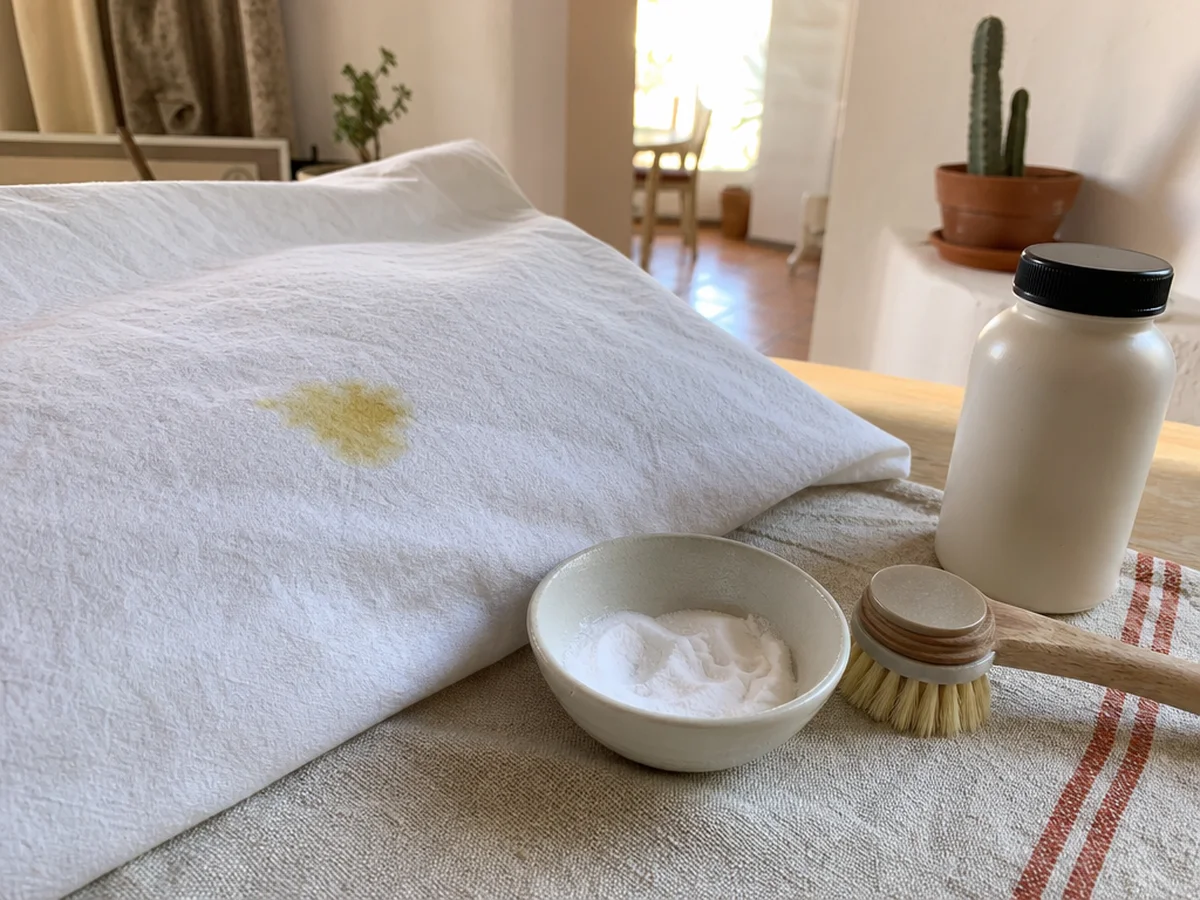
A small habit goes a long way here: keep one clean cloth beside your blending space and one old towel nearby. If a drop lands on the bottle, wipe the neck before you cap it, because an oily bottle is how a spot ends up on a bedside table. Handling the bottle with dry fingers and setting it down upright keeps both the label and the surface tidy.
Treat it like any other fragrant oil, keep a cloth nearby, and let the scent do the talking.
Turmeric Essential Oil
Turmeric Essential Oil from our own shop, in sizes from 0.5 oz to bulk.
From $12.99
Shop Now →Sources & Further Reading
- Ibanez MD, Blazquez MA (2020). Curcuma longa L. Rhizome Essential Oil from Extraction to Its Agri-Food Applications. A Review. Plants. PMC7823572
- Dosoky NS, Setzer WN (2018). Chemical Composition and Biological Activities of Essential Oils of Curcuma Species. Nutrients. PMC6164907
- Nath AK, Thappa DM (2007). Kumkum-induced dermatitis: an analysis of 46 cases. Clinical and Experimental Dermatology. PubMed 17425647
- UGA Cooperative Extension Textiles. Remove Stains From Oil-Based Foods. site.extension.uga.edu