Turmeric Oil for Flaky Scalp: What the Studies Covered
Flakes on a dark sweater, an itchy scalp, and a browser full of promises about turmeric: it is a common route to this page. We would like to be useful here, which means starting with what actually targets flaking, and then being straight about where turmeric oil sits. Our oil is an aroma-and-cosmetic product, sold neat, and we do not offer it as a dandruff product.
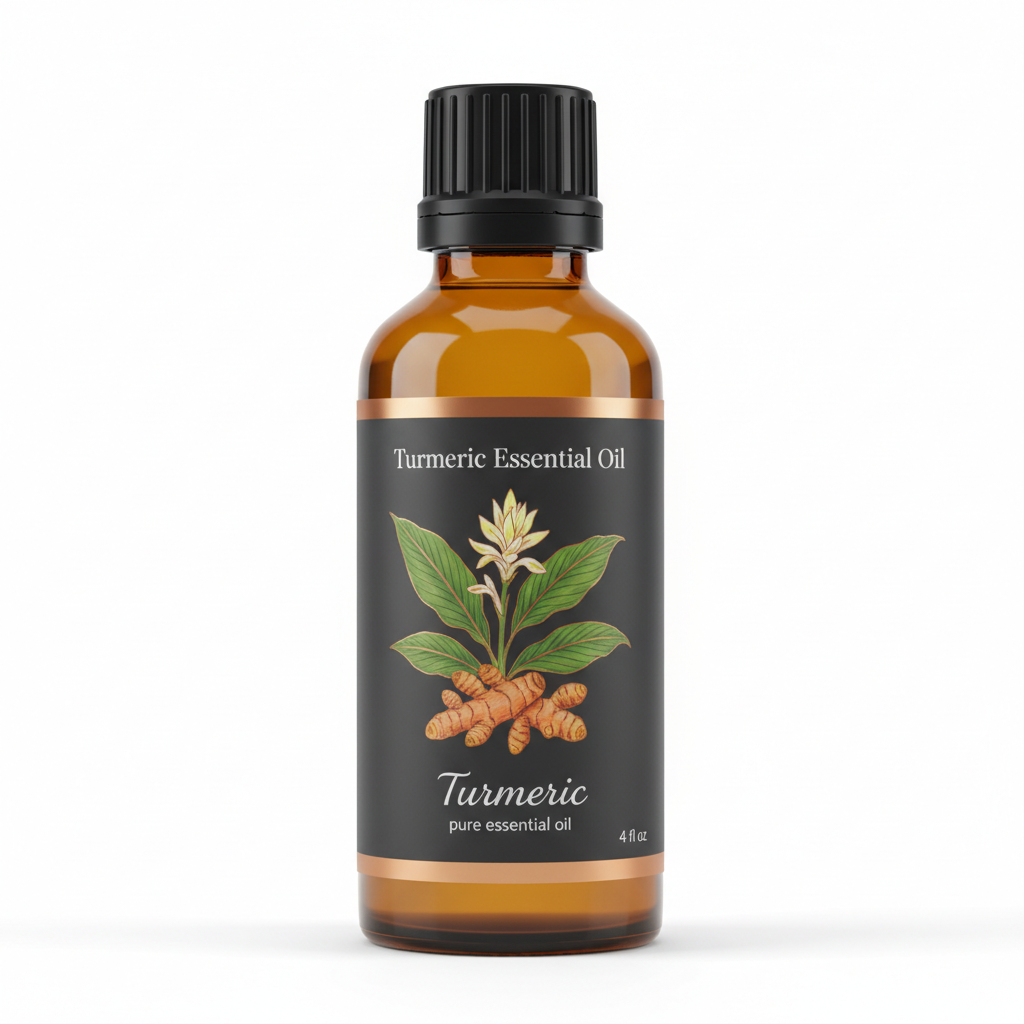
Turmeric Essential Oil
Our own Turmeric Essential Oil, in sizes from 0.5 oz to bulk.
From $12.99
Shop Now →What the dermatology sources point to
The American Academy of Dermatology lists zinc pyrithione, salicylic acid, sulfur, selenium sulfide, ketoconazole and coal tar as the shampoo ingredients to look for, and suggests alternating if one does not help. It also ties frequency to hair type: fine, straight or oily hair can take a dandruff shampoo about twice a week, while coarse, curly or coily hair does better with about once a week, applied to the scalp only (American Academy of Dermatology, dandruff page). The NHS names ketoconazole, coal tar or salicylic acid, suggests trying a shampoo for up to four weeks, and says to book a GP appointment if symptoms continue after that, if the scalp is very itchy, red or swollen, or if flaky patches appear on the face or body (Dandruff, NHS). Neither page mentions essential oils. So our advice is simple: use one of those shampoos as directed, and see a professional if it does not settle.
Flakes are frustrating, and it is easy to lose weeks to trying one thing after another. A useful habit is to pick a single approach from a reliable source and stay with it for the period the instructions give, rather than switching every few days. That makes it much easier to see what is helping and to tell a clinician what you have already tried.
What the turmeric oil papers measured
The research that does exist on turmeric oil and skin fungi is laboratory work. A Thai study hydrodistilled oil from fresh and dried Curcuma longa rhizomes and tested it, undiluted, on agar plates against 29 clinical strains of dermatophytes, the fungi behind ringworm-type infections. The oil gave clear inhibition zones, and the oil's minimum inhibitory concentration was about 7.8 mg/ml for freshly distilled oil. The curcuminoids did much less (Antifungal activity of Curcuma longa grown in Thailand). Another study tested turmeric essential oil against pathogenic fungi, alone and beside over-the-counter antifungal creams, and found the combinations ranged from synergistic to indifferent depending on the fungus (Synergistic antifungal evaluation of over-the-counter antifungal creams with turmeric essential oil or Aloe vera gel against pathogenic fungi).
Both are interesting chemistry, and both stop at the dish. The first abstract does not mention Malassezia, the yeast usually discussed with flaking, and neither study applied a diluted oil to a human scalp. We also searched PubMed for turmeric essential oil and Malassezia in November 2026 and found no record. A plate of agar and a scalp covered in sebum and hair are very different environments, so we would not read these results as a promise about flakes.
Small habits that keep a scalp routine simple
- Keep one product change at a time, so you always know what you changed.
- Wash pillowcases and hats regularly, since they sit against the scalp.
- Write down the date you started any new product, and the date you stopped.
- Keep scented oils out of the picture while you follow a treatment shampoo, then bring them back for the pleasure of the aroma.
It is also worth being kind to your scalp while you sort this out. Rinse thoroughly after shampooing, avoid scratching, and keep hot water for the bath rather than the scalp. These are everyday habits rather than treatments, and they make any routine easier to live with.
If you simply like the aroma
Scent is a perfectly good reason to own a bottle, and we say so happily.
Plenty of people enjoy a scented scalp massage on a relaxed evening. If that is you, turmeric oil's warm, earthy, gingery aroma is a nice fit, and our dilution guidance is 0.5% to 2% in a carrier oil with a patch test first. We would stay at the low end, apply it to a calm, intact scalp and keep it out of the eyes. If your scalp is red, sore or very itchy, leave the oil out and follow the NHS or AAD steps above, since a possible allergen on irritated skin muddies the picture for you and for a clinician.
Turmeric oil can be sensitising for some people, which is one more reason to start light. Our safety post and side effects post cover what is known, and the dilution guide shows how to measure small amounts. The scalp massage night post puts the aroma use in context.
If you do enjoy the scent, a few diluted drops in a carrier oil used for an occasional massage, or a diffuser running in the next room, keeps turmeric where it belongs: as a warm, earthy aroma in your evening rather than a remedy.
Our oil sits in the aroma part of that picture, so keep your expectations there. Enjoy the scent, and let a proper anti-dandruff shampoo and your clinician handle the flakes.
Turmeric Essential Oil
Turmeric Essential Oil from our own shop, in sizes from 0.5 oz to bulk.
From $12.99
Shop Now →