Turmeric Oil Scalp Massage: Setting Up a Slow Evening
Some oils are made for a quick sniff; turmeric is made for a slow evening. Its warm, earthy, gingery scent has a woody-spicy edge that suits an unhurried scalp massage, the kind where you put your phone in another room and take ten minutes just for yourself. The oil is there for the aroma and the ritual, so let us walk through how to set it up well.

Turmeric Essential Oil
Our own Turmeric Essential Oil, in sizes from 0.5 oz to bulk.
From $12.99
Shop Now →Why the massage is the main event
Working your fingertips across the scalp feels good on its own, and that is reason enough. A small 2016 study in Japan had nine men use a scalp massage device for four minutes a day for 24 weeks and measured their hair, with cell experiments alongside it (Koyama et al., Standardized Scalp Massage Results in Increased Hair Thickness by Inducing Stretching Forces to Dermal Papilla Cells in the Subcutaneous Tissue). It was tiny, it used a device and no oil at all, so it tells us nothing about turmeric. What it does suggest is that pressure, not the contents of a bottle, is the part worth taking seriously. We offer our oil as a lovely-smelling companion to that habit, with no outcome attached.
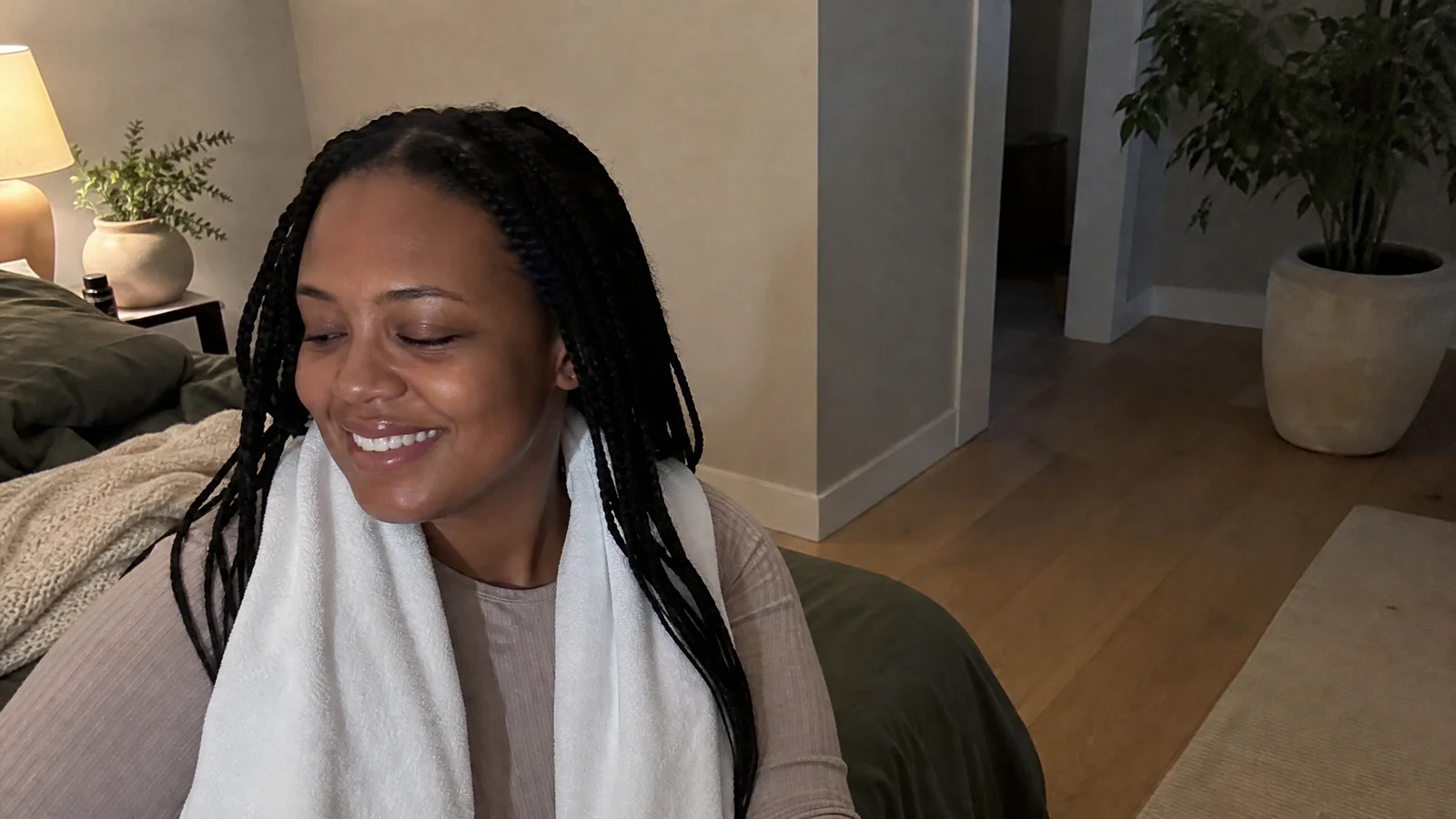
The set-up is half the pleasure. Put on a towel you do not mind, warm your hands, and decide in advance how long you are going to spend. A massage that is planned for ten minutes tends to be more enjoyable than one squeezed between other jobs.
Choosing the dilution
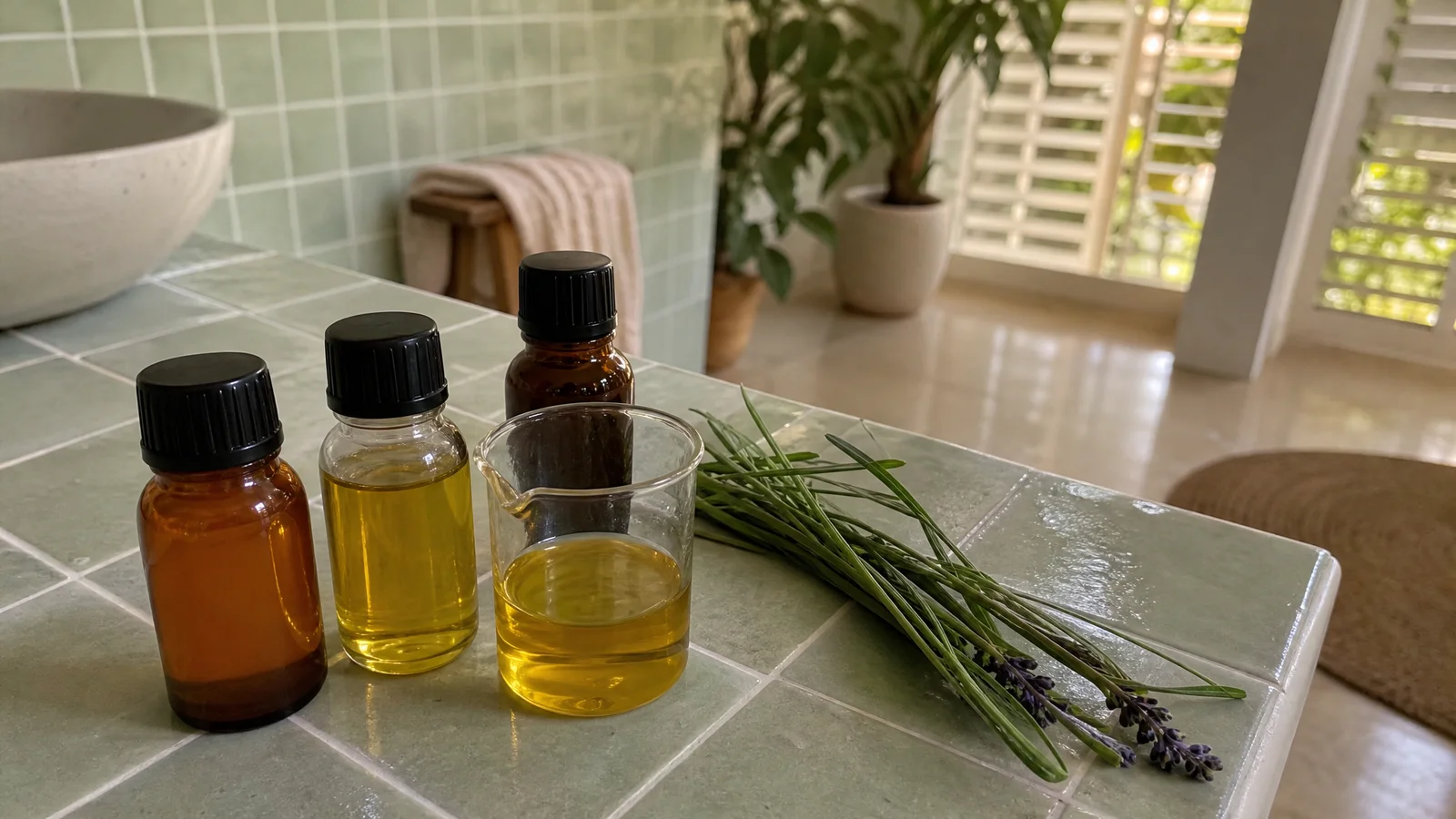
Our oil is sold neat, so the blending is yours to do. Our guidance is 0.5% to 2% in a carrier, and for the scalp we would begin at 0.5%. That is arithmetic we are suggesting, not a rule: 0.5% of 30 ml (about an ounce) of carrier is 0.15 ml, or roughly 3 drops at the usual 20 drops per ml. Droppers vary, so weighing is more reliable. Turmeric oil can be sensitising for some people, and a light hand serves better than a generous one. It is a strong, lingering scent anyway, so a quiet dilution tends to be plenty.
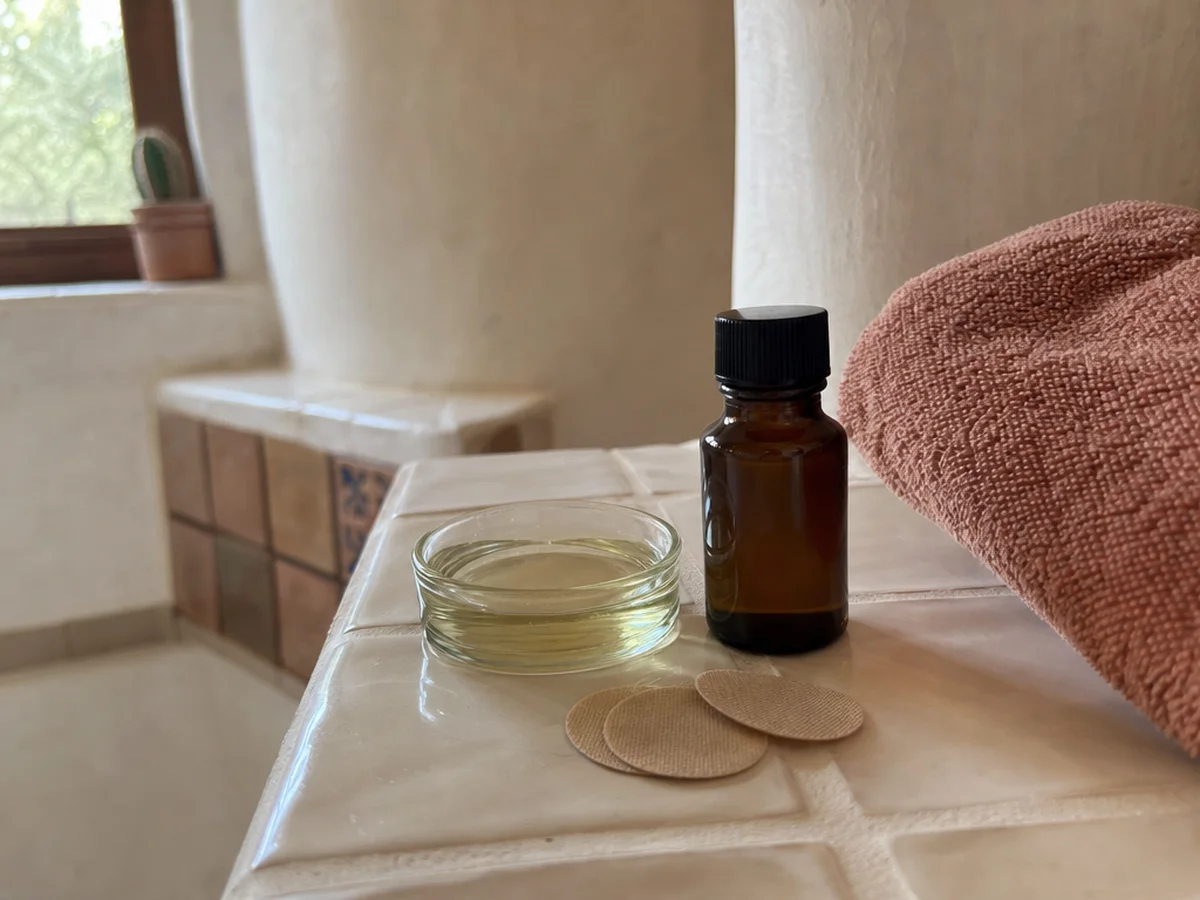
We do not sell carrier oils, so jojoba, sweet almond or whichever light oil you prefer will come from a craft supplier, pharmacy or grocery. If you are curious about coconut oil as a base, our post on turmeric and coconut oil works through the numbers.
A relaxed order for the evening
- Patch test ahead of time. The American Academy of Dermatology suggests a quarter-sized spot where the product will not be rubbed or washed away, such as the underside of the arm, applied twice a day for seven to ten days. If red, itchy or swollen skin shows up, wash it off and do not use it again (How to test skin care products). Test the diluted blend you plan to use, in the carrier you plan to use.
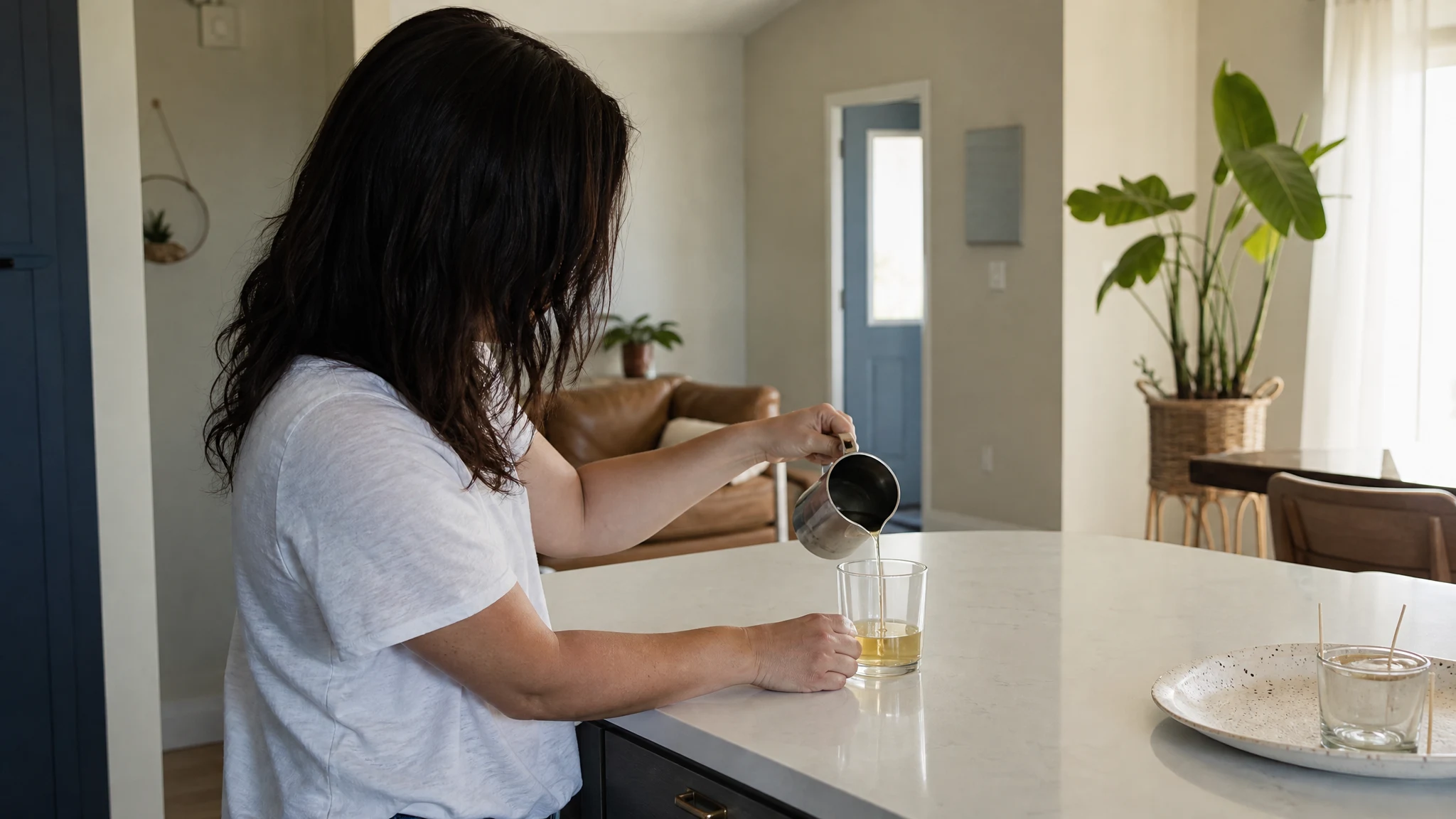
- Blend and label. Measure the carrier, add the oil, and stir gently.
- Part the hair and apply sparingly. A few drops on the fingertips is enough. Keep it off the hairline and well away from the eyes.
- Massage for a few minutes, then wash out. Washing out the same evening keeps skin contact short and spares the pillowcase.
- Shampoo as usual, twice if the carrier is stubborn.
While you massage, use the pads of your fingers rather than your nails, and move in slow circles. Work from the front of the scalp to the back, then up from the nape. There is no need for hard pressure; it is the unhurried rhythm that makes it feel like a ritual.
A note on color and fabric
We describe our oil as carrying turmeric's aroma without the pigment that stains raw powder. If you have light or color-treated hair, a dab on a hidden strand and a swipe on a white cloth give you answers before the main event. Our stain post has more.
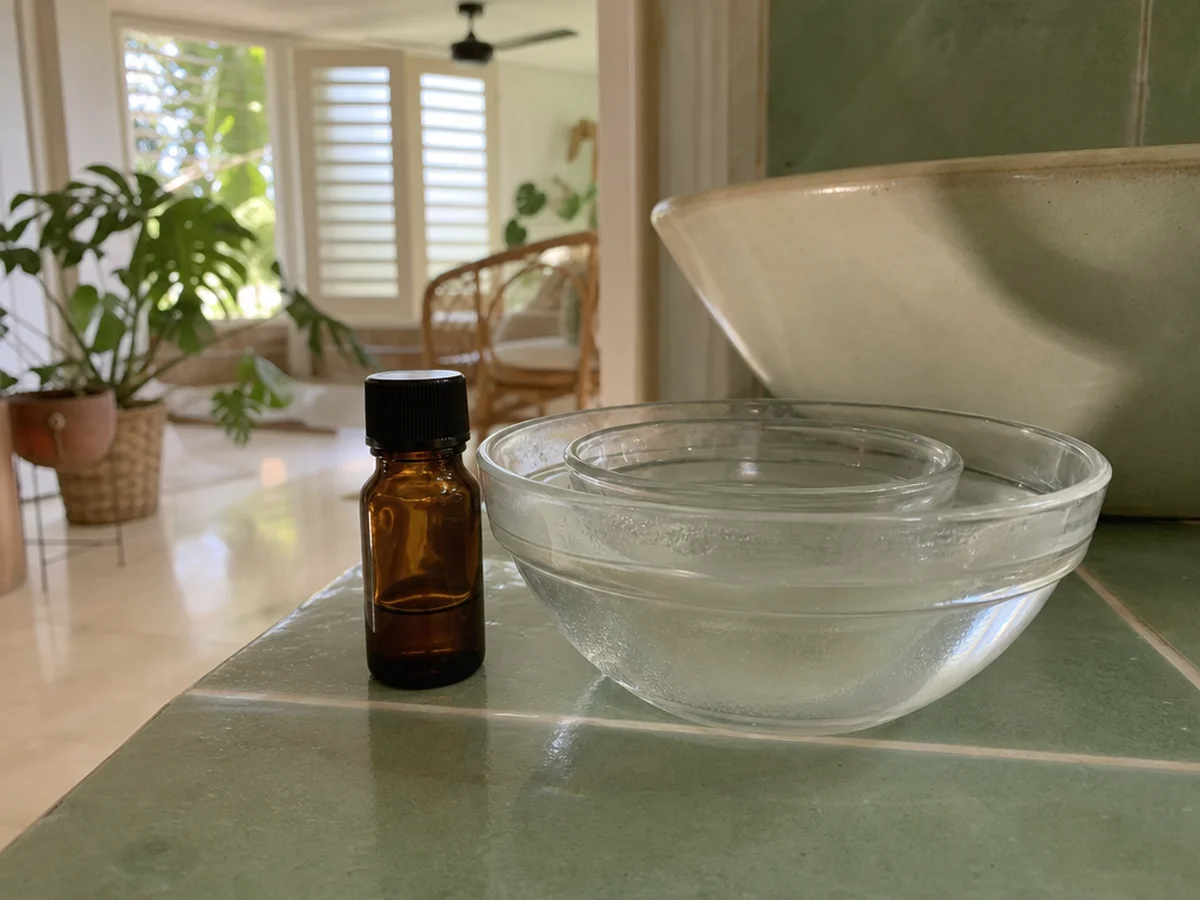
Plan the timing too. A weekend evening, or a night when nothing else is calling, suits this better than a rushed weekday. Keep a hair tie, a towel and a clean pillowcase nearby so the aftermath is easy.
Who should sit this one out
Skip it if your scalp is sore, cracked or weeping, and see a physician or dermatologist for that. The same goes if you are pregnant, nursing or have a medical condition: our disclaimer asks you to consult your physician before using essential oils. Keep the bottle away from children and pets. If hair is changing in a way that worries you, the American Academy of Dermatology suggests seeing a board-certified dermatologist for an accurate diagnosis (Hair loss: Diagnosis and treatment), and our post on turmeric oil and hair explains what research does and does not cover.
After the massage
Once you have washed out, towel dry and let your hair air dry if you can. Open a window for a minute so the warm scent fades into the room rather than lingering on the pillow. Wash the towel on its own, since it will carry some of the oil.
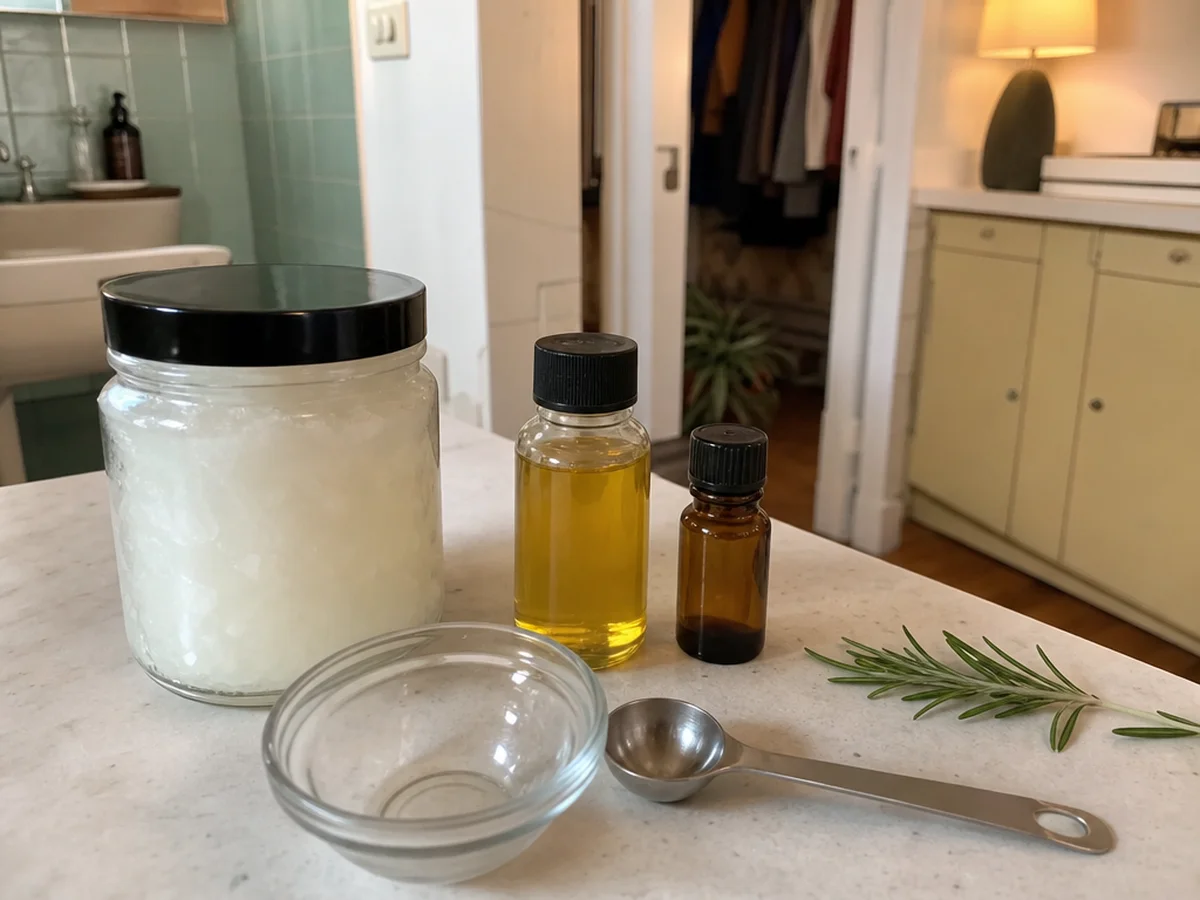
Making the evening feel complete
Scent is what makes this ritual memorable. If a warm woody-spicy aroma appeals, you might enjoy reading how perfumers think about it in turmeric as a warm base note, then turn the lights down and take your time.
Turmeric Essential Oil
Turmeric Essential Oil from our own shop, in sizes from 0.5 oz to bulk.
From $12.99
Shop Now →Sources & Further Reading
- Koyama T, Kobayashi K, Hama T, Murakami K, Ogawa R. Standardized Scalp Massage Results in Increased Hair Thickness by Inducing Stretching Forces to Dermal Papilla Cells in the Subcutaneous Tissue. Eplasty, 2016. PubMed 26904154
- American Academy of Dermatology. How to test skin care products. aad.org
- American Academy of Dermatology. Hair loss: Diagnosis and treatment. aad.org