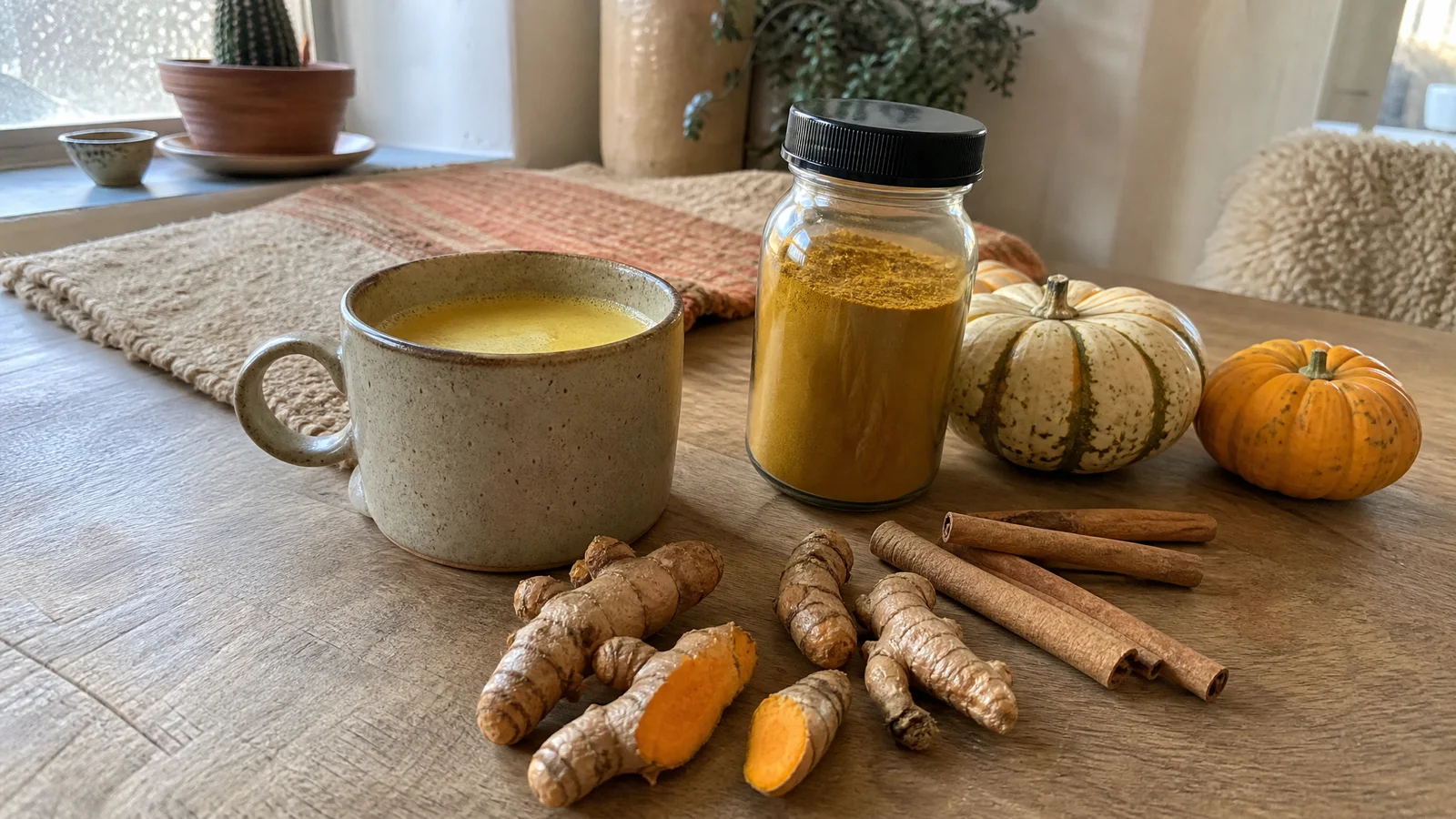
Golden Milk and Turmeric Oil: Mug vs Diffuser
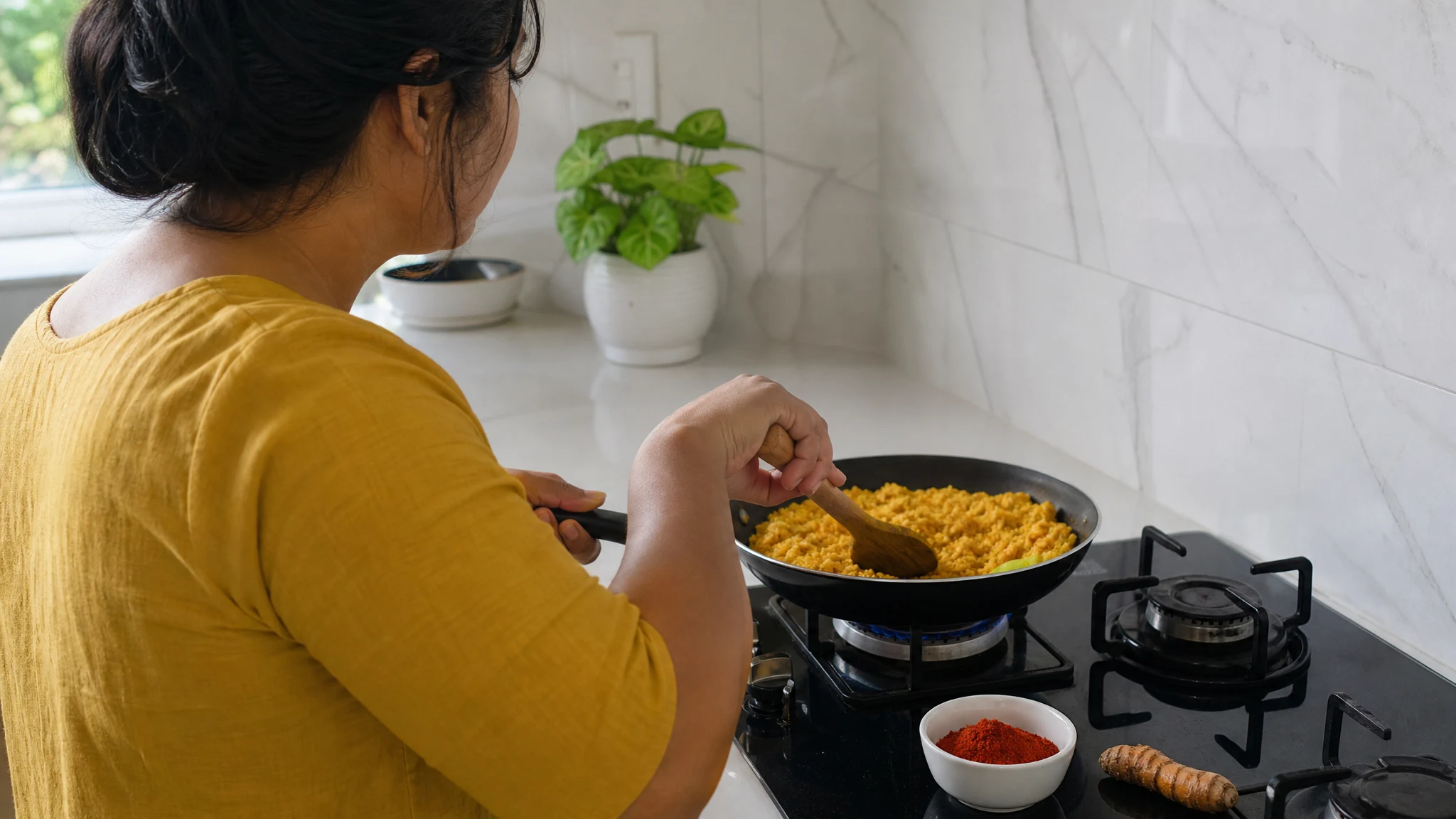
Come October, a lot of kitchens fill with the smell of turmeric. Someone is stirring golden milk, someone else is lighting a candle, and somewhere a diffuser is running. It is all the same plant, but the spice jar and the essential oil bottle are different things with different jobs, and sorting them out is the most useful thing we can do for a cozy season.

Turmeric Essential Oil
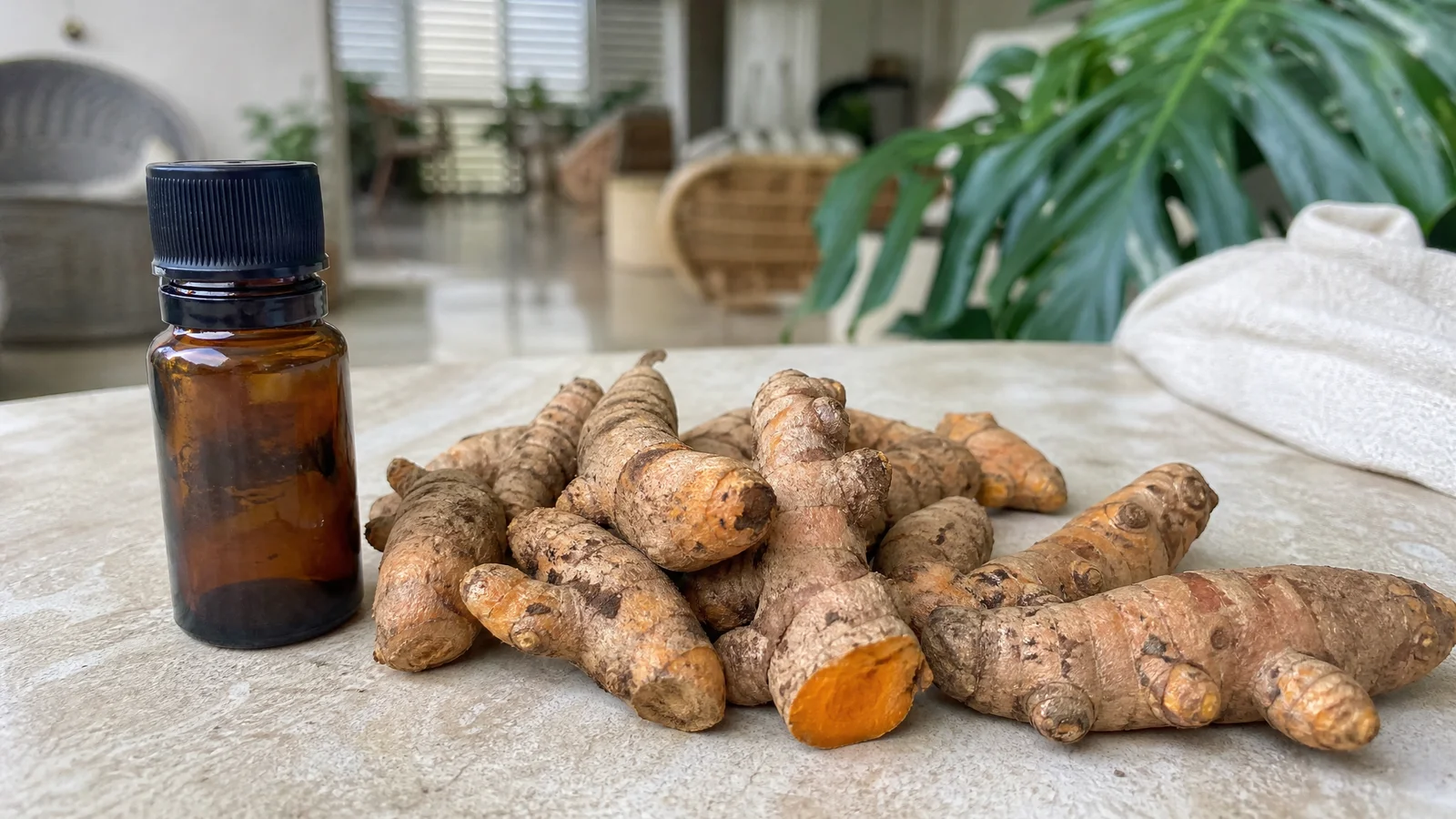
Our own Turmeric Essential Oil, in sizes from 0.5 oz to bulk.
From $12.99
Shop Now →The jar is for the mug
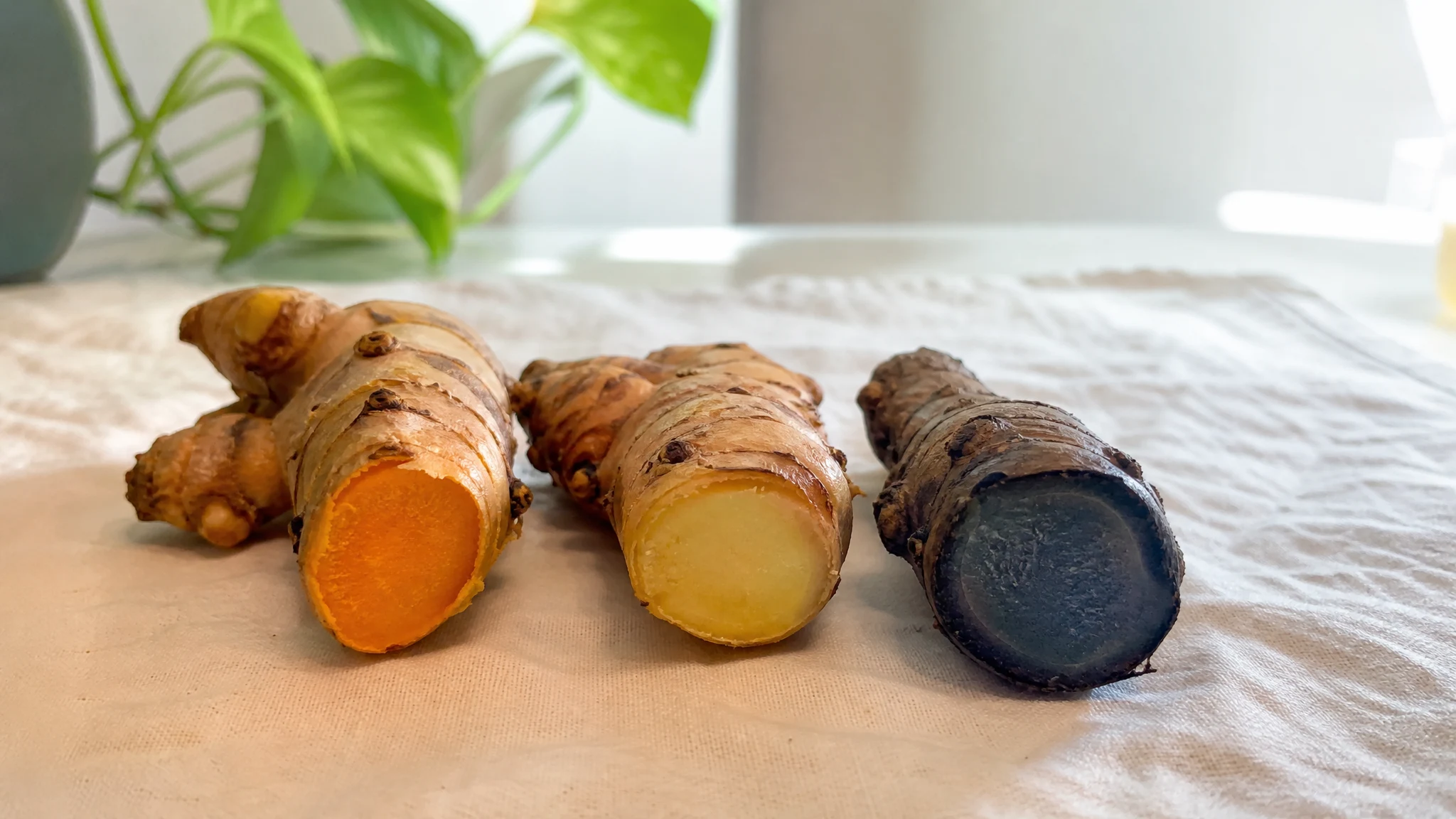
Golden milk is powdered or fresh turmeric root warmed in milk or a plant milk, usually with black pepper and something sweet. The essential oil is the steam-distilled volatile fraction of the rhizome, and we sell ours for aromatic and cosmetic use only, never for internal use. America's Poison Centers state the reason bluntly: misuse of essential oils can cause serious poisoning. If someone swallows one, the number to call is 1-800-222-1222. So the sort is simple: spice in the mug, oil on the diffuser shelf. Our swallowing post explains why the spice does not translate to the bottle.
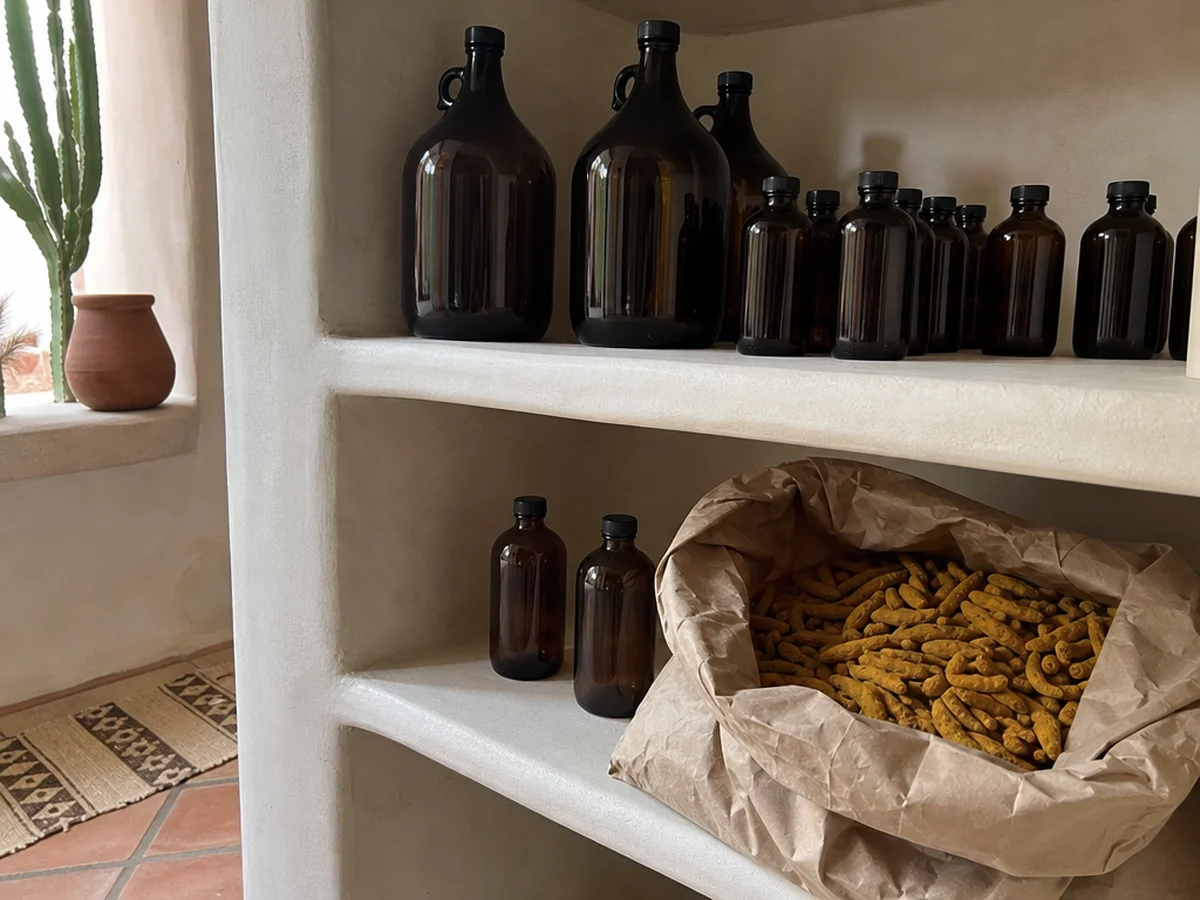
For the drink itself, the National Center for Complementary and Integrative Health is a good, plain reference. It says we do not yet know enough to conclude that turmeric or curcumin helps with any health purpose, and describes conventionally formulated oral turmeric as likely safe in recommended amounts for up to two or three months. It also notes liver injury reported with highly bioavailable curcumin products. If you are pregnant, nursing, on medication or managing a liver or gallbladder condition, a pharmacist or physician is the right person to ask about a daily habit.
The pepper story
Why pepper? A 1998 study in Planta Medica gave 2 g of curcumin to healthy volunteers and found serum levels either undetectable or very low, and then found that adding 20 mg of piperine, the pungent compound in black pepper, raised the reported bioavailability by 2000%. That is where the pepper habit comes from. It is worth reading for what it is: a purified curcumin dose, a blood measurement, no claim about benefits. So a pinch of pepper is a cook's habit with a neat chemical reason behind it, and a nice bit of kitchen lore.
And since the powder is the star of the mug, it is worth knowing that a 2026 scoping review of 48 publications and 2,235 commercial samples put the overall turmeric adulteration rate at 20.0%, and 20.4% for spice samples. We do not sell the powder, so a spice merchant that shares its sourcing and test details is the place to look.
The oil is for the room
This is where our bottle belongs. We describe the aroma as warm, earthy and gingery with a woody-spicy edge, and ginger, sweet orange, ylang ylang, sandalwood, patchouli and cedarwood are the partners we list for blending. We sell none of those, so a craft or aromatherapy supply shop is the place for them. Our sweet orange diffuser post does the arithmetic for one pairing.
A few habits keep a scented evening easy on everyone. Run the diffuser for short periods and ventilate afterward. The Merck Veterinary Manual's advice for households with animals is the same, and adds that pets belong out of the room while a diffuser runs: cats and birds are especially sensitive, and active diffusers put fine droplets into the air that settle on fur and feathers. Our pets post and children post go through the sources.
Setting the scene without the spoon
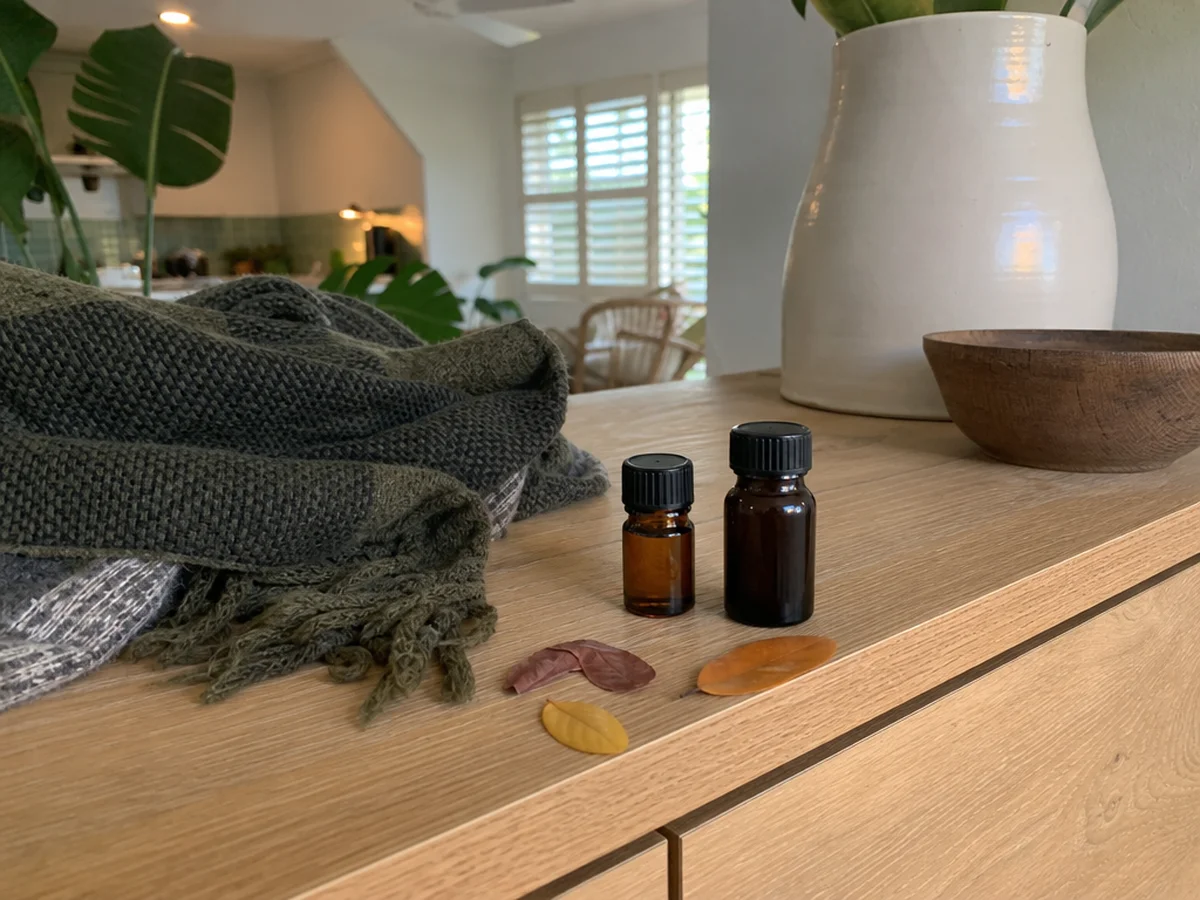
If it is the atmosphere of golden milk you love, you can build it with scent. Think of a low lamp, a blanket and the smell of warm spice drifting from across the room. A short diffuser session with a couple of drops of turmeric oil gives that warm, earthy, gingery note with a woody-spicy edge, and because it is a base to middle note it does not vanish after a minute. Add a little sweet orange from your supply shop and the room smells brighter and sweeter, a bit like an autumn bakery.
Keep the mug and the diffuser in separate places on the table so there is no chance of mixing them up, and keep the bottle itself away from the kitchen counter where food is prepared.
The skin, on a cold day
Dry autumn hands tempt people toward body oils. Our dilution guidance is 0.5% to 2% in a carrier, which comes to roughly 3 to 12 drops per ounce, with a patch test first and never neat on skin. We would start at the lower end, since turmeric oil can be sensitizing for some people. Our body butter formulation and roller arithmetic are worked out from published guidance and maths, ready for you to scale.
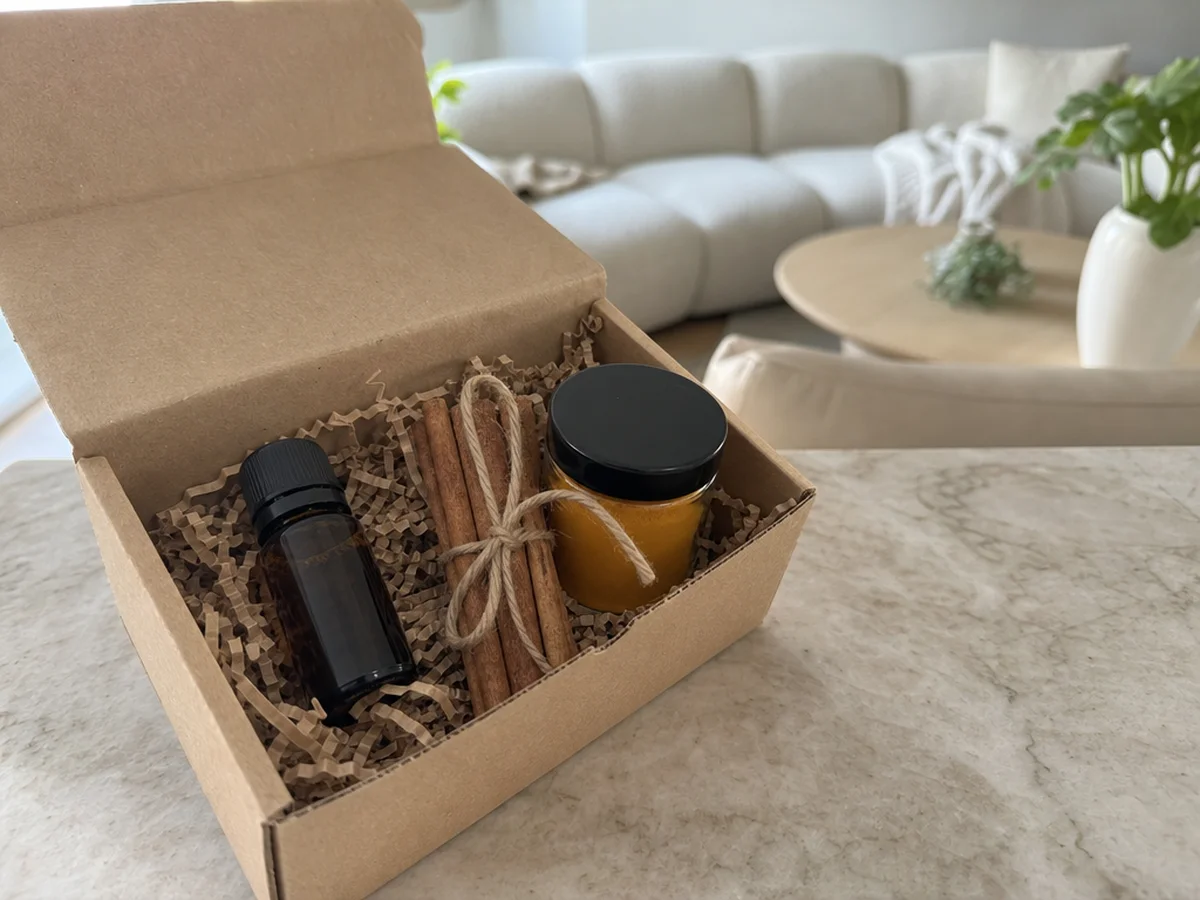
When the evening is over, close the bottle tightly, return it to a cool, dark spot, and open a window for a few minutes. A fresh room the next morning is part of the pleasure of a scented evening.
Gifts and stocking up
This is also the season of candles, soap and gift boxes. We sell one turmeric oil, in nine sizes from 0.5 oz to 400 lb. If a project needs more than the Certificate of Analysis we publish for one batch, ask us in writing through the contact page before you order. A batch-matched GC-MS report, an allergen declaration and a safety data sheet are the things businesses usually want. For the size question see which bottle to order first.
Warm drink in hand, a diffuser on a timer, a window cracked open: that is the whole season's ritual, and none of it needs anything more than good taste and a little common sense.
Turmeric Essential Oil
Turmeric Essential Oil from our own shop, in sizes from 0.5 oz to bulk.
From $12.99
Shop Now →Sources & Further Reading
- Poison Control. Essential oils: Poisonous when misused. poison.org/articles/essential-oils
- National Center for Complementary and Integrative Health. Turmeric (page last updated April 2025). nccih.nih.gov/health/turmeric
- Shoba G et al., 1998. Influence of piperine on the pharmacokinetics of curcumin in animals and human volunteers. Planta Medica. europepmc.org/article/MED/9619120
- Gafner S et al., 2026. A scoping review of turmeric adulteration based on data from six continents. Pharmaceutical Biology. europepmc.org/article/MED/41452918
- Merck Veterinary Manual (last updated March 2025). Toxicoses From Essential Oils in Animals. merckvetmanual.com