Cooking With Turmeric, Olive Oil and Paprika in One Pan
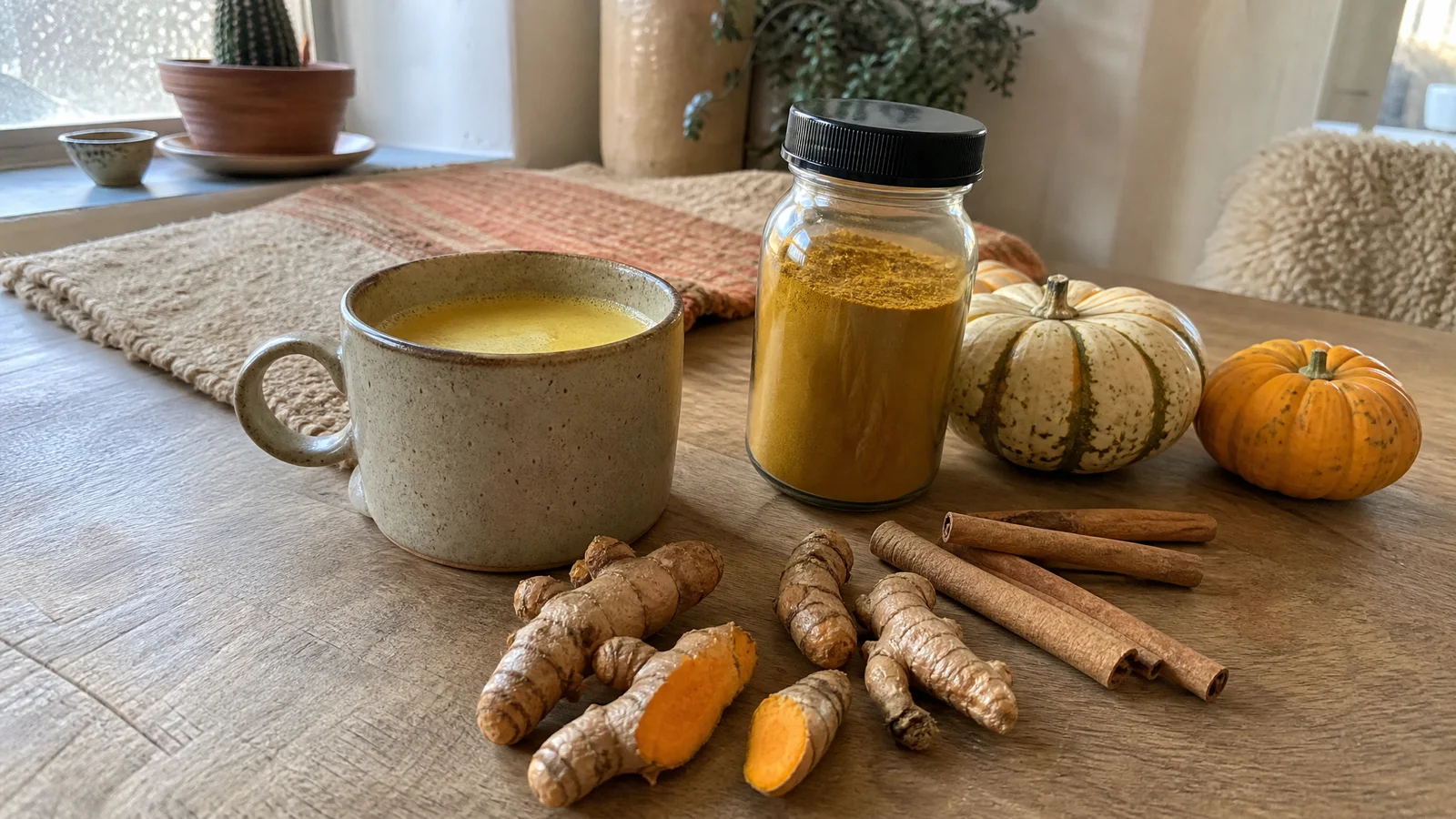
On a cold evening, few things smell better than ground turmeric blooming in warm olive oil, with paprika joining it a moment later. Let us be clear at the start about which turmeric goes into that pan: the ground spice from the grocery shelf. Our essential oil is steam-distilled from the rhizome for aromatic and cosmetic use only, and it stays out of the kitchen. What follows is for the cook, with the oil keeping you company from across the room.

Turmeric Essential Oil
Our own Turmeric Essential Oil, in sizes from 0.5 oz to bulk.
From $12.99
Shop Now →Why the spice, and only the spice
Turmeric's golden colour comes from curcumin, which is not volatile and so never makes it into a steam-distilled oil. What the still carries over is the aromatic fraction, mostly turmerones, which is why the oil smells warm and gingery without the pigment that stains the powder. The pigment you want to coax into your olive oil is simply not in our bottle (Saavedra et al., "Turmeric (curcuma longa) rhizome essential oil: analytical profile of authenticated and commercial samples, safety and pharmacology review."). If you are curious about the difference, our comparison of turmeric oil and turmeric powder sets the two side by side, and why the oil stays out of the kitchen explains the rest.
The pepper habit has a reason
Cooks have long added black pepper to turmeric dishes, and there is a study behind the habit. In a 1998 trial, healthy volunteers who took 2 g of curcumin alone had serum levels that were undetectable or very low, while adding 20 mg of piperine, the pungent compound in pepper, produced much higher levels and an increase in bioavailability the authors reported as 2000% (Shoba et al., "Influence of piperine on the pharmacokinetics of curcumin in animals and human volunteers."). The dose there is far above what a seasoned dish provides, so it would be too much to promise that a pinch of pepper changes anything you could feel. It is still a lovely bit of kitchen wisdom, and pepper tastes good in the pan anyway.
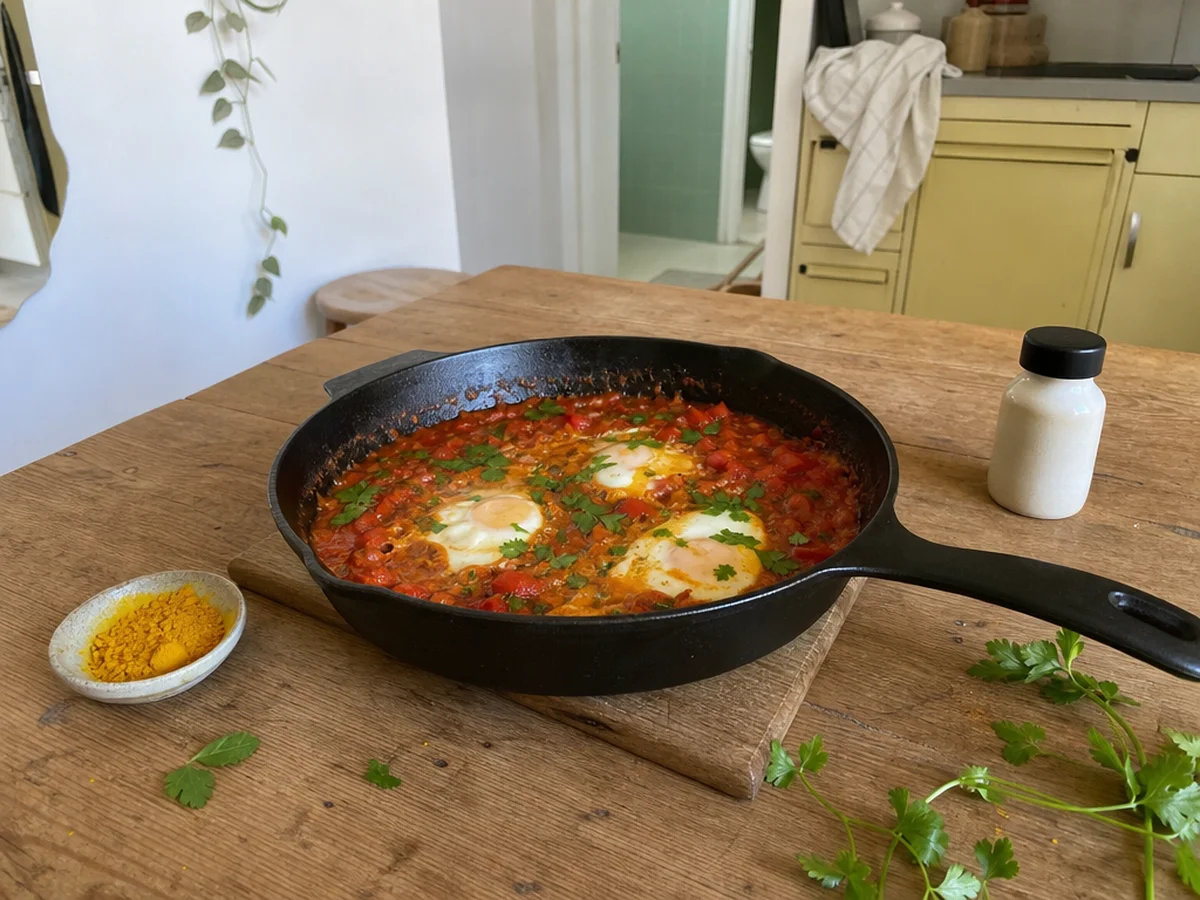
Olive oil and heat
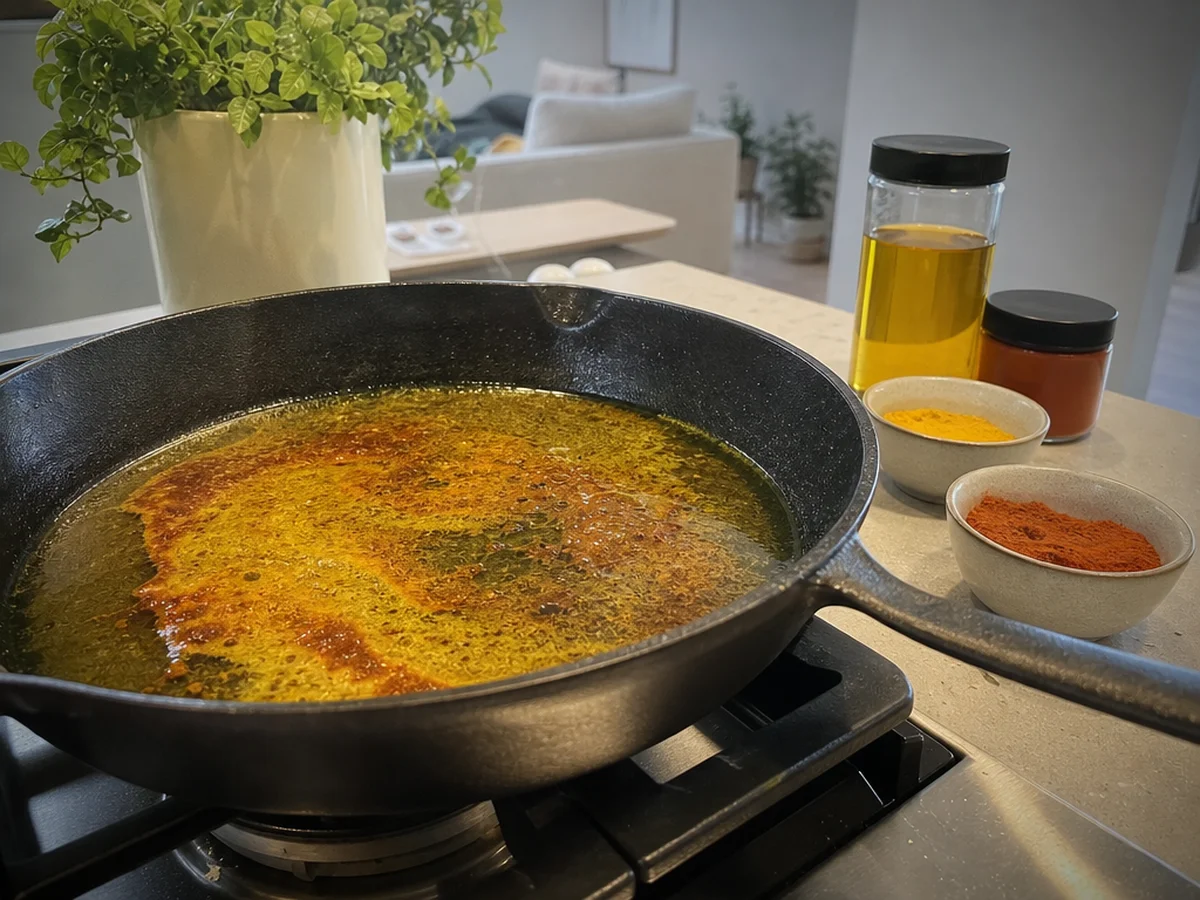
Olive oil is the classic fat for a spice sauté, and its smoke point varies more than cooking charts suggest. A 2025 study of 48 virgin olive oils found that free fatty acid content was the strongest influence on smoke point, with higher acidity meaning a lower smoke point (Díez-Betriu et al., "Deciphering the Complexity of Smoke Point in Virgin Olive Oils to Develop Simple Predictive Models."). Our reading of that is practical: a fresher, milder oil tends to be more forgiving, and your nose is the best thermometer. Here is the rhythm we would suggest, as general cooking sense rather than tested timings:
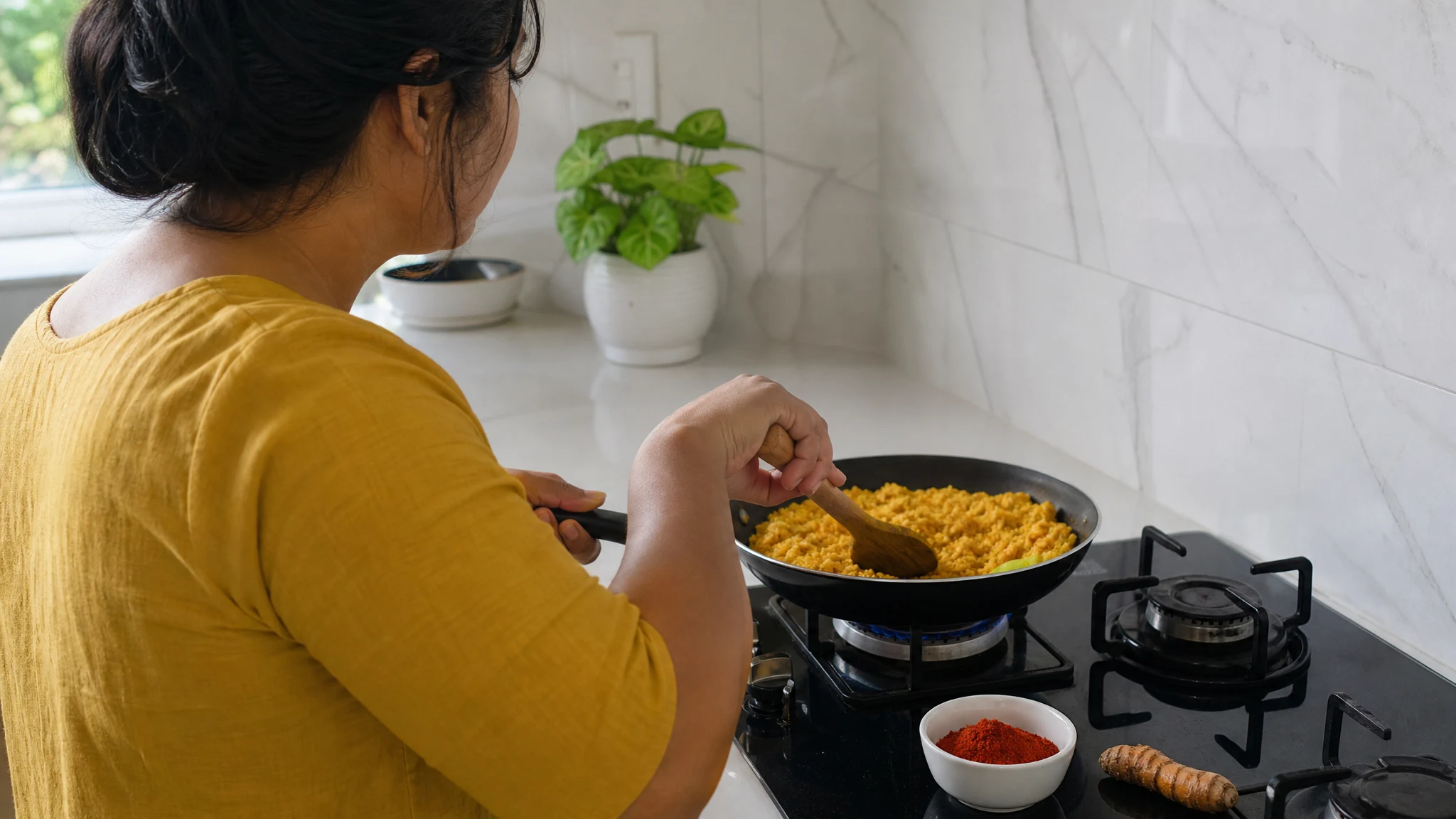
- Warm the oil over low to medium heat and add the turmeric and paprika together, just long enough to smell them.
- Add onions, vegetables or liquid before the powders darken, so they cook in the flavoured oil rather than scorch.
- If the oil starts to smoke or the spices smell acrid, take the pan off the heat and start fresh.
Paprika comes sweet, hot or smoked, and the label tells you which. Sweet paprika gives colour and mellow flavour, smoked adds depth, and hot brings the heat. Pairing them with turmeric is a matter of taste, so start with less than you think you need.
Cooking by nose is half the fun. As the spices meet the warm oil, listen for a gentle sizzle rather than a loud one, and notice how the smell shifts from raw and dusty to rounder and sweeter. That moment is your signal to add the next ingredient, and it is a habit that serves you with every spice, not just these two.
Choosing a good jar
Turmeric is a frequently adulterated spice. A 2026 scoping review pooled 48 publications covering 2,235 commercial samples and found that adulterants included artificial dyes, undeclared diluents and synthetic curcumin (Gafner et al., "A scoping review of turmeric adulteration based on data from six continents."). A study across five eastern Indian states tested 503 samples and found that 30% exceeded India's permissible lead limit, with lead chromate used to deepen the colour (Forsyth et al., "Systemic drivers of toxic food adulteration: lead chromate in turmeric across eastern India."). Those samples do not describe the jar in your cupboard, but they do suggest that a vividly orange powder is no proof of quality. Buy from a spice merchant who tells you where the turmeric came from, and ask about testing if you cook with it often. We do not sell turmeric powder, so a grocery or spice shop is the place to ask.
A note on health talk
Turmeric in dinner is a delight. The US National Center for Complementary and Integrative Health says it does not know enough to conclude that turmeric or curcumin helps for any health purpose, and its safety notes are about supplements rather than a spoonful in a pot of lentils (NCCIH, "Turmeric: Usefulness and Safety"). If you take medication, ask your pharmacist or physician before making turmeric a daily habit.
Where our bottle fits
If you would like a turmeric note in the room while you cook, our oil can be diffused lightly with the windows open. Keep it away from the food, and keep the powder off your sleeves: raw turmeric stains, so a dark board and a quick wipe of the spatula help. We recommend our oil for diffusing and, diluted to 0.5% to 2% in a carrier, for skin; our scent profile describes what it smells like.
So cook with the spice, scent the room with the oil, and let each do the job it is made for.
Turmeric Essential Oil
Turmeric Essential Oil from our own shop, in sizes from 0.5 oz to bulk.
From $12.99
Shop Now →Sources & Further Reading
- Saavedra DI et al. Turmeric (curcuma longa) rhizome essential oil: analytical profile of authenticated and commercial samples, safety and pharmacology review. Pharm Biol, 2026
- Shoba G et al. Influence of piperine on the pharmacokinetics of curcumin in animals and human volunteers. Planta Med, 1998
- Díez-Betriu A et al. Deciphering the Complexity of Smoke Point in Virgin Olive Oils to Develop Simple Predictive Models. Foods, 2025
- Gafner S et al. A scoping review of turmeric adulteration based on data from six continents. Pharm Biol, 2026
- Forsyth JE et al. Systemic drivers of toxic food adulteration: lead chromate in turmeric across eastern India. NPJ Sci Food, 2026
- Turmeric: Usefulness and Safety | NCCIH