Does Turmeric Oil Expire? Signs That It Has Turned
A bottle of turmeric oil can sit in a cupboard for a long time and still smell like itself, and that is not luck. Turmeric oil is built largely from heavy sesquiterpene molecules, which tend to age slowly. Slowly is not never, though, and the best test of where your bottle stands is mostly your nose.

Turmeric Essential Oil
Our own Turmeric Essential Oil, in sizes from 0.5 oz to bulk.
From $12.99
Shop Now →Oils do not spoil, they oxidise
Food goes off because microbes grow in it. An essential oil is different: the Tisserand Institute says that eventually all essential oils degrade, and that the main direct cause is oxidation, where constituents react with oxygen in the air and form oxides and peroxides (Is my bottle of essential oil oxidized or no longer good to use?). Those products change the smell and sometimes the thickness, and they are slightly toxic, which raises the chance of a skin reaction. It is a chemistry clock, not a hygiene problem, and it does not vary with brand.
A 2013 review of the stability literature names the three biggest influences as temperature, light and oxygen availability (Turek and Stintzing, Stability of Essential Oils: A Review). Keep those three in check and the clock slows.
How long a bottle should keep
Our own guidance for turmeric oil is typically three to four years unopened, stored in a cool, dark place away from heat and direct light. For a sense of where that sits, Robert Tisserand's rule of thumb gives citrus, tea tree, pine, spruce and frankincense one to two years, almost every other oil two to three years, and the heavy base-note oils (sandalwood, vetiver, patchouli) four to eight (Lemon on the rocks: keep your essential oils cool). Two details matter. His figures count from the day a bottle is first opened, and they assume refrigeration; he says oils kept out of the fridge last about half as long.
Turmeric belongs on the heavier side of that map. A 2026 analysis of authenticated turmeric oils found them to be mostly sesquiterpenoids, large, heavy molecules (Saavedra et al., Turmeric (curcuma longa) rhizome essential oil: analytical profile of authenticated and commercial samples, safety and pharmacology review.). That puts turmeric closer in character to the heavy base-note oils than to a lemon, which is a reason to expect it to outlast one. It is reasoning, not a measured turmeric shelf life. In practice we would treat an opened bottle kept in a cupboard as good for a couple of years, and then judge it by its smell rather than by the calendar.
What to check, in order
The smell
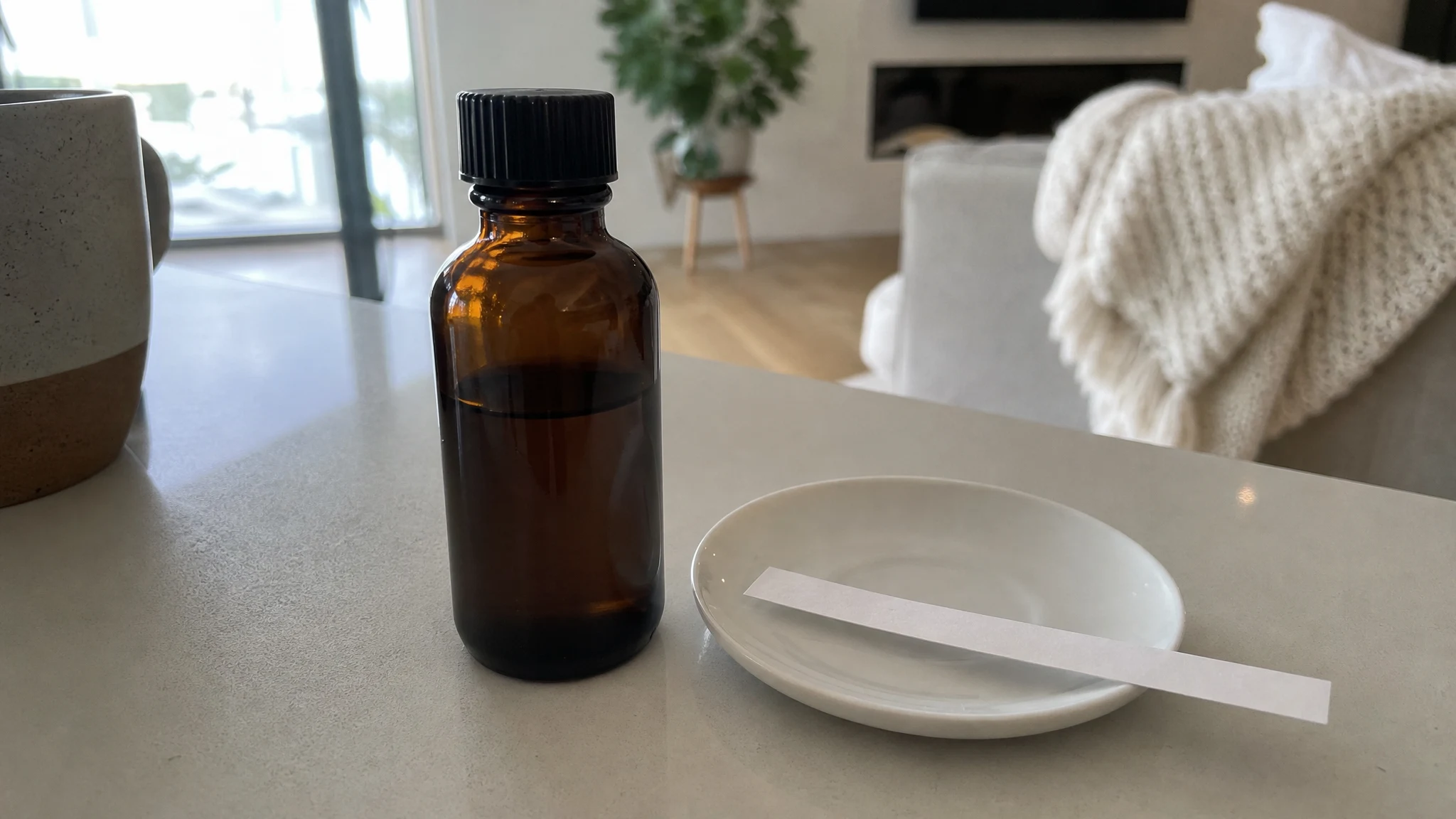
This is the first and best test. Fresh turmeric oil smells warm, earthy and gingery with a woody-spicy edge. As oxidation sets in, the smell shifts slightly and some of the brightness fades, and Tisserand notes you may only notice by comparing with a fresh bottle. If you no longer have one, smell the oil on a paper strip, wait a minute, and ask whether it still reads warm and layered or has turned flat, sharp or sour. Our scent profile describes what to expect.
The feel
Rub a tiny drop between two fingers. Oil that has become noticeably thicker or sticky is changing. The Tisserand Institute says very old oils may grow more viscous and eventually solidify, though this usually takes many years. Check the neck of the bottle as well, where a tacky ring means oil has been drying in contact with air.
The look
Cloudiness is the sign Tisserand ties to moisture entering the bottle, which speeds oxidation. We would not use colour to judge turmeric oil, so lean on smell, feel and clarity.
If it has turned
Because oxidation products raise the chance of skin reactions, a bottle that smells off belongs off your skin. That means no roller blends, no body oil and no bath. A doubtful bottle is not worth a rash, and our post on skin reactions covers what to do if one happens. Check your local waste authority's rules for household oils rather than pouring it down the drain. Our general advice on turmeric oil safety stays the same whether the bottle is new or old: dilute, patch test and keep it away from eyes.
Slowing the clock
Write the date you first open a bottle on a strip of tape, which is exactly what Tisserand suggests if you are ever unsure of an oil's age. Keep the cap on, and think about how much air the bottle holds as it empties. A half-ounce bottle is usually all a home project needs, and we say more in our post on bottle sizes.
An oil that ages gracefully is one of the nicer things about working with a base note. Date it, smell it every so often, and trust your nose.
Turmeric Essential Oil
Turmeric Essential Oil from our own shop, in sizes from 0.5 oz to bulk.
From $12.99
Shop Now →Sources & Further Reading
- Tisserand Institute. Is my bottle of essential oil oxidized or no longer good to use?
- Tisserand R. Lemon on the rocks: keep your essential oils cool.
- Turek C, Stintzing FC. Stability of Essential Oils: A Review. Comprehensive Reviews in Food Science and Food Safety, 2013.
- Saavedra DI, et al. Turmeric (curcuma longa) rhizome essential oil: analytical profile of authenticated and commercial samples, safety and pharmacology review. Pharmaceutical Biology, 2026.