
Turmeric Oil Uses: The Complete Guide to Golden-Hour Skin and Home

Key Takeaways
- Turmeric essential oil is steam-distilled from Curcuma longa rhizomes and contains ar-turmerone, turmerone, and zingiberene as its primary aromatic compounds.
- It is distinct from turmeric powder: the oil is highly concentrated and must always be diluted before skin contact.
- A 1% dilution (roughly 6 drops per ounce of carrier oil) is the widely recommended starting point for most adults applying it to the face or body.
- Turmeric oil blends well with coconut, jojoba, sweet almond, and rosehip carrier oils, plus complementary botanicals like frankincense, ginger, and sandalwood.
- Quality sourcing matters enormously. Look for steam-distilled, GC/MS-tested oil with a clear country of origin.
- Patch testing is non-negotiable before any new topical application.
- Consult a qualified healthcare provider before incorporating any new botanical into your routine, especially during pregnancy or if you take medication.
Turmeric has colored kitchens and ceremonies golden for thousands of years. The spice is familiar. The essential oil, however, occupies a quieter corner of the botanical world, and that relative obscurity is worth examining. Turmeric essential oil has a warmer, woodier, and far more complex aromatic character than the dried powder. It behaves differently on skin. It requires a different kind of care. And it brings a genuinely distinctive quality to a home diffuser blend that most people have never experienced.
This guide covers the full range of turmeric oil uses: skincare rituals, face-specific applications, scalp massage routines, DIY body blends, home diffusing, and the practical details of sourcing and safety. Every section is written with the same underlying belief: the best way to enjoy a botanical this potent is to understand it thoroughly before you reach for the dropper.
1. What Is Turmeric Essential Oil?
From Rhizome to Bottle
Turmeric essential oil is produced by steam-distilling the rhizomes of Curcuma longa, a flowering plant in the ginger family native to the Indian subcontinent and Southeast Asia. The rhizomes (the knobby underground stems most of us recognize as turmeric root) are harvested, cleaned, and then exposed to pressurized steam. That steam carries volatile aromatic compounds up through a condenser, where they cool and separate from the water, yielding the concentrated oil.
This process is important to understand because it determines what ends up in the bottle. Steam distillation captures volatile aromatic molecules but leaves behind non-volatile compounds, including curcumin, the pigment responsible for turmeric powder's vivid yellow-orange color. This is why a properly produced turmeric essential oil is pale yellow to amber in color rather than the deep orange-gold of the spice. It also means the oil carries a different chemical profile than curcumin supplements or culinary turmeric.
Primary Aromatic Compounds
The three compounds that define turmeric essential oil's aromatic and functional character are:
- Ar-turmerone: The dominant sesquiterpene in most well-sourced turmeric oils. It contributes a warm, slightly spicy, and resinous quality to the aroma.
- Turmerone (alpha and beta): Related compounds that deepen the warm, woody base note and contribute to the oil's viscosity and aromatic staying power.
- Zingiberene: Shared with ginger essential oil, this compound adds a bright, slightly citrus-adjacent spice note to the overall scent profile.
Some producers also offer CO2-extracted turmeric oil. CO2 extraction uses pressurized carbon dioxide as a solvent and can capture a broader range of compounds, sometimes including small amounts of curcuminoids. CO2 extracts tend to be darker, thicker, and more intensely colored. Both forms have a place in a serious botanical toolkit. For most skin and diffuser applications, steam-distilled is the more common and widely available choice.
Turmeric Oil vs. Turmeric Powder vs. Curcumin Supplements
These are three distinct products with different compositions and different appropriate uses. Turmeric powder is a culinary spice containing fiber, curcumin, and many other compounds. Curcumin supplements are concentrated extracts intended for oral consumption (always under guidance from a healthcare provider). Turmeric essential oil is an aromatic, topical botanical product. This guide covers only the essential oil. No content here applies to dietary or supplemental use of turmeric in any form.

2. Turmeric Oil Benefits: An Overview of the Golden Profile
When people search for "turmeric essential oil benefits" or "benefits of turmeric oil," they are usually looking for a clear, practical answer to a simple question: what can this oil actually do? The honest answer has two parts. First, the aromatic properties are well-established and genuinely pleasant in ways that make turmeric oil worth exploring on sensory and atmospheric grounds alone. Second, some preliminary research has examined the compounds found in turmeric oil, and those findings are interesting, though they are not a basis for medical claims of any kind.
Here is a grounded overview of the recognized qualities that make turmeric oil useful in a cosmetic and aromatic context.
A Distinctive, Complex Aroma
The scent of turmeric essential oil is genuinely difficult to describe to someone who has not encountered it. It is earthy and warm like the spice, but without the dusty, sharp edge of the powder. Ar-turmerone contributes a soft, almost resinous depth. Zingiberene adds a bright top note. The overall impression is grounding and slightly exotic. In a diffuser blend, it functions as a middle-to-base note that adds body and character without overwhelming lighter citrus or floral companions.
For those who practice intentional home atmosphere design (candle pairing, seasonal scenting, evening wind-down routines), turmeric oil brings a warmth that is genuinely hard to replicate with more common choices like lavender or eucalyptus.
Cosmetic Skin Applications
Turmeric has a long history in South Asian and Southeast Asian skincare traditions, where preparations made from the root have been used in pre-wedding rituals, face pastes, and body brightening routines for generations. The essential oil, being a more concentrated and refined form, is increasingly finding a place in modern botanical skincare for similar reasons.
Some research suggests that aromatic compounds in turmeric oil, particularly ar-turmerone, may interact with skin in ways that support an even, luminous appearance. It is worth noting that most available research uses isolated compounds in laboratory settings, not finished skincare formulas. Real-world cosmetic effects depend heavily on formulation, concentration, and individual skin type.
For a thorough look at how turmeric oil fits into a full skincare ritual, see our guide to turmeric oil for skin: the golden glow routine done right.
Scalp and Hair Care Applications
Massaging a diluted turmeric oil blend into the scalp before washing is a practice with roots in Ayurvedic tradition. People who incorporate this step into their weekly hair care routines often report that the ritual itself, with its warmth and intentional massage, supports a sense of relaxation and scalp comfort. The warming aromatic compounds may also support circulation in the area during massage.
Home and Atmospheric Uses
Beyond personal care, turmeric oil contributes to a grounded, warm olfactory atmosphere in any room. Diffused alongside sandalwood, frankincense, or sweet orange, it creates what many aromatherapy practitioners describe as a "golden hour" mood: warm, settled, and unhurried. This atmospheric quality is one of the most overlooked turmeric oil benefits, and one of the most immediately accessible.
"Turmeric oil is the kind of ingredient that rewards patience. It does not announce itself. It settles into a blend and makes everything around it feel warmer and more complete."
3. Turmeric Oil Uses for Skin: Rituals, Recipes, and Real Talk
Skin is where most people encounter turmeric oil for the first time, and where its benefits are most immediately tangible. The following rituals and recipes reflect the collective wisdom of botanical formulators and the practical experience of people who have worked turmeric oil into a regular personal care routine.
The Golden After-Shower Body Oil
One of the most popular and well-loved applications is a post-shower body oil applied to still-damp skin. The moisture already present on the skin helps spread the oil evenly and supports absorption. Turmeric oil's warm scent blooms beautifully in the steam-warmed air immediately after a shower, making this a genuinely sensory experience rather than just a skincare step.
A simple starting formula:
- 2 ounces (60ml) fractionated coconut oil or jojoba oil
- 6 drops turmeric essential oil (approximately 1% dilution)
- 4 drops frankincense essential oil (optional, for additional depth)
- 3 drops sweet orange essential oil (optional, for brightness)
Combine in a glass pump or dropper bottle. Apply immediately after showering, before fully toweling off. This formula stays within the 1% turmeric dilution that most formulators recommend for regular body use. For a more detailed version of this recipe with variations, see our DIY turmeric body oil: a golden after-shower moisture blend.
Safety note: Always patch test any new oil blend on a small area of inner forearm skin and wait 24 hours before wider application. If you notice redness, itching, or discomfort, discontinue use.
The Classic Turmeric and Coconut Oil Pairing
Coconut oil is turmeric's most traditional companion in South Asian beauty practice. The two have been combined in various forms for centuries. In an essential oil context, the pairing works because coconut oil (especially the fractionated form, which stays liquid at room temperature) has a neutral scent that allows turmeric's warm aromatic profile to lead. It also has a skin feel that many people find comfortable and non-greasy.
For a deeper exploration of this classic combination and how to use it well, visit our article on turmeric and coconut oil: the classic golden pairing.
Brightening Body Ritual: A Weekly Practice
Many formulators suggest keeping a dedicated weekly ritual separate from the daily body oil routine. A gentle sugar scrub base with a few drops of turmeric oil, applied before showering and rinsed off, can prepare skin beautifully for a follow-up moisturizing oil. The physical exfoliation combined with the warm aromatic experience turns an ordinary shower into something more intentional.
A simple scrub base:
- 3 tablespoons fine sugar
- 2 tablespoons fractionated coconut oil
- 3 drops turmeric essential oil
- 2 drops ginger essential oil (optional)
Important: Do not use this scrub on broken, irritated, or freshly shaved skin. Rinse thoroughly. The low concentration of essential oil in this formula is intended to stay within safe use guidelines, but individual sensitivities vary. Perform a patch test first.
Turmeric Oil in Commercial Skincare: What to Look For
Many skincare brands now include turmeric (in various forms) in their formulas. If you are evaluating a finished product rather than making your own, look for:
- Curcuma longa root oil or steam-distilled turmeric oil listed in the INCI ingredient list
- A position in the ingredient list that suggests a meaningful (not token) concentration
- A brand that is transparent about sourcing and testing
- Packaging in dark glass or opaque containers, since turmeric oil is light-sensitive
Transparency is one of the most reliable quality signals in botanical skincare. Brands willing to share GC/MS test data, country of origin, and distillation method are generally more trustworthy than those offering only vague claims.
4. Using Turmeric Oil on Your Face: Precision, Patience, and Small Doses
The face deserves its own section because facial skin is thinner, more reactive, and more exposed to the world than body skin. What works comfortably on arms and legs may need adjustment for cheeks, forehead, and the delicate area around the eyes. Turmeric oil can absolutely be part of a thoughtful facial skincare ritual. It simply requires more precision.
Concentration Matters More Here
For facial use, many formulators and aromatherapy educators recommend staying at or below 0.5% dilution, which is approximately 3 drops of turmeric essential oil per ounce of carrier oil. Some practitioners suggest beginning even lower (0.2 to 0.25%) and gradually increasing only if the skin responds well over several weeks.
This is not overcaution. The compounds in turmeric oil are genuinely potent, and the face is a sensitive canvas. A lower starting concentration also allows you to observe how your particular skin responds without committing to a formula that may be too strong.
Staining: An Honest Conversation
Turmeric has a centuries-long reputation for staining. The powder certainly does. The essential oil, being largely free of curcumin (the pigment responsible for staining), is far less likely to cause visible yellow discoloration on skin. However, CO2-extracted turmeric oil, which may contain curcuminoids, can leave a faint golden tint.
A few practical notes:
- Steam-distilled turmeric oil at low concentrations rarely causes visible staining on skin.
- On white or light-colored linens and clothing, even the steam-distilled oil can leave a faint mark over time. Use an old pillowcase if you apply overnight.
- If you notice any yellowing of skin after application, reduce your concentration further.
A Simple Facial Oil Formula
For reference, a beginner-friendly facial oil blend might look like this:
| Ingredient | Amount | Notes |
|---|---|---|
| Rosehip seed oil | 1 oz (30ml) | Lightweight, absorbs well |
| Jojoba oil | 0.5 oz (15ml) | Balances skin feel |
| Turmeric essential oil | 2 drops | Approx. 0.2% dilution |
| Frankincense essential oil | 2 drops | Optional; softens the aroma |
Apply 2 to 3 drops to clean skin in the evening, pressing gently rather than rubbing. Allow to absorb for several minutes before applying any other products on top.
For a complete approach to turmeric in a facial routine, including how to sequence it with other actives, visit our in-depth piece on turmeric oil for your face: warm botanical notes, small doses.
When to Avoid Facial Application
Avoid applying turmeric oil (or any new essential oil blend) to your face if:
- You have recently used any exfoliating acids or retinoids in your routine (wait at least 24 to 48 hours)
- Your skin is visibly irritated, sunburned, or compromised in any way
- You have not yet completed a patch test on a less sensitive area
Always consult a dermatologist or qualified skincare professional if you have specific skin concerns before adding concentrated botanicals to a facial routine.
5. Turmeric Oil for Hair and Scalp: The Evening Massage Ritual
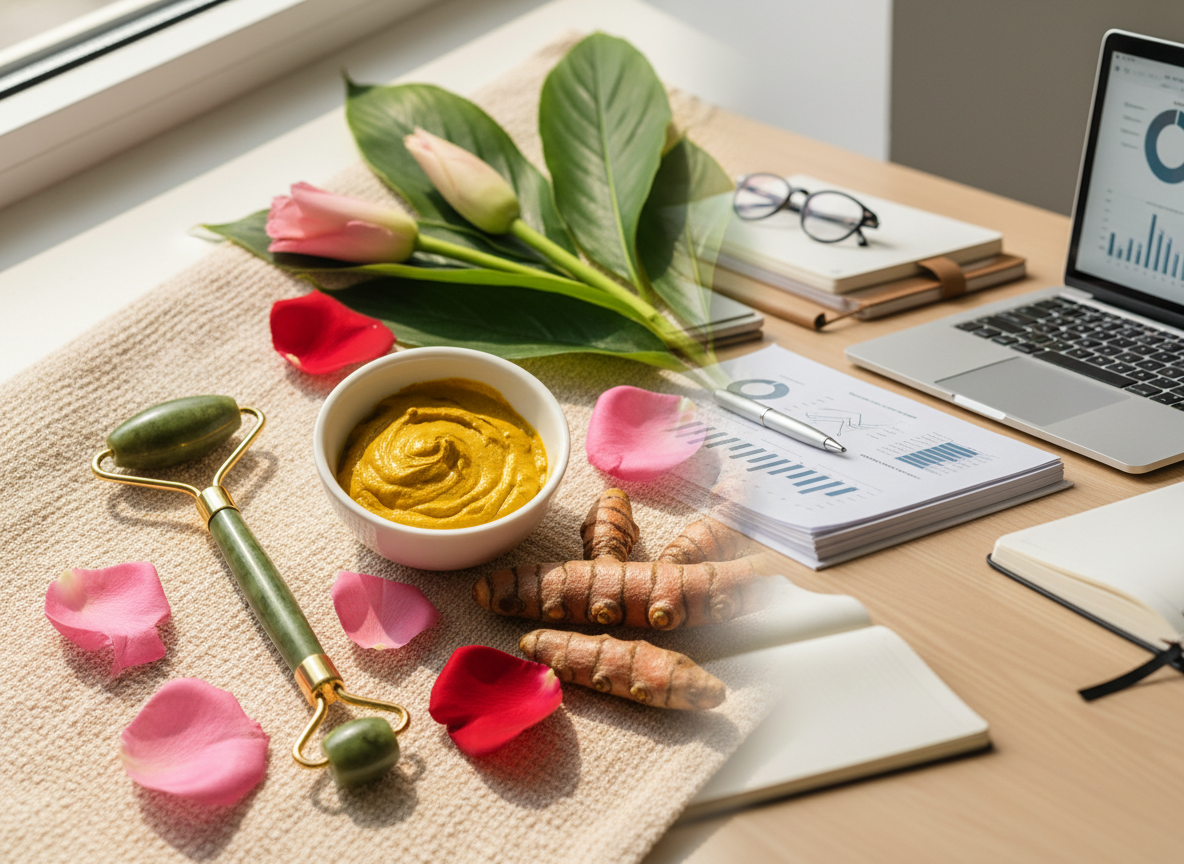
The scalp is skin. It benefits from the same thoughtful botanical attention as the rest of the body, and in some ways it rewards that attention more immediately. A warm oil scalp massage is one of those self-care rituals that feels almost disproportionately pleasant relative to the effort involved. Adding turmeric oil to that practice introduces an aromatic dimension that makes the routine genuinely something to look forward to.
Why the Scalp Responds Well to Oil Massage
Physical massage increases local circulation and encourages relaxation. Warm oil adds a conditioning element that the scalp and hair shaft can absorb during the time the oil sits before washing. Turmeric oil, with its warming aromatic compounds, adds a gentle thermal sensation (especially noticeable with zingiberene, the compound it shares with ginger) that many people describe as pleasant and settling during an evening wind-down.
This is not a claim about scalp conditions of any kind. It is simply a description of what the sensory experience is like, which is warm, earthy, grounding, and genuinely enjoyable.
A Simple Scalp Massage Blend
- 2 tablespoons (30ml) sweet almond or jojoba oil (carrier)
- 3 drops turmeric essential oil
- 2 drops rosemary essential oil (optional)
- 2 drops ginger essential oil (optional)
Warm the blend slightly by holding the bottle between your palms for 30 seconds. Part your hair in sections and apply to the scalp using fingertip pressure. Massage for 5 to 10 minutes using circular motions. Leave on for 30 minutes to overnight (protected with an old towel or shower cap), then wash out thoroughly with your regular shampoo. You may need two rounds of shampooing to remove oil completely.
Turmeric oil at this concentration (approximately 0.5% in a 30ml carrier volume) is well within generally recognized safe use limits for scalp application in most adults. However, individual scalp sensitivity varies. Begin with a shorter leave-in time and rinse before extending to overnight.
For a full evening hair ritual with additional blending ideas, see our guide to turmeric oil for hair: an earthy note for scalp massage night.
Staining and Hair Color: A Practical Note
Very light or bleached hair deserves extra caution. While steam-distilled turmeric essential oil at typical dilutions rarely causes visible color change on most hair types, it is worth being attentive with pale blond or white hair. Test on a small, less visible section first if this is a concern. CO2-extracted turmeric is more likely to affect light hair color and is best used with extra caution on those hair types.
6. Home and Diffuser Uses: Creating a Golden-Hour Atmosphere
The aromatic use of turmeric oil in a home setting is one of its most underrated applications. Most people who discover turmeric oil do so through a skincare lens and never think to put it in a diffuser. That is a genuine omission. The oil's warm, earthy, slightly spiced profile creates an olfactory atmosphere that is difficult to achieve with more familiar choices.
Understanding Turmeric Oil in the Scent Pyramid
In classical fragrance terminology, turmeric essential oil sits primarily in the middle-to-base note range. Ar-turmerone and the turmerone compounds are relatively heavy molecules with good tenacity (they linger in the air). Zingiberene adds a lighter, brighter quality that you may notice first on diffusion. The practical implication: turmeric oil will deepen and anchor a blend, giving it staying power and warmth.
Diffuser Blends for Different Moments
Here are four distinct diffuser blends, each designed for a specific home atmosphere:
Golden Morning (Bright and Awakening)
- 3 drops sweet orange essential oil
- 2 drops turmeric essential oil
- 1 drop ginger essential oil
This blend is bright, citrus-forward, and spiced. It works well in a kitchen or workspace during morning hours. The orange leads, turmeric grounds it, ginger adds a lively edge.
Golden Hour (Warm and Settling)
- 3 drops sandalwood essential oil
- 2 drops turmeric essential oil
- 2 drops bergamot essential oil
A classic afternoon-to-early-evening blend. Sandalwood and turmeric share a warm, woody character. Bergamot adds a soft floral brightness that keeps the blend from feeling heavy.
Deep Evening (Grounded and Still)
- 3 drops frankincense essential oil
- 2 drops turmeric essential oil
- 1 drop vetiver essential oil
- 1 drop lavender essential oil
This is a deeply grounded, resinous blend suited to a quiet evening reading hour or a bedtime wind-down environment. Vetiver and frankincense are anchors. Turmeric adds warmth and breadth. Lavender softens the edges.
Winter Spice (Rich and Evocative)
- 3 drops cardamom essential oil
- 2 drops turmeric essential oil
- 2 drops clove bud essential oil (use sparingly; it is potent)
- 1 drop cedarwood essential oil
A rich, complex blend that works beautifully in autumn and winter. The spice notes interplay with turmeric's warm base, and cedarwood grounds everything.
Diffuser Best Practices with Turmeric Oil
- Use an ultrasonic or nebulizing diffuser rated for essential oils. Avoid plastic diffusers, as concentrated oils can degrade some plastics over time.
- Diffuse in intervals (30 to 60 minutes on, 30 minutes off) rather than continuously.
- Ventilate the room well, particularly if children, pets, or people with sensitivities to aromatic compounds are present.
- Keep turmeric oil away from the diffuser's water reservoir walls; let the water do the work.
- Cats and some other pets may be sensitive to diffused essential oils. Consult a veterinarian before regular diffusion in spaces shared with animals.
Beyond the Diffuser: Other Aromatic Home Uses
Turmeric oil also works well in:
- Linen spray: 10 drops in 4 ounces of distilled water with a small amount of solubilizer. Shake well before each use and mist pillowcases or curtains lightly.
- Candle scenting: If you make your own soy candles, turmeric oil can be incorporated into wax at standard fragrance load rates (usually 6 to 10% by weight). Its warm, resinous quality makes it a natural pairing with amber and sandalwood fragrance accords.
- Reed diffusers: Combined with a reed diffuser base oil (usually DPG or fractionated coconut), turmeric oil contributes a slow-releasing warmth over weeks or months.
7. Blending Guide: Carriers, Ratios, and Complementary Oils
Knowing what to blend with turmeric oil is almost as important as knowing how much to use. The right carrier oil amplifies its cosmetic effects. The right aromatic companions bring out its best qualities. The wrong pairing can result in a formula that smells muddy, absorbs poorly, or irritates skin.
Carrier Oil Compatibility Guide
| Carrier Oil | Best For | Skin Feel | Notes |
|---|---|---|---|
| Fractionated coconut oil | Body, scalp, all-purpose | Light, dry | Neutral scent; stays liquid; widely available |
| Jojoba oil | Face, body, scalp | Medium, non-greasy | Technically a liquid wax; very stable; long shelf life |
| Rosehip seed oil | Face | Light, fast-absorbing | Shorter shelf life; store refrigerated; high in essential fatty acids |
| Sweet almond oil | Body, scalp massage | Medium, smooth | Avoid if tree nut allergy is a concern |
| Argan oil | Face, hair ends | Medium, silky | Slight natural scent; pairs well with frankincense and turmeric |
| Hemp seed oil | Body, scalp | Medium-heavy, earthy | Pronounced natural scent that actually complements turmeric well |
Complementary Essential Oils
Turmeric oil's warm, spiced, earthy character pairs best with:
- Frankincense: The most harmonious pairing. Both are resinous, grounding, and have long histories in ritual and personal care. They deepen each other without competing.
- Ginger: A natural family companion (both are in Zingiberaceae). The pairing creates a warming, stimulating aromatic profile.
- Sandalwood: Smooth, creamy, and woody. Sandalwood softens turmeric's spiced edge and creates a luxurious base note combination.
- Sweet orange or bergamot: Citrus companions brighten the blend. Orange keeps things warm and accessible. Bergamot adds a more sophisticated, slightly floral dimension.
- Cedarwood: Adds depth and a forest-floor earthiness that extends turmeric's natural warmth in a different direction.
- Black pepper: A bold choice that intensifies the spiced character. Use sparingly (1 drop to every 4 to 5 drops of turmeric) as it can be a skin sensitizer at higher concentrations.
Dilution Reference Chart
| Application | Recommended Dilution | Drops per 1 oz Carrier |
|---|---|---|
| Facial oil (daily use) | 0.2 to 0.5% | 1 to 3 drops |
| Body oil (daily use) | 1% | 6 drops |
| Scalp massage (weekly) | 0.5 to 1% | 3 to 6 drops |
| Body scrub (rinse-off) | 1% | 6 drops per oz of base |
| Diffuser blend | N/A (use 2 to 4 drops in a standard diffuser) | 2 to 4 drops total blend |
These figures reflect guidance from reputable aromatherapy education bodies including the National Association for Holistic Aromatherapy (NAHA) and the Tisserand Institute. They are general guidelines for healthy adults. Consult a certified aromatherapist or healthcare provider for personalized guidance.
8. How to Choose a High-Quality Turmeric Essential Oil
The essential oil market has a well-documented quality problem. Adulteration (diluting or substituting a pure oil with cheaper compounds) is common, and because most consumers cannot distinguish a pure oil from an adulterated one by smell alone, the problem persists. Turmeric essential oil is not among the most frequently adulterated oils on the market, but quality still varies significantly based on sourcing, distillation practices, and storage.
What GC/MS Testing Means and Why It Matters
Gas chromatography/mass spectrometry (GC/MS) testing is the industry standard method for verifying essential oil composition. A GC/MS report identifies the aromatic compounds present in a sample and their approximate percentages. For turmeric oil, you should expect to see ar-turmerone, alpha-turmerone, beta-turmerone, and zingiberene listed as primary compounds. Their relative percentages will vary by origin and harvest, but their presence confirms you have genuine turmeric oil.
Reputable suppliers make GC/MS reports available on request, or publish them directly on their product pages. If a brand cannot or will not share this data, consider that a meaningful signal about their transparency.
Origin and Growing Conditions
India produces the majority of the world's turmeric, and some of the most aromatic and consistent turmeric essential oils come from specific growing regions in South India. Sri Lanka and Indonesia also produce quality material. In general, you want to know:
- Which country and region the turmeric was grown in
- Whether it was organically cultivated or wild-harvested
- What the distillation method was (steam-distilled vs. CO2)
- When the oil was produced (freshness matters for aromatic quality)
Packaging and Storage Signals
High-quality turmeric essential oil should always come in dark glass (amber or cobalt blue) bottles. Light degrades aromatic compounds. If you receive turmeric oil in clear glass or plastic, that is a red flag for the supplier's handling practices regardless of the oil's initial quality.
Once you own the oil, store it in a cool, dark location. A dedicated essential oil box or drawer away from sunlight and heat sources will significantly extend the oil's aromatic life. Properly stored, turmeric essential oil typically maintains its quality for two to three years.
Price as a Quality Signal
Turmeric essential oil is not among the most expensive botanicals on the market, but very cheap turmeric oil (well below $10 for a 15ml bottle from a brand with no transparency about sourcing or testing) warrants skepticism. Quality distillation, third-party testing, and responsible sourcing all have real costs. A supplier absorbing all of those costs while charging less than commodity prices is either cutting corners somewhere or selling a significantly different product than they describe.
A reasonable price range for a quality steam-distilled turmeric oil in a 15ml bottle is approximately $15 to $40, depending on organic certification, origin, and brand positioning. This is a rough guideline, not a hard rule. Price alone does not determine quality, but it is one useful data point in a constellation of signals.
9. Safety, Dilution, and Who Should Be Cautious
Every article about essential oils needs a genuinely useful safety section. Not a perfunctory legal disclaimer, but a practical, honest discussion of who needs to exercise additional caution, what specific risks look like with this particular oil, and what to do if something goes wrong. This is that section.
Skin Sensitization: The Primary Concern
The most common adverse response to turmeric essential oil is skin sensitization: a reaction where the immune system develops a heightened response to a particular compound after repeated exposure. Once sensitization occurs, even small amounts of the sensitizing compound can trigger a noticeable skin response. The best way to avoid sensitization is to use turmeric oil at appropriate dilutions, perform patch tests consistently, and avoid using it daily on the same area of skin for extended periods without breaks.
Patch test protocol:
- Dilute the turmeric oil at your intended concentration in your chosen carrier oil.
- Apply a small amount (about the size of a dime) to the inner forearm or behind the ear.
- Leave uncovered and unwashed for 24 hours.
- Check for redness, itching, swelling, or any other reaction.
- If no reaction occurs, proceed with use. If any reaction occurs, discontinue and consult a healthcare provider.
Photosensitivity
Turmeric essential oil is not classified as a primary photosensitizer in the way that many citrus oils are. However, if you are using a blend that includes known photosensitizers (bergamot, lemon, lime, or other cold-pressed citrus oils), avoid direct sun exposure on treated skin for at least 12 hours after application. Always check the photosensitivity status of every oil in a blend, not just the turmeric.
Populations Who Should Consult a Healthcare Provider First
- Pregnant individuals: Many essential oils, including some warming and spiced botanicals, are not recommended during pregnancy. Consult your midwife or OB-GYN before using any new essential oil topically or aromatically during pregnancy.
- Breastfeeding individuals: Similar caution applies. Compounds from topically applied oils can, in theory, be absorbed into the bloodstream. Seek professional guidance.
- Children: Essential oils require more conservative dilutions for children, and some are not appropriate at all for young children. Age-specific dilution guidance from a certified aromatherapist is important here.
- Individuals taking prescription medications: Some aromatic compounds may interact with medications. This is not a reason to avoid essential oils categorically, but it is a reason to consult your prescribing physician or pharmacist before adding a new botanical to your regular routine.
- Individuals with known plant allergies: Allergy to members of the Zingiberaceae family (ginger, cardamom) or other spice plants may indicate a higher likelihood of sensitivity to turmeric oil. Patch test with particular care.
What to Do if Irritation Occurs
If you experience skin discomfort after applying a turmeric oil blend:
- Do not rinse with water alone. Apply a plain carrier oil (fractionated coconut, jojoba) to the area first to dilute and absorb the essential oil. Then wash with mild soap and water.
- Avoid applying more essential oils to the irritated area.
- If irritation is severe, widespread, or does not subside within a few hours, seek medical attention.
- Keep your diluted blend formula noted so you can share the ingredients with a healthcare provider if needed.
Keep Essential Oils Away From Mucous Membranes and Eyes
Never apply undiluted essential oil to the lips, nostrils, eyes, or any mucous membrane. If accidental eye contact occurs, flush with a carrier oil (not water) and seek medical advice immediately. Keep all essential oils stored securely out of reach of children and pets.
Bringing It All Together: A Golden-Hour Philosophy
Turmeric essential oil rewards the kind of deliberate, unhurried engagement that is increasingly rare. You do not throw it into a diffuser and forget it. You do not add it to a formula without thinking about concentration and carriers. You get to know it the way you get to know any ingredient worth using seriously: by starting simply, paying attention, and building from there.
The practical range of turmeric oil uses is genuinely broad. An after-shower body oil. A weekly scalp ritual. A bedtime wind-down diffuser blend. A carefully formulated facial oil for evening use. A warming linen spray. A winter diffuser blend that makes a room feel like somewhere worth being. Each of these is achievable at home with a single bottle of quality oil and a bit of thoughtfulness about what you are putting it with and how much you are using.
For those who want to go deeper into any of these areas, our related guides cover each application in full detail. Start with the turmeric oil for skin golden glow routine for a complete body skincare framework. Move on to the facial application guide for the precision that face-specific use requires. Explore the turmeric and coconut oil pairing for the foundational combination that underlies many of the simplest and most effective recipes in this tradition. And if you have come across the oral whitening trend involving turmeric and oil, our piece on turmeric, coconut oil, and teeth takes an honest look at what the practice involves and what is actually known about it.
The golden hour, that brief window of warm afternoon light before evening settles in, is a useful metaphor for what turmeric oil does in a well-crafted formula. It does not dominate. It warms. It deepens. It makes everything around it feel more settled and complete. That quality, more than any single application or use case, is what makes this botanical worth understanding.
Frequently Asked Questions
Is turmeric essential oil the same as turmeric powder?
No. Turmeric powder is a dried, ground spice containing curcumin and many other compounds. Turmeric essential oil is produced by steam-distilling the rhizomes to capture only volatile aromatic compounds. They have different compositions, different applications, and very different appropriate uses.
Will turmeric essential oil stain my skin yellow?
Steam-distilled turmeric essential oil at typical dilutions rarely causes visible staining on most skin tones. CO2-extracted turmeric oil, which may contain curcuminoids, is more likely to leave a faint golden tint. Pale linens and clothing can pick up color over time regardless of extraction method.
How do I dilute turmeric essential oil for body use?
A 1% dilution is the widely recommended starting point for body application in healthy adults. That is approximately 6 drops of turmeric essential oil per 1 ounce (30ml) of carrier oil. For facial use, begin at 0.2 to 0.5%, which is 1 to 3 drops per ounce.
Can I use turmeric essential oil in a diffuser every day?
Diffusing any essential oil daily in closed spaces over long periods is generally not recommended. Use in 30 to 60 minute intervals with breaks, ventilate the room, and be attentive to how household members (including pets) respond. Varying the oils you diffuse is also a good practice.
What should I do if turmeric oil irritates my skin?
Apply a plain carrier oil to the area first to dilute the essential oil, then wash with mild soap and water. Do not apply more essential oils to irritated skin. If the response is significant or does not resolve, consult a healthcare provider.