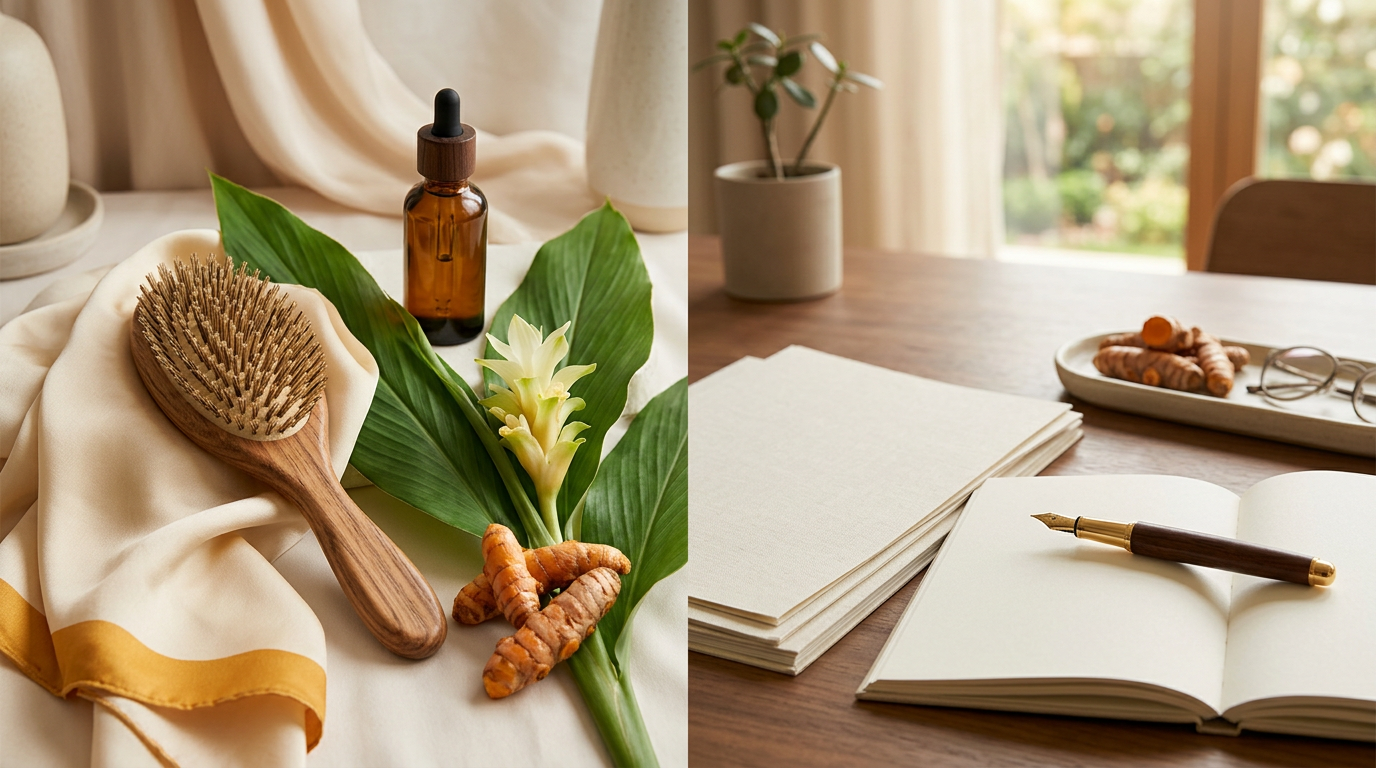
Turmeric Oil for Hair: An Earthy Note for Scalp Massage Night
There is something quietly luxurious about a slow evening hair ritual. The lights are low, a favorite playlist is on, and you have a warm, golden oil warming between your palms. Turmeric oil for hair has become a beloved part of exactly this kind of night for many people who gravitate toward botanically rich grooming routines. The scent alone, earthy and faintly spiced, sets a grounding tone before you even begin to massage.
This guide walks you through the full process: what you need, how to blend, how to apply, and what to realistically expect. If you are curious about turmeric essential oil beyond the scalp, the complete guide to golden-hour skin uses covers a broader range of aromatic and cosmetic applications worth exploring.
Why Turmeric Hair Oil Belongs in Your Evening Routine
Turmeric essential oil is steam-distilled from Curcuma longa rhizomes. It carries a warm, woody-spicy aroma that some people describe as a softer, more rounded version of fresh turmeric root. Unlike turmeric powder, a quality steam-distilled essential oil does not carry the same intense staining risk, though you should still be mindful with very light fabrics and use appropriate dilutions.
People who incorporate a turmeric scalp massage into their weekly routine often describe the experience as grounding and settling, a sensory shift that signals the body that the evening has truly begun. The act of slow, deliberate massage at the scalp is, in itself, a worthwhile ritual. The turmeric hair oil simply adds an aromatic dimension to it.
From a cosmetic standpoint, carrier oils used in scalp massage blends may help condition the scalp surface and support a healthy-feeling environment for hair. Turmeric essential oil brings its characteristic aroma and the naturally occurring compounds of the Curcuma plant into that blend. Some research observations suggest that curcuminoids and the volatile compounds in turmeric have interesting properties, though the cosmetic literature is still developing. The honest framing is this: a turmeric scalp massage is a pleasant, aromatic ritual. Anything beyond that is a bonus worth following in future research.
What You Will Need
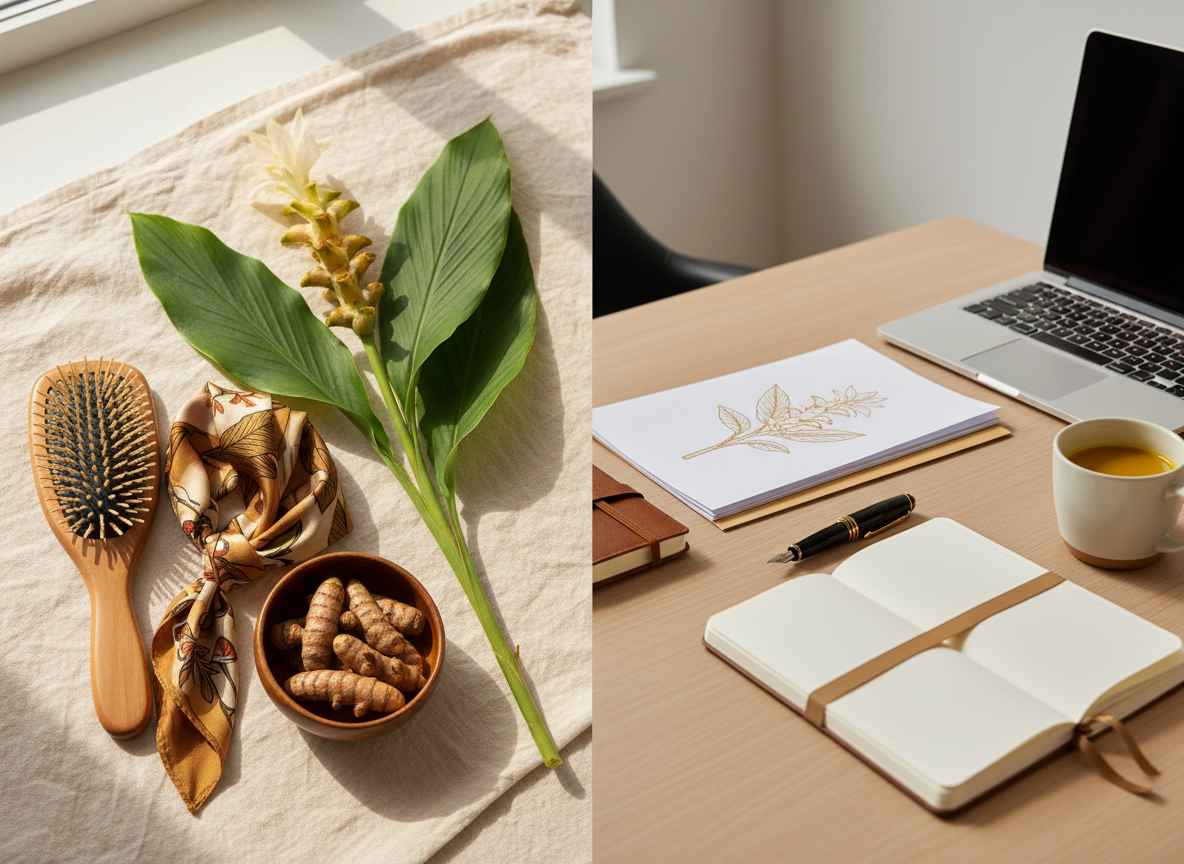
Gathering your materials before you begin makes the whole experience more seamless. Nothing breaks a calm evening ritual faster than hunting for a measuring spoon mid-blend.
Essential Ingredients
- Turmeric essential oil: 3 to 4 drops for a single scalp session. Choose a reputable supplier who provides GC/MS testing reports and lists the full botanical name (Curcuma longa) on the label.
- Primary carrier oil: 2 tablespoons. Coconut oil is the classic pairing (see the full breakdown in this guide to the classic golden pairing). Jojoba, sweet almond, and argan oil are excellent alternatives for those who prefer a lighter feel.
- Optional secondary carrier: 1 teaspoon of castor oil. It is thick and sticky on its own, but blended in small amounts it adds a rich, coating texture that many people enjoy for overnight scalp work.
- Optional complementary essential oils: 1 to 2 drops of rosemary (Rosmarinus officinalis) or lavender (Lavandula angustifolia) blend beautifully with turmeric's earthy note without overpowering it.
Tools and Accessories
- A small glass mixing bowl or a 1-ounce glass bottle with dropper
- A measuring teaspoon or a kitchen scale
- A wide-tooth comb or sectioning clips
- An old t-shirt or a dedicated hair towel (oil will transfer to fabric)
- A soft shower cap or a reusable satin wrap for overnight wear
Dilution and Safety: Read This First
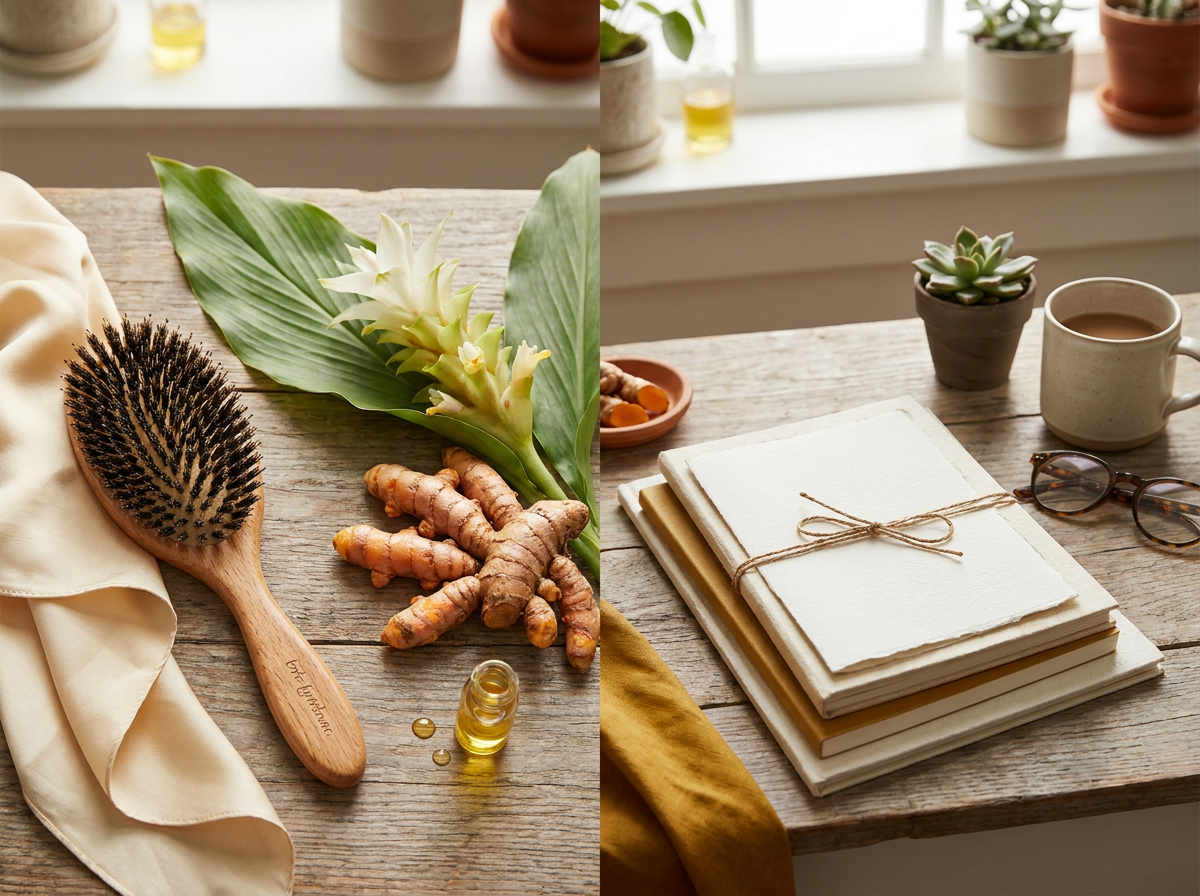
Essential oils are highly concentrated plant extracts. Turmeric essential oil should never be applied directly to the scalp without dilution in a carrier oil. For scalp use, a dilution of 1% to 2% is appropriate for most adults. This means 1 to 2 drops of essential oil per teaspoon of carrier oil, or roughly 3 to 6 drops per tablespoon.
A patch test is non-negotiable before your first use. Apply a small amount of your finished blend to the inside of your elbow, cover loosely, and wait 24 hours. If you notice redness, itching, or any discomfort, do not proceed with scalp application.
Avoid this blend if you are pregnant, nursing, or have a known sensitivity to the Zingiberaceae family (which includes ginger, cardamom, and turmeric). Children under 12 should not use essential oil blends without guidance from a qualified healthcare provider. When in doubt, consult your healthcare provider before introducing any new topical botanical preparation.
Step-by-Step: The Turmeric Scalp Massage Ritual
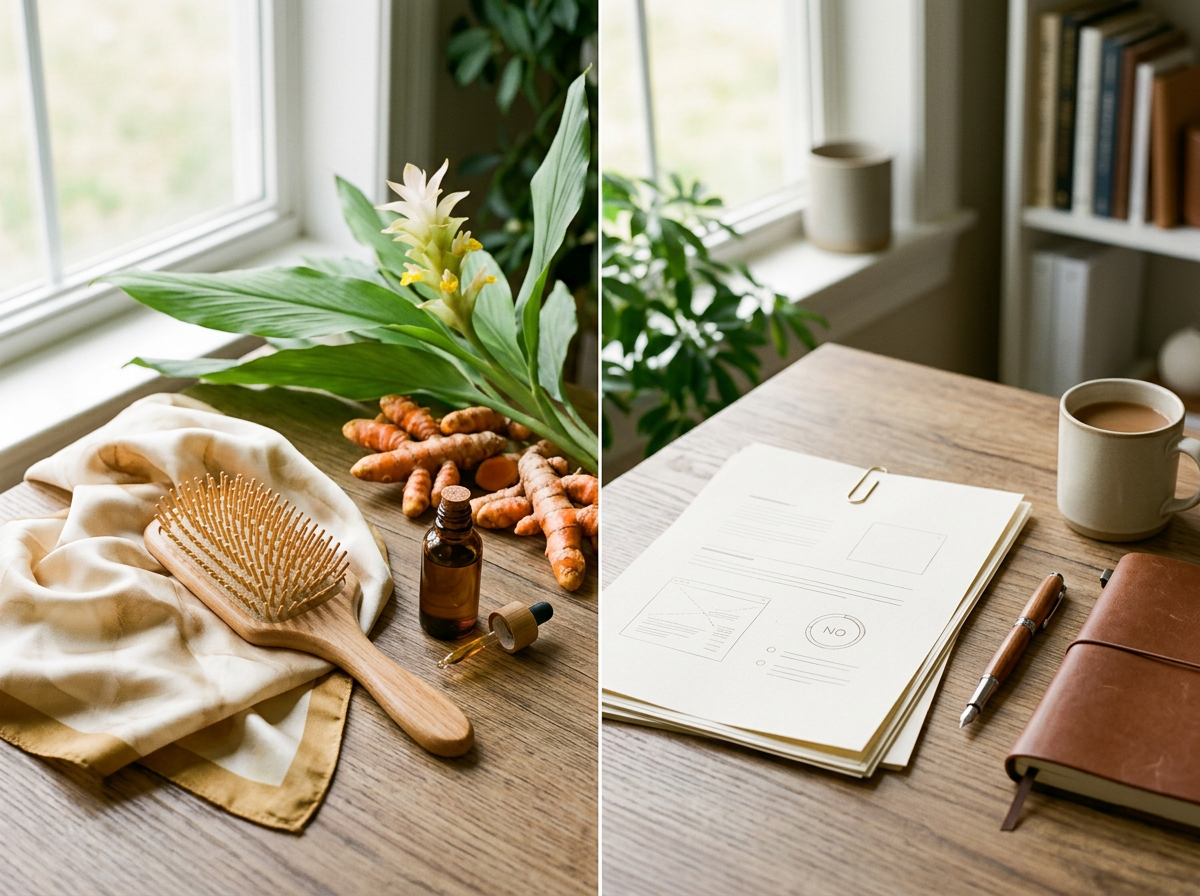
Step 1: Blend Your Oil
Measure your carrier oil into your glass bowl. If you are using coconut oil and it is solid, warm it gently by setting the bowl in a larger bowl of hot water for two to three minutes. Do not microwave essential oils or blends containing them.
Once your carrier is fluid and slightly warm to the touch (not hot), add your turmeric essential oil drops. If you are adding rosemary or lavender, add those now as well. Stir gently with a small spoon or swirl the bowl. The oil will take on a faint golden hue, depending on the quality and composition of your turmeric essential oil.
Keep your blend at or below a 2% dilution for scalp use. For 2 tablespoons of carrier oil, that is a maximum of 6 drops of essential oil total across all oils in the blend.
Step 2: Section the Hair
Dry or slightly damp hair both work for this ritual. Many people prefer dry hair for an overnight treatment because damp hair can make the oil feel heavier and slower to absorb.
Use your wide-tooth comb or your fingers to divide the hair into four to six sections. Clip or twist each section out of the way. Working in sections ensures that the oil reaches the scalp rather than sitting on top of the hair shaft.
Step 3: Warm the Oil in Your Palms
Pour a small amount of your blend into one palm. Rub your hands together for five to ten seconds. This step is easy to skip and worth not skipping. Warm oil spreads more easily, and the act of rubbing your palms together briefly diffuses the aroma so your first inhalation of that earthy turmeric note is immediate and pleasant.
Step 4: Apply and Massage
Working one section at a time, apply the oil directly to the scalp using your fingertips. Focus on the scalp, not the lengths of the hair. The scalp is where the massage does its work.
Begin with small circular motions using the pads (not the nails) of your fingers. Move systematically from the front hairline toward the crown, then from the temples to the nape of the neck. Spend at least two to three minutes per major zone. The full massage should take ten to fifteen minutes.
Apply moderate, consistent pressure. Too light and you are barely touching the scalp. Too heavy and the experience becomes unpleasant quickly. A good scalp massage should feel like a slow, intentional kneading.
Step 5: Distribute and Cover
Once the oil is applied and the massage is complete, run your fingers or a wide-tooth comb lightly through the lengths of your hair to distribute any excess oil. This is optional, and you may prefer to keep the treatment focused on the scalp.
Gather your hair loosely and cover with a satin wrap or shower cap. This keeps the oil from transferring to your pillowcase and helps retain a little warmth, which many people find adds to the sensory comfort of the ritual.
Step 6: Rest and Rinse
Leave the turmeric hair oil blend on for a minimum of 30 minutes. Many people prefer to sleep with it overnight and rinse in the morning. If you choose the overnight option, use an old pillowcase regardless of your hair covering, as oils migrate.
Rinse with lukewarm water and shampoo thoroughly. You may need two rounds of shampoo to fully remove heavier carrier oils like coconut or castor. Follow with your usual conditioner if desired.
Tips and Common Mistakes to Avoid
Tip 1: Start with Less Oil Than You Think You Need
A common mistake is using too much carrier oil at once. Two tablespoons is the upper end for most hair types. Fine hair in particular may feel weighed down. Start with one tablespoon and add more only if the scalp feels dry after your first section.
Tip 2: Do Not Rush the Massage
Ten minutes of attentive massage is more beneficial than twenty minutes of distracted, half-hearted application. Set your phone down. The turmeric scalp massage works best as a single-focus activity.
Tip 3: Store Your Blend Properly
If you make a larger batch to use over several sessions, store it in a dark glass bottle away from heat and direct sunlight. Carrier oils oxidize over time. A blend made with coconut oil or jojoba has a reasonable shelf life of one to two months when stored correctly. Label the bottle with the date you made it.
Tip 4: Mind the Staining Potential
Quality steam-distilled turmeric essential oil carries far less staining risk than turmeric powder, but it is not entirely without color. Use old towels and hair coverings. Rinse thoroughly in the morning. If you notice any slight golden tint on very light blonde or gray hair, an extra shampoo cycle typically resolves it.
Tip 5: Quality of the Essential Oil Matters
A poorly sourced turmeric essential oil can smell acrid, flat, or chemically sharp rather than warmly spiced. Always look for oils that list the country of origin (India is the most common for Curcuma longa), the extraction method (steam distillation), and a batch-specific GC/MS report. The aroma of a quality oil should be distinctly warm, earthy, and slightly sweet.
What to Realistically Expect
After a single session, most people report that their scalp feels moisturized and their hair looks glossier. The earthy, spiced aroma lingers softly through the evening and fades almost entirely by morning after rinsing.
With regular weekly sessions over four to six weeks, some people note that their scalp feels less dry and that the ritual itself has become a meaningful wind-down cue for the body. These are experiential and cosmetic observations. Individual results vary considerably depending on hair type, existing scalp condition, and consistency of practice.
A turmeric scalp massage is not a substitute for professional guidance if you have persistent scalp concerns. It is a sensory ritual that many people find genuinely enjoyable and worth building into a regular grooming week.
If you enjoy working with golden botanical oils more broadly, the DIY turmeric body oil guide is a natural next step. The same careful blending principles apply, and the after-shower ritual pairs beautifully with the scalp massage night you have now built.
A Final Note on Building the Ritual
The most effective grooming rituals are the ones you actually look forward to. The combination of warm oil, deliberate touch, and turmeric's distinctive aroma creates an experience that is sensory before it is anything else. Give yourself the full fifteen minutes. Dim the lights. Let the earthy golden note of turmeric oil fill the room. The scalp will thank you, and so will the rest of your evening.