
A Golden Evening Ritual with Turmeric Oil: Warmth Without the Kitchen
Turmeric has a reputation problem when it comes to aromatics. Most people associate it with stained fingertips, yellow-streaked cutting boards, and the lingering ghost of last night's curry. So when turmeric essential oil started appearing in the wellness fragrance space, a reasonable first reaction was skepticism. Would it smell like a spice cabinet? Would it belong anywhere near a bedroom diffuser?
This case study follows one person's four-week exploration of building a turmeric evening ritual using essential oil rather than the root or powder. The goal was simple: create a cozy scent ritual for winding down in the evening, using warm diffuser blends as the primary format. No topical application was central to this phase. No recipes from cookbooks. Just the aroma, the atmosphere, and honest observations about what worked.
The Context: A Restless Evening Routine
The subject, a freelance editor in her mid-thirties, described her evenings as "loud in a quiet house." Work notifications bled into personal time. Screen use continued past 10 p.m. Her wind-down routine was inconsistent, and she noted that the transition from work mode to rest mode rarely felt complete. She had previously used lavender in a diffuser but described the scent as "pleasant but flat" for her purposes. She wanted something with more presence. Something that signaled a distinct shift in the environment.
She had no prior experience with turmeric essential oil and expressed the same concern many people do: "I don't want my bedroom to smell like I'm cooking."
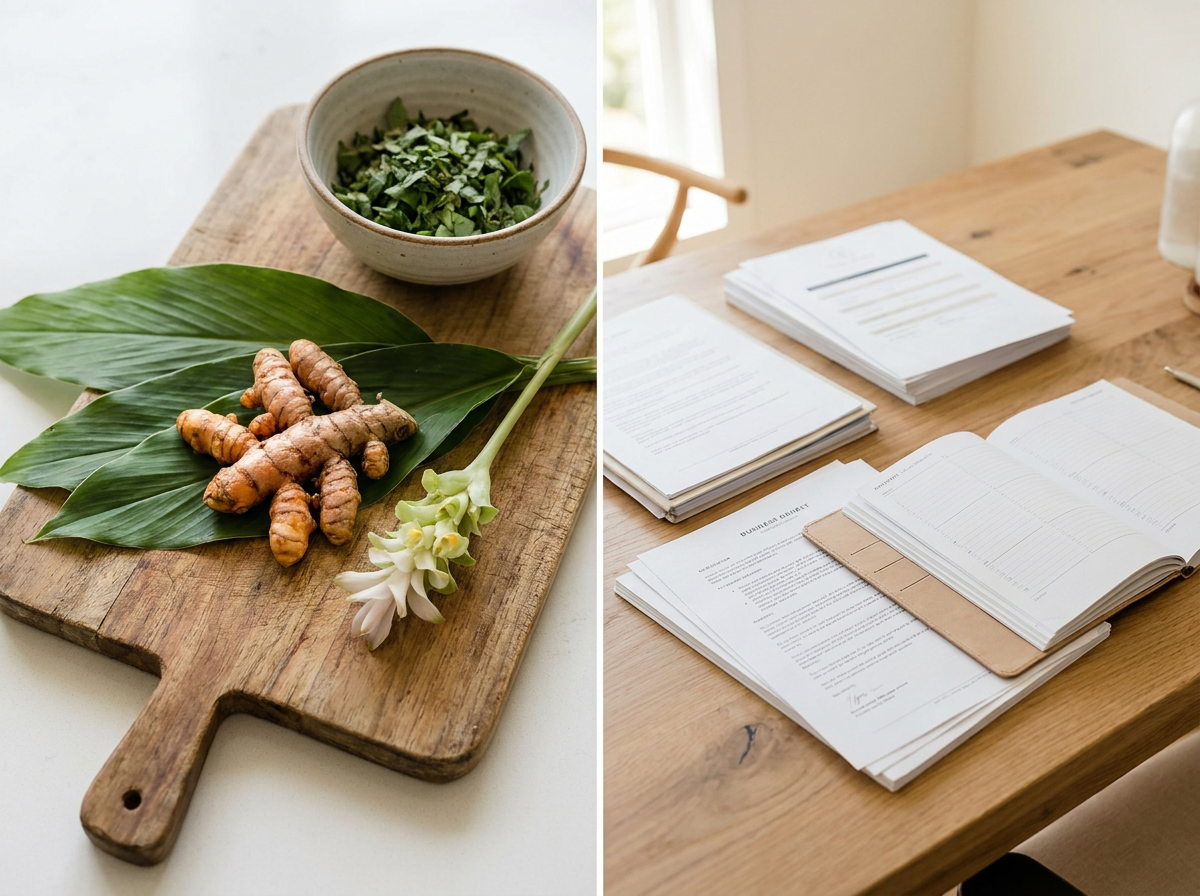
This is worth addressing directly before going further. Turmeric essential oil is steam-distilled from the rhizome of Curcuma longa. The resulting oil carries the plant's aromatic compounds but behaves quite differently from the dried powder or fresh root. The scent is earthy and warm, with woody undertones and a faint spiced sweetness. In diffusion, especially when blended, it reads more as "botanical warmth" than as a culinary note. That distinction became central to this exploration.
The Approach: Four Weeks, Three Blend Phases

The exploration was structured loosely across four weeks, divided into three blend phases. Each phase used a cold-air ultrasonic diffuser. Room size was approximately 200 square feet. Diffusion sessions ran for 30 to 45 minutes, beginning around 8:30 p.m.
Phase One: Turmeric Solo (Week One)
The first week used turmeric essential oil on its own. Three to four drops in the diffuser, water filled to the manufacturer's recommended line. The purpose was to understand the oil's baseline aroma without interference from other notes.
Observations from week one were instructive. The scent was present but not overpowering. The subject described it as "like warm soil after rain, but drier." There was an earthy opening that softened into something almost sweet as the session continued. She noted that it did not smell culinary. The spice association she had feared did not materialize in diffusion at this low drop count.
What she did notice: the scent created a sense of place. It was distinctive enough that entering the room after a diffusion session felt different from entering a room with no scent. That sensory marker, she observed, began to signal her brain that the evening had shifted into a different register.
Phase Two: Warm Diffuser Blends (Weeks Two and Three)
The second phase introduced blending. The goal was to build on turmeric's earthy warmth with complementary notes that would deepen the cozy scent ritual without overwhelming the room.
Three blends were rotated across the two weeks:
- Blend A (The Woodsmoke): 2 drops turmeric, 2 drops cedarwood, 1 drop vetiver. This was the most grounding of the three. The subject described the combination as "a fireplace in a forest." The turmeric note softened considerably against the wood tones.
- Blend B (The Spiced Citrus): 2 drops turmeric, 2 drops sweet orange, 1 drop cardamom. This blend was brighter, with the citrus lifting the earthiness into something more vibrant. It was her preference for earlier evenings, before 9 p.m., when she still wanted some energy in the room.
- Blend C (The Golden Quiet): 2 drops turmeric, 2 drops frankincense, 1 drop sandalwood. This became her late-evening standard. The frankincense added a resinous, slightly smoky depth. The sandalwood rounded the blend into something she described as "expensive and slow."
A note on sourcing here: the quality of the turmeric oil mattered noticeably in these blends. An early test with a cheaper, unspecified-origin oil produced a sharper, almost medicinal top note that clashed with the other ingredients. Switching to a steam-distilled oil with a clear country of origin (India, in this case) and a published GC/MS report produced a rounder, more cohesive result. If you are building your own warm diffuser blends, sourcing transparency is not a detail to skip.
Phase Three: Ritual Anchoring (Week Four)
The fourth week was less about the blends themselves and more about consistency. The subject used Blend C every evening at the same time, paired with the same sequence of activities: phone placed in another room, low lighting, 20 minutes of reading.
By the end of the week, she reported that the scent had begun to function as a cue. Before the diffuser session was even halfway through, she noticed a perceptible shift in her pace. She attributed this to the classical conditioning principle that underpins scent ritual: the aroma had been paired repeatedly with a calm, low-stimulation environment, and her nervous system appeared to be responding to the scent itself as a signal. This is a well-documented area in olfactory research, and it aligns with why consistent scent rituals tend to become more effective over time, not less.
Key Observations and Learnings
1. Turmeric Oil Diffuses Differently Than It Smells in the Bottle
This surprised the subject and is worth noting for anyone approaching this oil for the first time. Direct from the bottle, turmeric essential oil can smell sharp and intensely earthy. In a diffuser with water diffusion, the top notes disperse quickly and what remains is softer, warmer, and considerably more livable. Start with fewer drops than you think you need. Three drops in a standard diffuser is a reasonable starting point.
2. Blending Unlocks Turmeric's Potential as a Base Note
Turmeric works best in blends when it is treated as a base or mid note rather than a feature note. Its earthiness provides grounding without demanding attention. The wood and resin pairings (cedarwood, frankincense, sandalwood) brought out its warmth most effectively. The citrus pairing (sweet orange) brightened it considerably and may suit those who find the solo scent too heavy.
3. Consistency Matters More Than Complexity
The most meaningful shift in this exploration happened in week four, not week two. A single repeated blend, used at the same time each evening, built an associative pattern that a rotating selection of elaborate blends did not. For anyone building a turmeric evening ritual, the practical takeaway is this: pick one blend you genuinely enjoy and use it consistently for at least two weeks before evaluating its effectiveness as a wind-down cue.
4. Sourcing Quality Is a Real Variable
As noted in Phase Two, the difference between a poorly sourced turmeric oil and a quality steam-distilled oil with verified origin was perceptible in blending. A GC/MS report indicates that a supplier has tested the oil's chemical composition. It is not a guarantee of everything, but it is a meaningful signal of seriousness about quality. This is especially relevant with turmeric, which is sometimes adulterated or blended with carrier oils in lower-grade products.
5. The "Kitchen Smell" Fear Is Largely Unfounded in Diffusion
At appropriate drop counts and especially when blended, turmeric essential oil does not read as a culinary scent in the way the powder does. The steam distillation process separates the aromatic compounds from the heavier, color-bearing curcuminoids responsible for turmeric's signature staining. The result is a botanical oil with genuine aromatic complexity. That said, use restraint with drop count. Overloading any diffuser will push any oil into overwhelming territory.
A Note on Topical Use During This Period
This case study focused on diffusion, but it is worth noting that turmeric essential oil does have a place in skin-focused evening routines as well. If you are curious about how this oil behaves on skin, particularly for evening face and body rituals, the considerations around dilution and application are meaningfully different from aromatic use.
For a broader overview of how this oil fits into a skin-focused golden hour routine, see our guide to turmeric oil uses and the complete guide to golden hour skin. If you are specifically interested in how it may fit into a nightly glow routine, turmeric oil for skin and the golden glow routine done right covers the application side in detail. And for those interested in facial use specifically, including dilution guidance and patch testing, turmeric oil for your face: warm botanical notes, small doses is the right starting point.
As always, topical use requires appropriate dilution in a carrier oil and a patch test before broader application. Consult a qualified healthcare provider before adding any new botanical oil to your routine, particularly if you have sensitivities or are pregnant.
Building Your Own Golden Evening Ritual
If this exploration has prompted you to try a cozy scent ritual of your own, here is a simple starting framework based on the observations above:
- Choose your timing. Pick a consistent start time in the evening and commit to it for at least two weeks. The ritual needs repetition to build its associative signal.
- Start with a proven blend. The Golden Quiet blend (2 drops turmeric, 2 drops frankincense, 1 drop sandalwood) is a low-risk starting point for most preferences. Adjust from there.
- Pair with a low-stimulation activity. The scent works best as part of a broader wind-down sequence. Reading, stretching, journaling, and quiet conversation all pair naturally.
- Source carefully. Look for steam-distilled turmeric essential oil with a published GC/MS report and a clear country of origin. Quality variation in this oil is significant enough that sourcing deserves attention before you decide whether you enjoy the oil itself.
- Give it time. Scent association builds gradually. A single session tells you something about the aroma. Four weeks of consistent use tells you something about the ritual.
Warmth, in the aromatic sense, is something turmeric essential oil offers in abundance. It does not arrive loudly. It does not announce itself the way citrus does or demand attention the way peppermint does. It settles into a room and shifts its quality. For an evening ritual, that understated, grounding presence may be exactly the right register.
The kitchen can keep its powder. This golden root has found a different room in the house.